Tea party
Tea Party refers to a social gathering where tea is served, often accompanied by light refreshments. Originating in Britain during the early 19th century, the tradition has since spread worldwide and has been adapted to various cultural contexts.
History[edit]
The tradition of the tea party began in Britain during the early 19th century. The concept was introduced by Anna, the Duchess of Bedford, who started the trend of having tea with light refreshments in the afternoon to stave off hunger before dinner. This practice quickly gained popularity among the British upper class and eventually became a social event known as the "afternoon tea" or "tea party".
Types of Tea Parties[edit]
There are several types of tea parties, each with its own unique characteristics and traditions.
Afternoon Tea[edit]
Afternoon tea, also known as "low tea", is a British tradition that involves serving tea with a variety of small sandwiches, scones, and pastries. It is typically served in the late afternoon and is often associated with social events or special occasions.
High Tea[edit]
High tea, contrary to its name, is a more substantial meal that is served in the early evening. It includes tea, but also heavier dishes like meat, fish, and baked goods. Despite its name, high tea is considered less formal than afternoon tea.
Cream Tea[edit]
Cream tea is a type of afternoon tea that is popular in the West Country of England. It involves serving tea with scones, clotted cream, and strawberry jam.
Cultural Variations[edit]
Tea parties vary greatly depending on the cultural context in which they are held. For example, in Japan, the Japanese tea ceremony is a formal and ritualized event that involves the ceremonial preparation and presentation of matcha, a powdered green tea. In Russia, tea parties often involve samovars, large urns used to boil water and brew tea.
Tea Party in Popular Culture[edit]
The tea party has been a popular theme in various forms of media, most notably in literature. The most famous example is the Mad Hatter's tea party in Lewis Carroll's Alice's Adventures in Wonderland.
See Also[edit]

- Tea_party
-
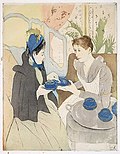 Afternoon Tea Party by Mary Cassatt
 -
 A Group of Artists by Grün
 -
 Tea Time
 -
 Tea Party


Ad. Transform your health with W8MD Weight Loss, Sleep & MedSpa

Tired of being overweight?
Special offer:
Budget GLP-1 weight loss medications
- Semaglutide starting from $29.99/week and up with insurance for visit of $59.99 and up per week self pay.
- Tirzepatide starting from $45.00/week and up (dose dependent) or $69.99/week and up self pay
✔ Same-week appointments, evenings & weekends
Learn more:
- GLP-1 weight loss clinic NYC
- W8MD's NYC medical weight loss
- W8MD Philadelphia GLP-1 shots
- Philadelphia GLP-1 injections
- Affordable GLP-1 shots NYC
|
WikiMD Medical Encyclopedia |
Medical Disclaimer: WikiMD is for informational purposes only and is not a substitute for professional medical advice. Content may be inaccurate or outdated and should not be used for diagnosis or treatment. Always consult your healthcare provider for medical decisions. Verify information with trusted sources such as CDC.gov and NIH.gov. By using this site, you agree that WikiMD is not liable for any outcomes related to its content. See full disclaimer.
Credits:Most images are courtesy of Wikimedia commons, and templates, categories Wikipedia, licensed under CC BY SA or similar.
Translate this page: - East Asian
中文,
日本,
한국어,
South Asian
हिन्दी,
தமிழ்,
తెలుగు,
Urdu,
ಕನ್ನಡ,
Southeast Asian
Indonesian,
Vietnamese,
Thai,
မြန်မာဘာသာ,
বাংলা
European
español,
Deutsch,
français,
Greek,
português do Brasil,
polski,
română,
русский,
Nederlands,
norsk,
svenska,
suomi,
Italian
Middle Eastern & African
عربى,
Turkish,
Persian,
Hebrew,
Afrikaans,
isiZulu,
Kiswahili,
Other
Bulgarian,
Hungarian,
Czech,
Swedish,
മലയാളം,
मराठी,
ਪੰਜਾਬੀ,
ગુજરાતી,
Portuguese,
Ukrainian
