Glutamate decarboxylase
Glutamate decarboxylase (GAD) is an enzyme that catalyzes the decarboxylation of glutamate to gamma-aminobutyric acid (GABA) and carbon dioxide. GAD plays a crucial role in the metabolism of amino acids and is pivotal in the process of inhibitory neurotransmission in the central nervous system (CNS). There are two forms of this enzyme, GAD65 and GAD67, named after their molecular weights. These enzymes are encoded by two different genes, GAD1 (GAD67) and GAD2 (GAD65), in humans.
Function[edit]
Glutamate decarboxylase is essential for the synthesis of GABA, the principal inhibitory neurotransmitter in the brain. By converting glutamate, the main excitatory neurotransmitter, into GABA, GAD helps maintain the balance between excitation and inhibition in the CNS. This balance is crucial for normal brain function, and disruptions can lead to various neurological and psychiatric disorders.
Structure[edit]
GAD exists in two isoforms, GAD65 and GAD67, which are encoded by separate genes. These isoforms differ in their distribution, regulation, and function within the brain. GAD67 is ubiquitously expressed in GABAergic neurons and is responsible for the basal levels of GABA synthesis necessary for cell maintenance and non-synaptic GABA signaling. In contrast, GAD65 is mainly involved in synthesizing GABA for neurotransmission and is dynamically regulated by synaptic activity.
Clinical Significance[edit]
- Autoimmune Disorders
Autoantibodies to GAD are a characteristic feature of some autoimmune diseases, including Type 1 diabetes and Stiff person syndrome. In Type 1 diabetes, GAD65 autoantibodies are often present and can serve as a marker for the disease. In Stiff person syndrome, antibodies against GAD65 are thought to impair GABA synthesis, leading to muscle stiffness and spasms.
- Neurological Disorders
Alterations in GAD activity and GABA synthesis have been implicated in several neurological disorders, such as epilepsy, schizophrenia, and major depressive disorder. These conditions may arise from an imbalance between excitatory and inhibitory neurotransmission in the brain.
Genetics[edit]
The human genes GAD1 and GAD2 encode the GAD67 and GAD65 enzymes, respectively. Variations in these genes can affect the function and regulation of GAD, potentially leading to altered GABAergic signaling and susceptibility to neurological and psychiatric disorders.
Pharmacology[edit]
GAD and its product, GABA, are targets for several pharmacological agents. Drugs that increase GABA levels in the brain, such as GABA analogs and GABA reuptake inhibitors, are used to treat conditions like epilepsy and anxiety disorders. Understanding the role of GAD in GABA synthesis has been crucial for developing these therapeutic strategies.
See Also[edit]

-
 Structure of GAD67
 -
 Active site of GAD67
 -
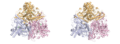 pH-induced conformational changes
 -
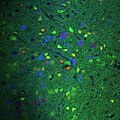 Mouse GAD65 and GAD67
 -
 Stiff man syndrome in human cerebellum


Ad. Transform your health with W8MD Weight Loss, Sleep & MedSpa

Tired of being overweight?
Special offer:
Budget GLP-1 weight loss medications
- Semaglutide starting from $29.99/week and up with insurance for visit of $59.99 and up per week self pay.
- Tirzepatide starting from $45.00/week and up (dose dependent) or $69.99/week and up self pay
✔ Same-week appointments, evenings & weekends
Learn more:
- GLP-1 weight loss clinic NYC
- W8MD's NYC medical weight loss
- W8MD Philadelphia GLP-1 shots
- Philadelphia GLP-1 injections
- Affordable GLP-1 shots NYC
|
WikiMD Medical Encyclopedia |
Medical Disclaimer: WikiMD is for informational purposes only and is not a substitute for professional medical advice. Content may be inaccurate or outdated and should not be used for diagnosis or treatment. Always consult your healthcare provider for medical decisions. Verify information with trusted sources such as CDC.gov and NIH.gov. By using this site, you agree that WikiMD is not liable for any outcomes related to its content. See full disclaimer.
Credits:Most images are courtesy of Wikimedia commons, and templates, categories Wikipedia, licensed under CC BY SA or similar.
Translate this page: - East Asian
中文,
日本,
한국어,
South Asian
हिन्दी,
தமிழ்,
తెలుగు,
Urdu,
ಕನ್ನಡ,
Southeast Asian
Indonesian,
Vietnamese,
Thai,
မြန်မာဘာသာ,
বাংলা
European
español,
Deutsch,
français,
Greek,
português do Brasil,
polski,
română,
русский,
Nederlands,
norsk,
svenska,
suomi,
Italian
Middle Eastern & African
عربى,
Turkish,
Persian,
Hebrew,
Afrikaans,
isiZulu,
Kiswahili,
Other
Bulgarian,
Hungarian,
Czech,
Swedish,
മലയാളം,
मराठी,
ਪੰਜਾਬੀ,
ગુજરાતી,
Portuguese,
Ukrainian
