Clavulina cristata

Clavulina cristata, commonly known as the white coral fungus or the crested coral, is a species of fungus in the family Clavulinaceae. It is found in various parts of the world, including North America, Europe, and Asia, where it grows in deciduous and coniferous forests. This fungus is recognized by its distinctive coral-like appearance, with white to pale branches that end in crown-like tips. It is a saprotrophic organism, deriving nutrients by decomposing organic matter, which contributes to the nutrient cycle in forest ecosystems.
Description[edit]
Clavulina cristata features a branched, coral-like structure, typically reaching heights of 4 to 10 cm. The branches are white to pale cream in color, smooth, and terminate in multiple, small, crown-like clusters. The flesh of the fungus is white, with a brittle texture. Spores of Clavulina cristata are white, smooth, and ellipsoid in shape, contributing to its classification within the Clavulinaceae family.
Habitat and Distribution[edit]
This species is predominantly found in temperate forests, thriving in both deciduous and coniferous environments. It forms mycorrhizal relationships with a variety of trees, which is essential for nutrient exchange between the fungus and its host. Clavulina cristata is widely distributed across North America, Europe, and Asia, indicating its adaptability to different forest ecosystems.
Ecological Role[edit]
As a saprotrophic fungus, Clavulina cristata plays a crucial role in decomposing dead organic matter, such as fallen leaves and wood. This decomposition process releases nutrients back into the soil, making them available for uptake by plants. Furthermore, its mycorrhizal relationships contribute to the health of forest ecosystems by enhancing nutrient uptake for its host trees.
Culinary and Medicinal Use[edit]
While Clavulina cristata is not commonly regarded as a choice edible fungus due to its tough texture, some cultures may use it in traditional dishes. There is limited information on its medicinal properties; however, research into the potential health benefits of various fungi is ongoing.
Conservation[edit]
Currently, there are no significant conservation concerns for Clavulina cristata, as it is relatively widespread and common. However, like many fungi, its presence is dependent on the health of its habitat, making forest conservation efforts important for its continued survival.
See Also[edit]

-
 Clavulina cristata
 -
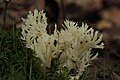 Clavulina coralloides
 -
 Clavulina coralloides
 -
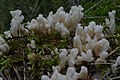 Clavulina cristata
 -
 Clavulina cristata spore

.jpg)


Ad. Transform your life with W8MD's
GLP-1 weight loss injections special from $29.99


W8MD Medical Weight Loss, Sleep and Medspa offers physician-supervised medical weight loss programs: NYC medical weight loss Philadelphia medical weight loss
Affordable GLP-1 Weight Loss ShotsAffordable GLP-1 Weight Loss Shots
Budget GLP-1 injections NYC (insurance & self-pay options) Popular treatments:
- Semaglutide starting from $29.99/week
- Tirzepatide starting from $45.00/week
✔ Most insurances accepted for visits ✔ Prior authorization support when eligible
Start your physician weight loss NYC journey today:
📍 NYC: Brooklyn weight loss center 📍 Philadelphia: Philadelphia weight loss center
📞 Call: 718-946-5500 (NYC) | 215-676-2334 (Philadelphia)
Tags: Affordable GLP1 weight loss NYC, Wegovy NYC, Zepbound NYC, Philadelphia medical weight loss


|
WikiMD Medical Encyclopedia |
Medical Disclaimer: WikiMD is not a substitute for professional medical advice. The information on WikiMD is provided as an information resource only, may be incorrect, outdated or misleading, and is not to be used or relied on for any diagnostic or treatment purposes. Please consult your health care provider before making any healthcare decisions or for guidance about a specific medical condition. WikiMD expressly disclaims responsibility, and shall have no liability, for any damages, loss, injury, or liability whatsoever suffered as a result of your reliance on the information contained in this site. By visiting this site you agree to the foregoing terms and conditions, which may from time to time be changed or supplemented by WikiMD. If you do not agree to the foregoing terms and conditions, you should not enter or use this site. See full disclaimer.
Credits:Most images are courtesy of Wikimedia commons, and templates, categories Wikipedia, licensed under CC BY SA or similar.
Translate this page: - East Asian
中文,
日本,
한국어,
South Asian
हिन्दी,
தமிழ்,
తెలుగు,
Urdu,
ಕನ್ನಡ,
Southeast Asian
Indonesian,
Vietnamese,
Thai,
မြန်မာဘာသာ,
বাংলা
European
español,
Deutsch,
français,
Greek,
português do Brasil,
polski,
română,
русский,
Nederlands,
norsk,
svenska,
suomi,
Italian
Middle Eastern & African
عربى,
Turkish,
Persian,
Hebrew,
Afrikaans,
isiZulu,
Kiswahili,
Other
Bulgarian,
Hungarian,
Czech,
Swedish,
മലയാളം,
मराठी,
ਪੰਜਾਬੀ,
ગુજરાતી,
Portuguese,
Ukrainian
