Cleidocranial dysostosis
Cleidocranial dysostosis (CCD), also known as Cleidocranial dysplasia, is a rare genetic disorder primarily affecting bone and dental development. It is inherited in an autosomal dominant manner, typically resulting from mutations in the RUNX2 gene<ref>,
 Cleidocranial dysplasia,
 Orphanet Journal of Rare Diseases,
 2006,
 Vol. 1(Issue: 1),
 pp. 15,
 DOI: 10.1186/1750-1172-1-15,
 PMID: 16722557,</ref>.
Clinical Presentation
Characteristics of CCD include skeletal and dental abnormalities. The most characteristic features are underdeveloped or absent clavicles (collar bones), which results in individuals being able to bring their shoulders together in front of their body. Dental anomalies, including delayed loss of primary teeth and delayed eruption of secondary teeth, are common. Other features include delayed or incomplete closure of the fontanelles, a prominent forehead, wide-set eyes (hypertelorism), a flat nose, and a short stature. Spinal abnormalities, such as scoliosis, may also occur<ref>,
 GeneReviews. online version,

 University of Washington, Seattle,
 2018,</ref>.
Genetics
CCD is caused by mutations in the RUNX2 gene, located on chromosome 6p21. RUNX2 is essential for the development of osteoblasts, the cells responsible for bone formation<ref>,
 CBFA1, a candidate gene for cleidocranial dysplasia syndrome, is essential for osteoblast differentiation and bone development,
 Cell,
 1997,
 Vol. 89(Issue: 5),
 pp. 765-771,
 DOI: 10.1016/S0092-8674(00)80259-7,
 PMID: 9182762,</ref>.
Diagnosis and Management
Diagnosis of CCD is primarily based on clinical examination and radiographic findings, but can be confirmed by genetic testing. Management of CCD is mainly supportive and involves a multidisciplinary approach, including orthopedic management for skeletal anomalies and dental interventions for oral health<ref>,
 Cleidocranial dysplasia: clinical and molecular genetics,
 Journal of the American Dental Association,
 1999,
 Vol. 130(Issue: 5),
 pp. 656-662,
 DOI: 10.14219/jada.archive.1999.0257,
 PMID: 10332264,</ref>.
See Also
References
<references />
 | |
|---|---|
 |
 |
NIH genetic and rare disease info
Cleidocranial dysostosis is a rare disease.
| Rare and genetic diseases | ||||||
|---|---|---|---|---|---|---|
|
Rare diseases - Cleidocranial dysostosis
|
-
 Cleidocranial dysostosis
 -
 Cleidocranial dysostosis
 -
 Cleidocranial dysostosis
 -
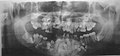 Cleidocranial dysplasia teeth
 -
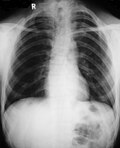 Cleidocranial dysostosis


Ad. Transform your life with W8MD's
GLP-1 weight loss injections special from $29.99 with insurance
|
WikiMD Medical Encyclopedia |
Medical Disclaimer: WikiMD is for informational purposes only and is not a substitute for professional medical advice. Content may be inaccurate or outdated and should not be used for diagnosis or treatment. Always consult your healthcare provider for medical decisions. Verify information with trusted sources such as CDC.gov and NIH.gov. By using this site, you agree that WikiMD is not liable for any outcomes related to its content. See full disclaimer.
Credits:Most images are courtesy of Wikimedia commons, and templates, categories Wikipedia, licensed under CC BY SA or similar.
Translate this page: - East Asian
中文,
日本,
한국어,
South Asian
हिन्दी,
தமிழ்,
తెలుగు,
Urdu,
ಕನ್ನಡ,
Southeast Asian
Indonesian,
Vietnamese,
Thai,
မြန်မာဘာသာ,
বাংলা
European
español,
Deutsch,
français,
Greek,
português do Brasil,
polski,
română,
русский,
Nederlands,
norsk,
svenska,
suomi,
Italian
Middle Eastern & African
عربى,
Turkish,
Persian,
Hebrew,
Afrikaans,
isiZulu,
Kiswahili,
Other
Bulgarian,
Hungarian,
Czech,
Swedish,
മലയാളം,
मराठी,
ਪੰਜਾਬੀ,
ગુજરાતી,
Portuguese,
Ukrainian
