United States Bill of Rights
First ten amendments to the United States Constitution

The United States Bill of Rights comprises the first ten amendments to the United States Constitution. These amendments were introduced by James Madison to the First United States Congress in 1789 as a series of legislative articles. They came into effect on December 15, 1791, when they were ratified by three-fourths of the states.
Background[edit]

The demand for a Bill of Rights emerged from the debates surrounding the ratification of the Constitution. Many Anti-Federalists, including prominent figures like Patrick Henry, argued that the new Constitution granted too much power to the federal government and lacked sufficient protections for individual liberties. In response, Federalists promised to add a Bill of Rights to the Constitution once it was ratified.
Drafting and Proposal[edit]

James Madison, who initially opposed the need for a Bill of Rights, took the lead in drafting the amendments. He drew from various sources, including the Virginia Declaration of Rights and the English Bill of Rights. Madison introduced a series of amendments to the House of Representatives on June 8, 1789. After much debate and revision, Congress approved twelve articles on September 25, 1789, and sent them to the states for ratification.
Ratification[edit]
The ratification process was swift, with the necessary three-fourths of the states approving ten of the twelve proposed amendments by December 15, 1791. These ten amendments became known as the Bill of Rights. The two articles not ratified dealt with congressional representation and congressional pay raises; the latter was eventually ratified as the Twenty-seventh Amendment in 1992.
Content of the Bill of Rights[edit]
The Bill of Rights enumerates specific prohibitions on governmental power, serving as a safeguard for individual liberties. Key protections include:
- The First Amendment, which guarantees freedoms of speech, religion, press, assembly, and petition.
- The Second Amendment, which protects the right to keep and bear arms.
- The Fourth Amendment, which guards against unreasonable searches and seizures.
- The Fifth Amendment, which ensures the right to due process and protects against double jeopardy and self-incrimination.
- The Sixth Amendment, which guarantees the right to a fair trial.
Legacy[edit]

The Bill of Rights has had a profound impact on American law and society, serving as a cornerstone for the protection of individual freedoms. It has been the basis for numerous landmark Supreme Court decisions and continues to influence debates on civil liberties.
Related pages[edit]
References[edit]
- "The Bill of Rights: A Transcription." National Archives. Retrieved from [1].
- Maier, Pauline. "Ratification: The People Debate the Constitution, 1787-1788." Simon & Schuster, 2010.
- Rakove, Jack N. "Original Meanings: Politics and Ideas in the Making of the Constitution." Vintage, 1997.
-
 United States Bill of Rights
 -
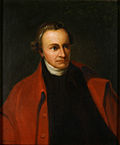 Patrick Henry
 -
 Letter from George Washington to Lafayette, 28 April 1788
 -
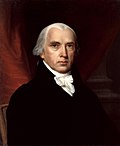 James Madison
 -
 United States Bill of Rights

Ad. Transform your health with W8MD Weight Loss, Sleep & MedSpa

Tired of being overweight?
Special offer:
Budget GLP-1 weight loss medications
- Semaglutide starting from $29.99/week and up with insurance for visit of $59.99 and up per week self pay.
- Tirzepatide starting from $45.00/week and up (dose dependent) or $69.99/week and up self pay
✔ Same-week appointments, evenings & weekends
Learn more:
- GLP-1 weight loss clinic NYC
- W8MD's NYC medical weight loss
- W8MD Philadelphia GLP-1 shots
- Philadelphia GLP-1 injections
- Affordable GLP-1 shots NYC
|
WikiMD Medical Encyclopedia |
Medical Disclaimer: WikiMD is for informational purposes only and is not a substitute for professional medical advice. Content may be inaccurate or outdated and should not be used for diagnosis or treatment. Always consult your healthcare provider for medical decisions. Verify information with trusted sources such as CDC.gov and NIH.gov. By using this site, you agree that WikiMD is not liable for any outcomes related to its content. See full disclaimer.
Credits:Most images are courtesy of Wikimedia commons, and templates, categories Wikipedia, licensed under CC BY SA or similar.
Translate this page: - East Asian
中文,
日本,
한국어,
South Asian
हिन्दी,
தமிழ்,
తెలుగు,
Urdu,
ಕನ್ನಡ,
Southeast Asian
Indonesian,
Vietnamese,
Thai,
မြန်မာဘာသာ,
বাংলা
European
español,
Deutsch,
français,
Greek,
português do Brasil,
polski,
română,
русский,
Nederlands,
norsk,
svenska,
suomi,
Italian
Middle Eastern & African
عربى,
Turkish,
Persian,
Hebrew,
Afrikaans,
isiZulu,
Kiswahili,
Other
Bulgarian,
Hungarian,
Czech,
Swedish,
മലയാളം,
मराठी,
ਪੰਜਾਬੀ,
ગુજરાતી,
Portuguese,
Ukrainian
