Transcranial Doppler
Ultrasound technique for measuring blood flow velocity in the brain


Transcranial Doppler (TCD) is a non-invasive ultrasound technique used to measure the velocity of blood flow through the brain's blood vessels. It is primarily used to assess the cerebral circulation and diagnose conditions affecting blood flow to the brain.
History[edit]
The development of transcranial Doppler ultrasound began in the early 1980s. It was first introduced by Rune Aaslid, a Norwegian physicist, who demonstrated its potential for measuring blood flow velocity in the major cerebral arteries. Since then, TCD has become a valuable tool in both clinical and research settings.
Technique[edit]
Transcranial Doppler uses a handheld probe that emits ultrasound waves through the skull. These waves are reflected off moving red blood cells within the cerebral arteries, and the frequency shift (Doppler effect) is used to calculate blood flow velocity. The procedure is typically performed through the temporal bone, which is one of the thinnest parts of the skull, allowing for better ultrasound penetration.
Clinical Applications[edit]
TCD is used in various clinical scenarios, including:
- Detection of vasospasm: Following a subarachnoid hemorrhage, TCD can monitor for vasospasm, a condition where blood vessels constrict, potentially leading to ischemia.
- Assessment of cerebral autoregulation: TCD can evaluate the brain's ability to maintain stable blood flow despite changes in systemic blood pressure.
- Monitoring during carotid endarterectomy: TCD is used intraoperatively to monitor cerebral blood flow and detect emboli.
- Evaluation of sickle cell disease: In children with sickle cell disease, TCD is used to assess the risk of stroke by measuring blood flow velocity in the cerebral arteries.
Advantages and Limitations[edit]
TCD is advantageous because it is non-invasive, relatively inexpensive, and can be performed at the bedside. However, it has limitations, including operator dependency and difficulty in obtaining adequate signals in some patients due to thick skull bones or poor acoustic windows.
Related pages[edit]
References[edit]
-
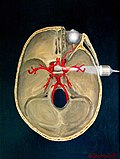 Transcranial Doppler
 -
 Doppler ultrasound analyzer of blood velocity
 -
 TCD Spectroscopy
 -
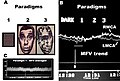 TCD Spectroscopy Paradigms
Ad. Transform your health with W8MD Weight Loss, Sleep & MedSpa

Tired of being overweight?
Special offer:
Budget GLP-1 weight loss medications
- Semaglutide starting from $29.99/week and up with insurance for visit of $59.99 and up per week self pay.
- Tirzepatide starting from $45.00/week and up (dose dependent) or $69.99/week and up self pay
✔ Same-week appointments, evenings & weekends
Learn more:
- GLP-1 weight loss clinic NYC
- W8MD's NYC medical weight loss
- W8MD Philadelphia GLP-1 shots
- Philadelphia GLP-1 injections
- Affordable GLP-1 shots NYC
|
WikiMD Medical Encyclopedia |
Medical Disclaimer: WikiMD is for informational purposes only and is not a substitute for professional medical advice. Content may be inaccurate or outdated and should not be used for diagnosis or treatment. Always consult your healthcare provider for medical decisions. Verify information with trusted sources such as CDC.gov and NIH.gov. By using this site, you agree that WikiMD is not liable for any outcomes related to its content. See full disclaimer.
Credits:Most images are courtesy of Wikimedia commons, and templates, categories Wikipedia, licensed under CC BY SA or similar.
Translate this page: - East Asian
中文,
日本,
한국어,
South Asian
हिन्दी,
தமிழ்,
తెలుగు,
Urdu,
ಕನ್ನಡ,
Southeast Asian
Indonesian,
Vietnamese,
Thai,
မြန်မာဘာသာ,
বাংলা
European
español,
Deutsch,
français,
Greek,
português do Brasil,
polski,
română,
русский,
Nederlands,
norsk,
svenska,
suomi,
Italian
Middle Eastern & African
عربى,
Turkish,
Persian,
Hebrew,
Afrikaans,
isiZulu,
Kiswahili,
Other
Bulgarian,
Hungarian,
Czech,
Swedish,
മലയാളം,
मराठी,
ਪੰਜਾਬੀ,
ગુજરાતી,
Portuguese,
Ukrainian
