Growth hormone-binding protein
Growth Hormone-Binding Protein (GHBP) is a protein that plays a crucial role in the modulation and function of growth hormone (GH) within the human body. GH is a vital hormone responsible for stimulating growth, cell reproduction, and cell regeneration, making it essential for human development. GHBP acts as a carrier for GH in the bloodstream, extending its half-life and affecting its bioavailability to tissues.
Structure and Function[edit]
GHBP is derived from the extracellular domain of the Growth Hormone Receptor (GHR) through a process known as alternative splicing or proteolytic cleavage. This means that GHBP shares a significant sequence homology with the extracellular domain of the GHR, allowing it to bind with high affinity to GH. The binding of GH to GHBP can regulate the amount of free GH available in circulation, thus indirectly modulating its effects on target tissues.
The interaction between GH and GHBP is critical for maintaining a stable physiological concentration of GH in the blood. By binding to GH, GHBP prevents its degradation and clearance, thereby prolonging its action. This interaction is also believed to facilitate the transport of GH to certain tissues, enhancing its growth-promoting effects.
Clinical Significance[edit]
The levels of GHBP in the blood can serve as an indirect marker of GHR function. Abnormal levels of GHBP have been associated with various growth disorders. For instance, low levels of GHBP may indicate a dysfunction in the GHR, leading to conditions such as Laron Syndrome, a form of dwarfism caused by resistance to GH. Conversely, elevated levels of GHBP can be observed in conditions where there is excessive GH production or increased GHR activity.
Monitoring GHBP levels can also be useful in the diagnosis and management of Acromegaly, a condition characterized by excessive growth of the hands, feet, and face, due to overproduction of GH in adulthood. In addition, GHBP levels can provide insights into the efficacy of GH therapy in patients with GH deficiency, helping clinicians to adjust treatment protocols for optimal outcomes.
Research Directions[edit]
Research into GHBP continues to uncover its potential roles beyond simply modulating GH activity. Studies are exploring its involvement in metabolic processes, such as lipid metabolism and insulin sensitivity, which could have implications for the treatment of metabolic disorders. Furthermore, understanding the mechanisms regulating GHBP expression and function may lead to new therapeutic targets for growth-related conditions.
Conclusion[edit]
Growth Hormone-Binding Protein is a critical regulator of growth hormone activity in the human body. Its role in extending the half-life of GH and modulating its effects on growth and metabolism makes it a significant factor in both normal physiology and disease. Ongoing research into GHBP and its interactions with GH promises to enhance our understanding of growth disorders and potentially lead to improved therapeutic strategies.

Growth_hormone-binding_protein[edit]
-
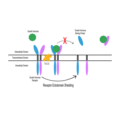 Growth Hormone Receptor Ectodomain Shedding
 -
 GHBP in 2:1 ratio with GH
 -
 GHBP in 1:1 ratio with GH


Ad. Transform your health with W8MD Weight Loss, Sleep & MedSpa

Tired of being overweight?
Special offer:
Budget GLP-1 weight loss medications
- Semaglutide starting from $29.99/week and up with insurance for visit of $59.99 and up per week self pay.
- Tirzepatide starting from $45.00/week and up (dose dependent) or $69.99/week and up self pay
✔ Same-week appointments, evenings & weekends
Learn more:
- GLP-1 weight loss clinic NYC
- W8MD's NYC medical weight loss
- W8MD Philadelphia GLP-1 shots
- Philadelphia GLP-1 injections
- Affordable GLP-1 shots NYC
|
WikiMD Medical Encyclopedia |
Medical Disclaimer: WikiMD is for informational purposes only and is not a substitute for professional medical advice. Content may be inaccurate or outdated and should not be used for diagnosis or treatment. Always consult your healthcare provider for medical decisions. Verify information with trusted sources such as CDC.gov and NIH.gov. By using this site, you agree that WikiMD is not liable for any outcomes related to its content. See full disclaimer.
Credits:Most images are courtesy of Wikimedia commons, and templates, categories Wikipedia, licensed under CC BY SA or similar.
Translate this page: - East Asian
中文,
日本,
한국어,
South Asian
हिन्दी,
தமிழ்,
తెలుగు,
Urdu,
ಕನ್ನಡ,
Southeast Asian
Indonesian,
Vietnamese,
Thai,
မြန်မာဘာသာ,
বাংলা
European
español,
Deutsch,
français,
Greek,
português do Brasil,
polski,
română,
русский,
Nederlands,
norsk,
svenska,
suomi,
Italian
Middle Eastern & African
عربى,
Turkish,
Persian,
Hebrew,
Afrikaans,
isiZulu,
Kiswahili,
Other
Bulgarian,
Hungarian,
Czech,
Swedish,
മലയാളം,
मराठी,
ਪੰਜਾਬੀ,
ગુજરાતી,
Portuguese,
Ukrainian
