Cellulase
Cellulase is an enzyme that breaks down cellulose, a polysaccharide that is the primary component of the cell wall in green plants. Cellulase is produced by certain bacteria, fungi, and protozoans that can decompose cellulose.
Structure and Function[edit]
Cellulase is a complex enzyme that consists of several subunits. Each subunit has a specific function in the breakdown of cellulose. The enzyme works by hydrolyzing the 1,4-beta-D-glycosidic linkages in cellulose, hemicellulose, lichenin, and cereal beta-D-glucans.
Cellulase has a significant role in the natural carbon cycle. By breaking down cellulose, it helps to release carbon dioxide into the atmosphere, which is then used by plants in the process of photosynthesis.
Industrial Applications[edit]
Cellulase has a wide range of industrial applications. It is used in the textile industry for the biopolishing of fabrics, in the food industry for the production of fruit and vegetable juices, and in the biofuel industry for the production of bioethanol from plant waste.
In the biofuel industry, cellulase is used to break down cellulose in plant waste into simple sugars. These sugars can then be fermented into ethanol, a type of biofuel. This process is seen as a sustainable alternative to fossil fuels, as it uses waste products and produces fewer greenhouse gases.
Medical Applications[edit]
In medicine, cellulase is used in the treatment of phytobezoars, a type of stomach blockage caused by the consumption of certain types of fruit and vegetables. Cellulase helps to break down the cellulose in the phytobezoar, allowing it to be passed through the digestive system.
Research and Development[edit]
Research is ongoing into the potential uses of cellulase in various industries. One area of interest is the development of genetically modified organisms that can produce cellulase. This could potentially increase the efficiency of biofuel production and reduce costs.

Cellulase[edit]
-
 Structure of cellulase enzyme
 -
 Ribbon diagram of cellulase
 -
 Types of cellulase
 -
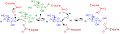 Mechanism of cellulase action
 -
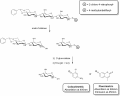 Use of enzyme-coupled reagents for the measurement of endo-cellulase


Ad. Transform your health with W8MD Weight Loss, Sleep & MedSpa

Tired of being overweight?
Special offer:
Budget GLP-1 weight loss medications
- Semaglutide starting from $29.99/week and up with insurance for visit of $59.99 and up per week self pay.
- Tirzepatide starting from $45.00/week and up (dose dependent) or $69.99/week and up self pay
✔ Same-week appointments, evenings & weekends
Learn more:
- GLP-1 weight loss clinic NYC
- W8MD's NYC medical weight loss
- W8MD Philadelphia GLP-1 shots
- Philadelphia GLP-1 injections
- Affordable GLP-1 shots NYC
|
WikiMD Medical Encyclopedia |
Medical Disclaimer: WikiMD is for informational purposes only and is not a substitute for professional medical advice. Content may be inaccurate or outdated and should not be used for diagnosis or treatment. Always consult your healthcare provider for medical decisions. Verify information with trusted sources such as CDC.gov and NIH.gov. By using this site, you agree that WikiMD is not liable for any outcomes related to its content. See full disclaimer.
Credits:Most images are courtesy of Wikimedia commons, and templates, categories Wikipedia, licensed under CC BY SA or similar.
Translate this page: - East Asian
中文,
日本,
한국어,
South Asian
हिन्दी,
தமிழ்,
తెలుగు,
Urdu,
ಕನ್ನಡ,
Southeast Asian
Indonesian,
Vietnamese,
Thai,
မြန်မာဘာသာ,
বাংলা
European
español,
Deutsch,
français,
Greek,
português do Brasil,
polski,
română,
русский,
Nederlands,
norsk,
svenska,
suomi,
Italian
Middle Eastern & African
عربى,
Turkish,
Persian,
Hebrew,
Afrikaans,
isiZulu,
Kiswahili,
Other
Bulgarian,
Hungarian,
Czech,
Swedish,
മലയാളം,
मराठी,
ਪੰਜਾਬੀ,
ગુજરાતી,
Portuguese,
Ukrainian
