Julia gens
Julia gens was one of the most ancient and noble patrician families in Ancient Rome, with its members playing a pivotal role in Roman history from the early days of the Republic through the age of the Roman Empire. The gens is perhaps best known through Gaius Julius Caesar, the dictator whose actions and assassination played a crucial role in the transformation of the Roman Republic into the Roman Empire. However, the Julia gens was much more than just Julius Caesar, encompassing a wide array of individuals who contributed to Roman military, political, and social life over several centuries.
Origin and History[edit]
The origins of the Julia gens are shrouded in myth and legend. According to Roman tradition, the Julii were descendants of Iulus, the son of the Trojan prince Aeneas, who was himself the son of the goddess Venus and a pivotal figure in both Homer's Iliad and Virgil's Aeneid. This divine ancestry was not only a source of pride for the Julii but also served as a political tool, enhancing their standing within Roman society.
Throughout the history of the Republic, members of the Julia gens held various high offices, including consul, praetor, and censor. They were known for their conservative stance in politics, often aligning with the optimates, the traditionalist faction within the Roman Senate.
Notable Members[edit]
While Gaius Julius Caesar is the most famous member of the gens, several other Julii made significant contributions to Roman history:
- Lucius Julius Caesar, a consul and staunch supporter of the Roman Republic, played a key role in the events leading up to the Social War (91–88 BC). - Julia (daughter of Julius Caesar), known for her beauty and intelligence, was married to Pompey the Great in a political alliance that temporarily united Caesar and Pompey, two of Rome's most powerful leaders. - Augustus (Octavianus), the adopted heir of Julius Caesar, became the first Roman Emperor and initiated the Pax Romana, a period of relative peace and stability that lasted for over two centuries.
Legacy[edit]
The legacy of the Julia gens is intertwined with the history and development of Rome itself. Through their political achievements, military exploits, and the eventual establishment of the Roman Empire under Augustus, the Julii left an indelible mark on the world. Their legacy is not only preserved in historical texts but also in the numerous monuments and architectural achievements that still stand in Rome today.
See Also[edit]
References[edit]
<references/>

This article is a ancient Rome–related stub. You can help WikiMD by expanding it!
-
 Bust of Gaius Julius Caesar in the Vatican Museum
 -
 Statue of Augustus, Lugdunum
 -
 Aeneas and the Tiber by B. Pinelli
 -
 Statue of Agricola at Bath
 -
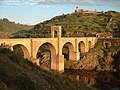 Bridge of Alcantara
.jpg)


Ad. Transform your life with W8MD's
GLP-1 weight loss injections special from $29.99 with insurance
|
WikiMD Medical Encyclopedia |
Medical Disclaimer: WikiMD is for informational purposes only and is not a substitute for professional medical advice. Content may be inaccurate or outdated and should not be used for diagnosis or treatment. Always consult your healthcare provider for medical decisions. Verify information with trusted sources such as CDC.gov and NIH.gov. By using this site, you agree that WikiMD is not liable for any outcomes related to its content. See full disclaimer.
Credits:Most images are courtesy of Wikimedia commons, and templates, categories Wikipedia, licensed under CC BY SA or similar.
Translate this page: - East Asian
中文,
日本,
한국어,
South Asian
हिन्दी,
தமிழ்,
తెలుగు,
Urdu,
ಕನ್ನಡ,
Southeast Asian
Indonesian,
Vietnamese,
Thai,
မြန်မာဘာသာ,
বাংলা
European
español,
Deutsch,
français,
Greek,
português do Brasil,
polski,
română,
русский,
Nederlands,
norsk,
svenska,
suomi,
Italian
Middle Eastern & African
عربى,
Turkish,
Persian,
Hebrew,
Afrikaans,
isiZulu,
Kiswahili,
Other
Bulgarian,
Hungarian,
Czech,
Swedish,
മലയാളം,
मराठी,
ਪੰਜਾਬੀ,
ગુજરાતી,
Portuguese,
Ukrainian
