Colorado River toad
Colorado River Toad
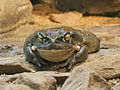
The Colorado River Toad (Incilius alvarius), also known as the Sonoran Desert Toad, is a large, semi-aquatic amphibian species native to the southwestern United States and northern Mexico. It is the largest toad in the United States, with adults commonly reaching lengths of 7.5 inches (19 cm).
Distribution and Habitat[edit]
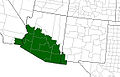
The Colorado River Toad is found in the lower Colorado River and the Gila River catchment areas, in southeastern California, New Mexico, Mexico and much of southern Arizona. It lives in both desert and semi-arid areas throughout its range. The toad is nocturnal, spending the day in burrows to avoid the heat, and is most active during the rainy season.
Description[edit]
The Colorado River Toad is recognized by its smooth, leathery skin and olive green to dark brown coloration. The toad has a large, round body with a short snout and two bulbous glands on its head, known as parotoid glands, which produce a potent toxin.
Behavior and Diet[edit]
The Colorado River Toad is an opportunistic feeder, eating a wide variety of insects, small mammals, and other amphibians. It is also known for its unusual defensive behavior. When threatened, it can puff up its body to appear larger and secrete a toxic substance from its parotoid glands.
Reproduction[edit]
Breeding takes place in shallow bodies of water, where the female lays thousands of eggs and the male fertilizes them externally. The eggs hatch into tadpoles, which undergo metamorphosis into toads within several weeks.
Conservation Status[edit]
The Colorado River Toad is not currently considered endangered, but its habitat is threatened by human encroachment and climate change. Conservation efforts are focused on preserving its natural habitat and monitoring population levels.
In Popular Culture[edit]
The Colorado River Toad has gained some notoriety due to its potent toxin, which can cause hallucinogenic effects if ingested. This has led to instances of recreational use and legal issues in some areas.
See Also[edit]
References[edit]

-
 Colorado River toad
 -
 Colorado River toad in Sonoran Desert
 -
 Colorado River toad
 -
 Sonoran toad

_(8-6-13)_78_circulo_montana,_patagonia_lake_ranch_estates,_scc,_az_-01_(9466158294).jpg)


Ad. Transform your health with W8MD Weight Loss, Sleep & MedSpa

Tired of being overweight?
Special offer:
Budget GLP-1 weight loss medications
- Semaglutide starting from $29.99/week and up with insurance for visit of $59.99 and up per week self pay.
- Tirzepatide starting from $45.00/week and up (dose dependent) or $69.99/week and up self pay
✔ Same-week appointments, evenings & weekends
Learn more:
- GLP-1 weight loss clinic NYC
- W8MD's NYC medical weight loss
- W8MD Philadelphia GLP-1 shots
- Philadelphia GLP-1 injections
- Affordable GLP-1 shots NYC
|
WikiMD Medical Encyclopedia |
Medical Disclaimer: WikiMD is for informational purposes only and is not a substitute for professional medical advice. Content may be inaccurate or outdated and should not be used for diagnosis or treatment. Always consult your healthcare provider for medical decisions. Verify information with trusted sources such as CDC.gov and NIH.gov. By using this site, you agree that WikiMD is not liable for any outcomes related to its content. See full disclaimer.
Credits:Most images are courtesy of Wikimedia commons, and templates, categories Wikipedia, licensed under CC BY SA or similar.
Translate this page: - East Asian
中文,
日本,
한국어,
South Asian
हिन्दी,
தமிழ்,
తెలుగు,
Urdu,
ಕನ್ನಡ,
Southeast Asian
Indonesian,
Vietnamese,
Thai,
မြန်မာဘာသာ,
বাংলা
European
español,
Deutsch,
français,
Greek,
português do Brasil,
polski,
română,
русский,
Nederlands,
norsk,
svenska,
suomi,
Italian
Middle Eastern & African
عربى,
Turkish,
Persian,
Hebrew,
Afrikaans,
isiZulu,
Kiswahili,
Other
Bulgarian,
Hungarian,
Czech,
Swedish,
മലയാളം,
मराठी,
ਪੰਜਾਬੀ,
ગુજરાતી,
Portuguese,
Ukrainian
