Cervical branch of the facial nerve
Cervical branch of the facial nerve
The cervical branch of the facial nerve is a significant peripheral nerve of the head and neck region. It is a branch of the facial nerve (cranial nerve VII), which is crucial for facial expression, among other functions. The cervical branch specifically innervates the platysma muscle, playing a pivotal role in facial expressions related to the lower face and neck.
Anatomy[edit]
The facial nerve, or cranial nerve VII, emerges from the brainstem between the pons and the medulla. It traverses the internal acoustic meatus to enter the facial canal within the temporal bone, giving rise to several branches, including the cervical branch. This particular branch exits the stylomastoid foramen and descends to innervate the platysma muscle, a broad, thin muscle in the superficial layer of the anterior neck.
Function[edit]
The primary function of the cervical branch of the facial nerve is motor innervation to the platysma muscle. The platysma is involved in lowering the lower lip and angle of the mouth, which is crucial for expressions of sadness or fright. It also contributes to the tension of the skin in the neck, aiding in the expression of surprise or alarm.
Clinical Significance[edit]
Damage to the cervical branch of the facial nerve can result in an asymmetrical facial appearance due to paralysis of the platysma muscle. This may manifest as an inability to depress the lower lip or create skin tension in the neck. Such damage is often a result of surgical procedures in the neck region, trauma, or pathological conditions affecting the facial nerve.
Bell's palsy, a condition that causes sudden, temporary weakness or paralysis of the facial muscles, can also affect the cervical branch, though its symptoms are more commonly associated with the upper branches of the facial nerve.
Diagnosis and Treatment[edit]
Diagnosis of cervical branch dysfunction typically involves a combination of clinical examination and imaging studies, such as MRI or CT scans, to assess the extent of nerve damage. Electromyography (EMG) can also be used to evaluate the electrical activity of the platysma muscle.
Treatment options vary depending on the cause and extent of the nerve damage. In cases of Bell's palsy, corticosteroids or antiviral medications may be prescribed. Physical therapy exercises can help in restoring muscle function. Surgical intervention may be considered in cases of severe trauma or when nerve damage is irreversible.
See Also[edit]

Cervical branch of the facial nerve[edit]
-
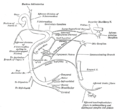 Cervical branch of the facial nerve
 -
 Cervical branch of the facial nerve
 -
 Cervical branch of the facial nerve
 -
 Cervical branch of the facial nerve
 -
 Cervical branch of the facial nerve


Ad. Transform your health with W8MD Weight Loss, Sleep & MedSpa

Tired of being overweight?
Special offer:
Budget GLP-1 weight loss medications
- Semaglutide starting from $29.99/week and up with insurance for visit of $59.99 and up per week self pay.
- Tirzepatide starting from $45.00/week and up (dose dependent) or $69.99/week and up self pay
✔ Same-week appointments, evenings & weekends
Learn more:
- GLP-1 weight loss clinic NYC
- W8MD's NYC medical weight loss
- W8MD Philadelphia GLP-1 shots
- Philadelphia GLP-1 injections
- Affordable GLP-1 shots NYC
|
WikiMD Medical Encyclopedia |
Medical Disclaimer: WikiMD is for informational purposes only and is not a substitute for professional medical advice. Content may be inaccurate or outdated and should not be used for diagnosis or treatment. Always consult your healthcare provider for medical decisions. Verify information with trusted sources such as CDC.gov and NIH.gov. By using this site, you agree that WikiMD is not liable for any outcomes related to its content. See full disclaimer.
Credits:Most images are courtesy of Wikimedia commons, and templates, categories Wikipedia, licensed under CC BY SA or similar.
Translate this page: - East Asian
中文,
日本,
한국어,
South Asian
हिन्दी,
தமிழ்,
తెలుగు,
Urdu,
ಕನ್ನಡ,
Southeast Asian
Indonesian,
Vietnamese,
Thai,
မြန်မာဘာသာ,
বাংলা
European
español,
Deutsch,
français,
Greek,
português do Brasil,
polski,
română,
русский,
Nederlands,
norsk,
svenska,
suomi,
Italian
Middle Eastern & African
عربى,
Turkish,
Persian,
Hebrew,
Afrikaans,
isiZulu,
Kiswahili,
Other
Bulgarian,
Hungarian,
Czech,
Swedish,
മലയാളം,
मराठी,
ਪੰਜਾਬੀ,
ગુજરાતી,
Portuguese,
Ukrainian
