Corey–Itsuno reduction
Corey–Itsuno reduction, also known as the Corey-Bakshi-Shibata (CBS) reduction, is a chemical reaction used in organic chemistry for the enantioselective reduction of ketones to secondary alcohols. This reaction employs a chiral oxazaborolidine catalyst, which was first reported by E.J. Corey and X-M. Cheng in 1987, and independently by Itsuno and co-workers. The catalyst is derived from proline, a naturally occurring amino acid, and is used in conjunction with borane (BH3) or its derivatives for the reduction process. The Corey–Itsuno reduction has become a fundamental tool in the synthesis of chiral molecules, particularly in the pharmaceutical industry, where the production of enantiomerically pure substances is crucial.
Reaction Mechanism[edit]
The mechanism of the Corey–Itsuno reduction involves the formation of a chiral oxazaborolidine catalyst from a proline derivative and a borane source. This catalyst complex then facilitates the reduction of the ketone to an alcohol, with the transfer of hydrogen atoms occurring in a manner that produces a high enantiomeric excess (ee) of the desired alcohol. The stereoselectivity of the reaction is determined by the chiral environment created by the oxazaborolidine catalyst, which directs the addition of hydrogen to the ketone in a preferential manner.
Applications[edit]
The Corey–Itsuno reduction has found widespread application in the synthesis of chiral alcohols, which are important building blocks in the production of various pharmaceuticals, agrochemicals, and natural products. Due to its high enantioselectivity, the reaction is particularly valuable in the synthesis of drugs that require a specific enantiomer for their biological activity.
Advantages[edit]
One of the main advantages of the Corey–Itsuno reduction is its high level of enantioselectivity, allowing for the production of enantiomerically pure alcohols. Additionally, the reaction conditions are generally mild, and the catalyst can be easily prepared from readily available materials. This makes the Corey–Itsuno reduction an attractive option for the synthesis of complex chiral molecules.
Limitations[edit]
Despite its many advantages, the Corey–Itsuno reduction does have some limitations. The reaction is primarily applicable to the reduction of ketones, and its use with other functional groups may not be as effective. Additionally, the cost of the chiral catalyst and the need for its careful preparation can be drawbacks in some applications.
See Also[edit]
References[edit]
<references/>

Corey–Itsuno reduction[edit]
-
 Corey–Itsuno reduction
 -
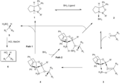 Transition state mechanism
 -
 Reaction scope
 -
 Application of Corey–Itsuno reduction


Ad. Transform your health with W8MD Weight Loss, Sleep & MedSpa

Tired of being overweight?
Special offer:
Budget GLP-1 weight loss medications
- Semaglutide starting from $29.99/week and up with insurance for visit of $59.99 and up per week self pay.
- Tirzepatide starting from $45.00/week and up (dose dependent) or $69.99/week and up self pay
✔ Same-week appointments, evenings & weekends
Learn more:
- GLP-1 weight loss clinic NYC
- W8MD's NYC medical weight loss
- W8MD Philadelphia GLP-1 shots
- Philadelphia GLP-1 injections
- Affordable GLP-1 shots NYC
|
WikiMD Medical Encyclopedia |
Medical Disclaimer: WikiMD is for informational purposes only and is not a substitute for professional medical advice. Content may be inaccurate or outdated and should not be used for diagnosis or treatment. Always consult your healthcare provider for medical decisions. Verify information with trusted sources such as CDC.gov and NIH.gov. By using this site, you agree that WikiMD is not liable for any outcomes related to its content. See full disclaimer.
Credits:Most images are courtesy of Wikimedia commons, and templates, categories Wikipedia, licensed under CC BY SA or similar.
Translate this page: - East Asian
中文,
日本,
한국어,
South Asian
हिन्दी,
தமிழ்,
తెలుగు,
Urdu,
ಕನ್ನಡ,
Southeast Asian
Indonesian,
Vietnamese,
Thai,
မြန်မာဘာသာ,
বাংলা
European
español,
Deutsch,
français,
Greek,
português do Brasil,
polski,
română,
русский,
Nederlands,
norsk,
svenska,
suomi,
Italian
Middle Eastern & African
عربى,
Turkish,
Persian,
Hebrew,
Afrikaans,
isiZulu,
Kiswahili,
Other
Bulgarian,
Hungarian,
Czech,
Swedish,
മലയാളം,
मराठी,
ਪੰਜਾਬੀ,
ગુજરાતી,
Portuguese,
Ukrainian
