Sulfur cycle
Sulfur Cycle
The sulfur cycle is a biogeochemical cycle that describes the movement of sulfur through the Earth's atmosphere, lithosphere, hydrosphere, and biosphere. Sulfur is an essential element for all living organisms, playing a crucial role in various biological processes.
Sulfur is present in the Earth's crust and is released into the atmosphere through volcanic activity, weathering of rocks, and human activities such as burning fossil fuels. Once in the atmosphere, sulfur can undergo various transformations, including oxidation and reduction reactions.
One of the key processes in the sulfur cycle is the microbial metabolism of sulfur compounds by certain bacteria and archaea. These microorganisms can oxidize sulfur compounds such as hydrogen sulfide (H2S) or elemental sulfur (S) to sulfate (SO4^2-), which can then be used by other organisms as a source of energy.
In aquatic environments, sulfur can also cycle between different forms. For example, sulfate-reducing bacteria can reduce sulfate to hydrogen sulfide in anaerobic conditions, contributing to the production of sulfide-rich sediments.
Plants play a crucial role in the sulfur cycle by taking up sulfate from the soil and incorporating it into organic compounds. When plants are consumed by animals, sulfur is transferred up the food chain. Decomposers in the soil then break down organic matter, releasing sulfur back into the environment.
Human activities, such as the burning of fossil fuels and industrial processes, have significantly altered the sulfur cycle. The release of sulfur dioxide (SO2) and other sulfur compounds into the atmosphere can lead to acid rain, which can have detrimental effects on ecosystems and human health.
Understanding the sulfur cycle is essential for managing environmental impacts and ensuring the sustainability of ecosystems. By studying the various processes involved in the sulfur cycle, scientists can develop strategies to mitigate the negative effects of human activities on sulfur cycling.

Sulfur_cycle[edit]
-
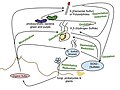 Sulfur cycle diagram in English
 -
 Dissimilatory sulfate reduction process
 -
 3'-Phosphoadenosine-5'-phosphosulfate structure
 -
 Biogeochemical sulfur cycle of marine sediments
 -
 Electron acceptor cascade in marine sediments


Ad. Transform your health with W8MD Weight Loss, Sleep & MedSpa

Tired of being overweight?
Special offer:
Budget GLP-1 weight loss medications
- Semaglutide starting from $29.99/week and up with insurance for visit of $59.99 and up per week self pay.
- Tirzepatide starting from $45.00/week and up (dose dependent) or $69.99/week and up self pay
✔ Same-week appointments, evenings & weekends
Learn more:
- GLP-1 weight loss clinic NYC
- W8MD's NYC medical weight loss
- W8MD Philadelphia GLP-1 shots
- Philadelphia GLP-1 injections
- Affordable GLP-1 shots NYC
|
WikiMD Medical Encyclopedia |
Medical Disclaimer: WikiMD is for informational purposes only and is not a substitute for professional medical advice. Content may be inaccurate or outdated and should not be used for diagnosis or treatment. Always consult your healthcare provider for medical decisions. Verify information with trusted sources such as CDC.gov and NIH.gov. By using this site, you agree that WikiMD is not liable for any outcomes related to its content. See full disclaimer.
Credits:Most images are courtesy of Wikimedia commons, and templates, categories Wikipedia, licensed under CC BY SA or similar.
Translate this page: - East Asian
中文,
日本,
한국어,
South Asian
हिन्दी,
தமிழ்,
తెలుగు,
Urdu,
ಕನ್ನಡ,
Southeast Asian
Indonesian,
Vietnamese,
Thai,
မြန်မာဘာသာ,
বাংলা
European
español,
Deutsch,
français,
Greek,
português do Brasil,
polski,
română,
русский,
Nederlands,
norsk,
svenska,
suomi,
Italian
Middle Eastern & African
عربى,
Turkish,
Persian,
Hebrew,
Afrikaans,
isiZulu,
Kiswahili,
Other
Bulgarian,
Hungarian,
Czech,
Swedish,
മലയാളം,
मराठी,
ਪੰਜਾਬੀ,
ગુજરાતી,
Portuguese,
Ukrainian
