Sweet bean paste
Sweet Bean Paste[edit]
Sweet bean paste, also known as Anko in Japan, is a popular ingredient used in various Asian cuisines. It is made from boiled legumes, which are then sweetened with sugar or honey. The most common types of sweet bean paste are made from adzuki beans, but it can also be made from other types of beans such as mung beans.
History[edit]
The use of sweet bean paste dates back to ancient times in Asia. It was first used in China during the Tang Dynasty and later spread to other parts of Asia including Japan and Korea. The paste was originally used as a medicinal remedy, but it gradually became a popular ingredient in desserts due to its sweet taste and smooth texture.
Preparation[edit]
The preparation of sweet bean paste involves soaking the beans overnight, boiling them until they become soft, and then mashing them into a paste. Sugar or honey is then added to sweeten the paste. The consistency of the paste can vary depending on the recipe. Some recipes call for a smooth paste, while others require a chunkier texture.
Uses[edit]
Sweet bean paste is used in a variety of dishes. In Japan, it is commonly used in desserts such as Mochi and Dorayaki. In China, it is often used in mooncakes and sweet soup balls. In Korea, sweet bean paste is used in a traditional dessert called Bungeoppang.
Varieties[edit]
There are several varieties of sweet bean paste, each with its own unique flavor and texture. The most common types include:
- Red Bean Paste: Made from adzuki beans, this is the most common type of sweet bean paste. It has a sweet, slightly nutty flavor and a smooth texture.
- White Bean Paste: Made from navy beans or other white beans, this paste has a milder flavor and a smoother texture than red bean paste.
- Black Bean Paste: Made from black beans, this paste has a rich, sweet flavor. It is often used in Korean cuisine.
- Green Bean Paste: Made from mung beans, this paste has a slightly sweet, nutty flavor. It is commonly used in Chinese cuisine.
Health Benefits[edit]
Sweet bean paste is not only delicious, but it also has several health benefits. Beans are a good source of protein and fiber, which can help to keep you feeling full and satisfied. They are also rich in vitamins and minerals, including iron, potassium, and magnesium.
See Also[edit]
References[edit]
- The Art of Making Sweet Bean Paste, by Kimiko Suzuki
- Asian Desserts: A Guide to Sweet Treats in Asia, by Linda Zhang
External Links[edit]

-
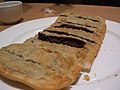 Red bean paste pancake
 -
 Making nokdu-songpyeon
 -
 Cream and sweet bean paste and strawberry sandwich in Nagoya
 -
 Bean paste flower


Ad. Transform your health with W8MD Weight Loss, Sleep & MedSpa

Tired of being overweight?
Special offer:
Budget GLP-1 weight loss medications
- Semaglutide starting from $29.99/week and up with insurance for visit of $59.99 and up per week self pay.
- Tirzepatide starting from $45.00/week and up (dose dependent) or $69.99/week and up self pay
✔ Same-week appointments, evenings & weekends
Learn more:
- GLP-1 weight loss clinic NYC
- W8MD's NYC medical weight loss
- W8MD Philadelphia GLP-1 shots
- Philadelphia GLP-1 injections
- Affordable GLP-1 shots NYC
|
WikiMD Medical Encyclopedia |
Medical Disclaimer: WikiMD is for informational purposes only and is not a substitute for professional medical advice. Content may be inaccurate or outdated and should not be used for diagnosis or treatment. Always consult your healthcare provider for medical decisions. Verify information with trusted sources such as CDC.gov and NIH.gov. By using this site, you agree that WikiMD is not liable for any outcomes related to its content. See full disclaimer.
Credits:Most images are courtesy of Wikimedia commons, and templates, categories Wikipedia, licensed under CC BY SA or similar.
Translate this page: - East Asian
中文,
日本,
한국어,
South Asian
हिन्दी,
தமிழ்,
తెలుగు,
Urdu,
ಕನ್ನಡ,
Southeast Asian
Indonesian,
Vietnamese,
Thai,
မြန်မာဘာသာ,
বাংলা
European
español,
Deutsch,
français,
Greek,
português do Brasil,
polski,
română,
русский,
Nederlands,
norsk,
svenska,
suomi,
Italian
Middle Eastern & African
عربى,
Turkish,
Persian,
Hebrew,
Afrikaans,
isiZulu,
Kiswahili,
Other
Bulgarian,
Hungarian,
Czech,
Swedish,
മലയാളം,
मराठी,
ਪੰਜਾਬੀ,
ગુજરાતી,
Portuguese,
Ukrainian
