Dorsal nerve of the penis
Dorsal nerve of the penis is a significant peripheral nerve of the penis. It is a branch of the pudendal nerve, which is itself a branch of the sacral plexus. The dorsal nerve of the penis plays a crucial role in the sensory innervation of the penis, contributing to the sensation of the penile shaft and the glans penis. Understanding its anatomy, function, and clinical significance is essential for medical professionals, particularly those specializing in urology and sexual medicine.
Anatomy[edit]
The dorsal nerve of the penis originates from the pudendal nerve, which arises from the ventral rami of the second, third, and fourth sacral nerves (S2-S4). After branching from the pudendal nerve, the dorsal nerve travels alongside the internal pudendal artery and enters the deep perineal space. It then runs along the dorsum of the penis, lying deep to the Buck's fascia and alongside the dorsal arteries and veins of the penis.
As it progresses towards the glans, the dorsal nerve of the penis divides into several branches, which innervate the skin of the penile shaft and the glans. It is important to note that the nerve does not innervate the corpus cavernosum directly, which is primarily involved in the erectile function of the penis.
Function[edit]
The primary function of the dorsal nerve of the penis is sensory. It provides the sensation to the skin of the penile shaft and the glans. This sensory input is crucial for sexual arousal and the perception of sexual stimuli. The nerve's role in sexual function highlights its importance in both sexual health and reproductive success.
Clinical Significance[edit]
Damage or injury to the dorsal nerve of the penis can lead to sensory deficits, affecting sexual function and satisfaction. Such damage may occur due to surgical procedures, trauma, or certain medical conditions. For instance, radical prostatectomy, a common treatment for prostate cancer, can pose a risk to the dorsal nerve, potentially leading to decreased penile sensation or erectile dysfunction.
Understanding the anatomy and pathway of the dorsal nerve is also crucial during penile surgeries, such as penile prosthesis implantation or circumcision, to minimize the risk of nerve damage.
Treatment and Management[edit]
Management of dorsal nerve injury depends on the cause and severity of the damage. In some cases, nerve function may recover over time without specific treatment. However, for more severe injuries, various strategies may be employed, including medication for neuropathic pain, physical therapy, or surgical intervention to repair or reconstruct the damaged nerve.
Conclusion[edit]
The dorsal nerve of the penis is a key component of the penile nervous system, with a primary role in the sensory innervation of the penis. Its significance in sexual function and satisfaction underscores the importance of preserving its integrity during medical and surgical procedures. Understanding its anatomy and clinical relevance is essential for healthcare providers involved in the management of conditions affecting the penis.

-
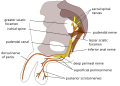 Diagram showing the course of the pudendal nerve.
 -
 Anatomy of the male pelvis, showing the dorsal nerve of the penis.
 -
 Nerve supply to the male genitalia, including the dorsal nerve of the penis.
 -
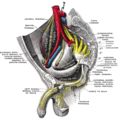 Detailed view of the male perineum, highlighting the dorsal nerve of the penis.


Ad. Transform your health with W8MD Weight Loss, Sleep & MedSpa

Tired of being overweight?
Special offer:
Budget GLP-1 weight loss medications
- Semaglutide starting from $29.99/week and up with insurance for visit of $59.99 and up per week self pay.
- Tirzepatide starting from $45.00/week and up (dose dependent) or $69.99/week and up self pay
✔ Same-week appointments, evenings & weekends
Learn more:
- GLP-1 weight loss clinic NYC
- W8MD's NYC medical weight loss
- W8MD Philadelphia GLP-1 shots
- Philadelphia GLP-1 injections
- Affordable GLP-1 shots NYC
|
WikiMD Medical Encyclopedia |
Medical Disclaimer: WikiMD is for informational purposes only and is not a substitute for professional medical advice. Content may be inaccurate or outdated and should not be used for diagnosis or treatment. Always consult your healthcare provider for medical decisions. Verify information with trusted sources such as CDC.gov and NIH.gov. By using this site, you agree that WikiMD is not liable for any outcomes related to its content. See full disclaimer.
Credits:Most images are courtesy of Wikimedia commons, and templates, categories Wikipedia, licensed under CC BY SA or similar.
Translate this page: - East Asian
中文,
日本,
한국어,
South Asian
हिन्दी,
தமிழ்,
తెలుగు,
Urdu,
ಕನ್ನಡ,
Southeast Asian
Indonesian,
Vietnamese,
Thai,
မြန်မာဘာသာ,
বাংলা
European
español,
Deutsch,
français,
Greek,
português do Brasil,
polski,
română,
русский,
Nederlands,
norsk,
svenska,
suomi,
Italian
Middle Eastern & African
عربى,
Turkish,
Persian,
Hebrew,
Afrikaans,
isiZulu,
Kiswahili,
Other
Bulgarian,
Hungarian,
Czech,
Swedish,
മലയാളം,
मराठी,
ਪੰਜਾਬੀ,
ગુજરાતી,
Portuguese,
Ukrainian
