Analeptic
An analeptic refers to a class of drugs that act as central nervous system stimulants. These medications primarily target the central nervous system to augment its activity. While commonly understood as CNS stimulants, the term "analeptic" can also be specifically associated with respiratory analeptics, drugs that act to stimulate the breathing muscles and thus enhance respiratory functions.
Classification[edit]
Analeptics can be broadly classified into:
- General CNS stimulants: These drugs stimulate the central nervous system.
- Respiratory analeptics: These specifically act on the breathing muscles to enhance respiration. Examples include doxapram.
Notable Drugs[edit]
- Doxapram: A respiratory analeptic.
- Prethcamide: Another drug in this category.
- Nikethamide: Once used as an analeptic, it has now been withdrawn from the market due to the risk of inducing convulsions.
Mechanism of Action[edit]
Analeptics operate via two main mechanisms:
- Blocking Inhibition: Some analeptics work by obstructing inhibitory pathways in the central nervous system. Examples include:
- Strychnine: Acts through glycine antagonism.
- Picrotoxin: Functions via GABA antagonism.
- Increasing Excitation: Other analeptics increase excitatory processes in the CNS. Examples of this mechanism include:
Historical Perspective[edit]
Historically, the term "analeptic" was used to denote substances that acted as restoratives. These were remedies employed to rejuvenate the body when it was weakened or wasted due to ailments or prolonged hunger. The contemporary usage of the term, particularly in the context of medicine, has evolved, but its root remains in the notion of restoration and stimulation.
Conclusion[edit]
Analeptics, with their primary function as central nervous system stimulants, have seen varied use in medical practice. While they offer potential benefits, especially in respiratory stimulation, it's crucial for practitioners to be aware of the associated risks, as exemplified by drugs like Nikethamide. As with all medications, understanding their mechanism of action and historical context can aid in their effective and safe application in clinical settings.

-
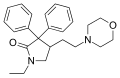 Doxapram chemical structure
 -
 Doxapram in vial
 -
 AMPA receptor structure
 -
 Caffeine chemical structure


Ad. Transform your health with W8MD Weight Loss, Sleep & MedSpa

Tired of being overweight?
Special offer:
Budget GLP-1 weight loss medications
- Semaglutide starting from $29.99/week and up with insurance for visit of $59.99 and up per week self pay.
- Tirzepatide starting from $45.00/week and up (dose dependent) or $69.99/week and up self pay
✔ Same-week appointments, evenings & weekends
Learn more:
- GLP-1 weight loss clinic NYC
- W8MD's NYC medical weight loss
- W8MD Philadelphia GLP-1 shots
- Philadelphia GLP-1 injections
- Affordable GLP-1 shots NYC
|
WikiMD Medical Encyclopedia |
Medical Disclaimer: WikiMD is for informational purposes only and is not a substitute for professional medical advice. Content may be inaccurate or outdated and should not be used for diagnosis or treatment. Always consult your healthcare provider for medical decisions. Verify information with trusted sources such as CDC.gov and NIH.gov. By using this site, you agree that WikiMD is not liable for any outcomes related to its content. See full disclaimer.
Credits:Most images are courtesy of Wikimedia commons, and templates, categories Wikipedia, licensed under CC BY SA or similar.
Translate this page: - East Asian
中文,
日本,
한국어,
South Asian
हिन्दी,
தமிழ்,
తెలుగు,
Urdu,
ಕನ್ನಡ,
Southeast Asian
Indonesian,
Vietnamese,
Thai,
မြန်မာဘာသာ,
বাংলা
European
español,
Deutsch,
français,
Greek,
português do Brasil,
polski,
română,
русский,
Nederlands,
norsk,
svenska,
suomi,
Italian
Middle Eastern & African
عربى,
Turkish,
Persian,
Hebrew,
Afrikaans,
isiZulu,
Kiswahili,
Other
Bulgarian,
Hungarian,
Czech,
Swedish,
മലയാളം,
मराठी,
ਪੰਜਾਬੀ,
ગુજરાતી,
Portuguese,
Ukrainian
