Urban reforestation
Urban Reforestation[edit]


Urban reforestation refers to the practice of planting trees and other vegetation in urban areas to improve the environment and quality of life for city dwellers. This practice is part of a broader movement towards sustainability and environmental conservation in urban settings.
Benefits[edit]
Urban reforestation offers numerous benefits, including:
- Improved Air Quality: Trees absorb pollutants and produce oxygen, helping to clean the air in densely populated areas.
- Temperature Regulation: Trees provide shade and release moisture through transpiration, which can help reduce the "urban heat island" effect.
- Biodiversity: Urban forests provide habitats for various species, promoting biodiversity within cities.
- Aesthetic and Recreational Value: Green spaces enhance the visual appeal of urban areas and provide spaces for recreation and relaxation.
- Stormwater Management: Trees help absorb rainwater, reducing runoff and the risk of flooding.
Challenges[edit]
Implementing urban reforestation can face several challenges, such as:
- Space Limitations: Finding suitable locations for planting in densely built environments can be difficult.
- Soil Quality: Urban soils are often compacted and contaminated, which can hinder tree growth.
- Maintenance: Trees require ongoing care, including watering, pruning, and protection from pests and diseases.
- Funding: Securing financial resources for planting and maintenance can be a significant hurdle.
Strategies[edit]
Successful urban reforestation initiatives often involve:
- Community Engagement: Involving local communities in planning and maintenance to ensure long-term success.
- Partnerships: Collaborating with local governments, non-profits, and businesses to pool resources and expertise.
- Species Selection: Choosing tree species that are well-suited to the local climate and soil conditions.
- Innovative Planting Techniques: Utilizing methods such as green roofs and vertical gardens to maximize space.
Case Studies[edit]
Several cities around the world have implemented successful urban reforestation projects:
- New York City: The MillionTreesNYC initiative aimed to plant one million trees across the city.
- Melbourne: The Urban Forest Strategy seeks to increase tree canopy cover to 40% by 2040.
- Singapore: Known as a "City in a Garden," Singapore has integrated extensive green spaces and tree planting into its urban planning.
Related Pages[edit]
References[edit]
-
 Urban reforestation effort in 2008
 -
 Zeytinburnu urban reforestation project
 -
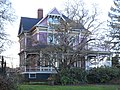 The big purple house blocked by a tree
Ad. Transform your health with W8MD Weight Loss, Sleep & MedSpa

Tired of being overweight?
Special offer:
Budget GLP-1 weight loss medications
- Semaglutide starting from $29.99/week and up with insurance for visit of $59.99 and up per week self pay.
- Tirzepatide starting from $45.00/week and up (dose dependent) or $69.99/week and up self pay
✔ Same-week appointments, evenings & weekends
Learn more:
- GLP-1 weight loss clinic NYC
- W8MD's NYC medical weight loss
- W8MD Philadelphia GLP-1 shots
- Philadelphia GLP-1 injections
- Affordable GLP-1 shots NYC
|
WikiMD Medical Encyclopedia |
Medical Disclaimer: WikiMD is for informational purposes only and is not a substitute for professional medical advice. Content may be inaccurate or outdated and should not be used for diagnosis or treatment. Always consult your healthcare provider for medical decisions. Verify information with trusted sources such as CDC.gov and NIH.gov. By using this site, you agree that WikiMD is not liable for any outcomes related to its content. See full disclaimer.
Credits:Most images are courtesy of Wikimedia commons, and templates, categories Wikipedia, licensed under CC BY SA or similar.
Translate this page: - East Asian
中文,
日本,
한국어,
South Asian
हिन्दी,
தமிழ்,
తెలుగు,
Urdu,
ಕನ್ನಡ,
Southeast Asian
Indonesian,
Vietnamese,
Thai,
မြန်မာဘာသာ,
বাংলা
European
español,
Deutsch,
français,
Greek,
português do Brasil,
polski,
română,
русский,
Nederlands,
norsk,
svenska,
suomi,
Italian
Middle Eastern & African
عربى,
Turkish,
Persian,
Hebrew,
Afrikaans,
isiZulu,
Kiswahili,
Other
Bulgarian,
Hungarian,
Czech,
Swedish,
മലയാളം,
मराठी,
ਪੰਜਾਬੀ,
ગુજરાતી,
Portuguese,
Ukrainian
