Aspergillus flavus
Aspergillus flavus is a species of fungus in the genus Aspergillus. It is known for its significant impact on both human and animal health, as well as its role in the decomposition of organic materials in nature.
Taxonomy[edit]
Aspergillus flavus belongs to the Aspergillus genus, which is comprised of a few hundred species. This genus is part of the Aspergillaceae family, within the order Eurotiales and the class Eurotiomycetes.
Morphology[edit]
Aspergillus flavus is characterized by its yellow-green spore producing structures, known as conidiophores. These structures are typically unbranched and have a roughened texture. The spores themselves are round and smooth, with a diameter of 3-6 micrometers.
Ecology[edit]
Aspergillus flavus is a saprophytic fungus, meaning it obtains its nutrients from dead or decaying organic matter. It is commonly found in soil and decaying vegetation, but can also be found in indoor environments, particularly in damp or water-damaged buildings.
Pathogenicity[edit]
Aspergillus flavus is a significant pathogen in both humans and animals. In humans, it can cause a disease known as aspergillosis, which can manifest as a variety of conditions including allergic reactions, lung infections, and systemic infections. In animals, it can cause a similar range of diseases, and is particularly problematic in poultry and livestock.
One of the major concerns with Aspergillus flavus is its production of aflatoxins, which are potent carcinogens. These toxins can contaminate crops and subsequently enter the food chain, posing a significant risk to both human and animal health.
Control[edit]
Control of Aspergillus flavus primarily involves preventing the conditions that allow for its growth and proliferation. This includes proper storage of crops and foodstuffs to prevent contamination, as well as the use of fungicides and biocontrol agents in agricultural settings.

-
 Aspergillus flavus
 -
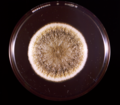 Aspergillus flavus in petri dish


Ad. Transform your health with W8MD Weight Loss, Sleep & MedSpa

Tired of being overweight?
Special offer:
Budget GLP-1 weight loss medications
- Semaglutide starting from $29.99/week and up with insurance for visit of $59.99 and up per week self pay.
- Tirzepatide starting from $45.00/week and up (dose dependent) or $69.99/week and up self pay
✔ Same-week appointments, evenings & weekends
Learn more:
- GLP-1 weight loss clinic NYC
- W8MD's NYC medical weight loss
- W8MD Philadelphia GLP-1 shots
- Philadelphia GLP-1 injections
- Affordable GLP-1 shots NYC
|
WikiMD Medical Encyclopedia |
Medical Disclaimer: WikiMD is for informational purposes only and is not a substitute for professional medical advice. Content may be inaccurate or outdated and should not be used for diagnosis or treatment. Always consult your healthcare provider for medical decisions. Verify information with trusted sources such as CDC.gov and NIH.gov. By using this site, you agree that WikiMD is not liable for any outcomes related to its content. See full disclaimer.
Credits:Most images are courtesy of Wikimedia commons, and templates, categories Wikipedia, licensed under CC BY SA or similar.
Translate this page: - East Asian
中文,
日本,
한국어,
South Asian
हिन्दी,
தமிழ்,
తెలుగు,
Urdu,
ಕನ್ನಡ,
Southeast Asian
Indonesian,
Vietnamese,
Thai,
မြန်မာဘာသာ,
বাংলা
European
español,
Deutsch,
français,
Greek,
português do Brasil,
polski,
română,
русский,
Nederlands,
norsk,
svenska,
suomi,
Italian
Middle Eastern & African
عربى,
Turkish,
Persian,
Hebrew,
Afrikaans,
isiZulu,
Kiswahili,
Other
Bulgarian,
Hungarian,
Czech,
Swedish,
മലയാളം,
मराठी,
ਪੰਜਾਬੀ,
ગુજરાતી,
Portuguese,
Ukrainian
