Nikolaas Tinbergen
Nikolaas Tinbergen (15 April 1907 – 21 December 1988) was a Dutch ethologist and ornithologist who is considered one of the founders of modern ethology, the study of animal behavior. He shared the Nobel Prize in Physiology or Medicine in 1973 with Karl von Frisch and Konrad Lorenz for their discoveries concerning organization and elicitation of individual and social behavior patterns in animals.
Early Life and Education[edit]
Nikolaas Tinbergen was born in The Hague, Netherlands. He was the brother of Jan Tinbergen, who won the first Nobel Prize in Economic Sciences in 1969. Tinbergen began his higher education at Leiden University where he studied biology. His early work was influenced by his teacher, Hendrik Brugmans, an early Dutch ethologist.
Career and Research[edit]
Tinbergen's research was primarily focused on the study of instinctive behavior in animals. He is best known for his work on the herring gull, including studies on the stimulus that triggers the pecking response of herring gull chicks. One of his most significant contributions to ethology is the concept of the fixed action pattern, a sequence of instinctive behaviors that once started, runs to completion.
Tinbergen also developed the four questions that are now considered the framework for ethological analysis: What are the mechanisms that cause the behavior? How does the behavior develop during the life of the animal? What is the behavior's survival value? And how does the behavior evolve?
In addition to his work on animal behavior, Tinbergen applied his ethological approach to human behavior, particularly in the study of autistic children, which he began in the late 1960s. He believed that ethological methods could provide insights into the causes and treatment of autism.
Legacy[edit]
Tinbergen's work laid the foundation for the modern study of animal behavior and had a profound influence on the development of psychology, particularly in the areas of child development and evolutionary psychology. His approach to studying behavior by asking mechanistic, ontogenetic, adaptive, and evolutionary questions has become a standard framework in ethology.
Tinbergen's contributions to science were recognized with numerous awards, including the Nobel Prize in Physiology or Medicine. His legacy continues to influence the fields of ethology, psychology, and beyond.
Selected Works[edit]
- The Study of Instinct (1951)
- Social Behaviour in Animals (1953)
- The Herring Gull's World (1953)
See Also[edit]

-
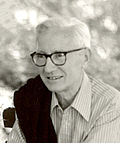 Nikolaas Tinbergen in 1978
 -
 Nikolaas Tinbergen


Ad. Transform your health with W8MD Weight Loss, Sleep & MedSpa

Tired of being overweight?
Special offer:
Budget GLP-1 weight loss medications
- Semaglutide starting from $29.99/week and up with insurance for visit of $59.99 and up per week self pay.
- Tirzepatide starting from $45.00/week and up (dose dependent) or $69.99/week and up self pay
✔ Same-week appointments, evenings & weekends
Learn more:
- GLP-1 weight loss clinic NYC
- W8MD's NYC medical weight loss
- W8MD Philadelphia GLP-1 shots
- Philadelphia GLP-1 injections
- Affordable GLP-1 shots NYC
|
WikiMD Medical Encyclopedia |
Medical Disclaimer: WikiMD is for informational purposes only and is not a substitute for professional medical advice. Content may be inaccurate or outdated and should not be used for diagnosis or treatment. Always consult your healthcare provider for medical decisions. Verify information with trusted sources such as CDC.gov and NIH.gov. By using this site, you agree that WikiMD is not liable for any outcomes related to its content. See full disclaimer.
Credits:Most images are courtesy of Wikimedia commons, and templates, categories Wikipedia, licensed under CC BY SA or similar.
Translate this page: - East Asian
中文,
日本,
한국어,
South Asian
हिन्दी,
தமிழ்,
తెలుగు,
Urdu,
ಕನ್ನಡ,
Southeast Asian
Indonesian,
Vietnamese,
Thai,
မြန်မာဘာသာ,
বাংলা
European
español,
Deutsch,
français,
Greek,
português do Brasil,
polski,
română,
русский,
Nederlands,
norsk,
svenska,
suomi,
Italian
Middle Eastern & African
عربى,
Turkish,
Persian,
Hebrew,
Afrikaans,
isiZulu,
Kiswahili,
Other
Bulgarian,
Hungarian,
Czech,
Swedish,
മലയാളം,
मराठी,
ਪੰਜਾਬੀ,
ગુજરાતી,
Portuguese,
Ukrainian
