Cowpea chlorotic mottle virus
Cowpea Chlorotic Mottle Virus (CCMV) is a plant pathogen that specifically targets legumes, particularly cowpeas (Vigna unguiculata). It is a member of the Bromoviridae family, which comprises viruses known for their tripartite RNA genomes and isometric particles. CCMV is responsible for causing significant economic losses in agriculture by reducing the quality and yield of infected crops. The virus is characterized by inducing symptoms such as chlorosis, mottling, and stunting in host plants.
Overview[edit]
CCMV is a spherical virus with a diameter of approximately 28 nm. It has a tri-segmented RNA genome, encapsulated within a protein coat known as a capsid. The genome segments are labeled as RNA1, RNA2, and RNA3, each encoding for different proteins essential for the virus's replication and assembly. RNA1 and RNA2 encode for the replication proteins, while RNA3 is split into two parts: one part encodes for the movement protein, and the other part, after a subgenomic RNA is produced, encodes for the coat protein.
Transmission[edit]
The virus is primarily transmitted through mechanical means and by several species of aphids in a non-persistent manner. This means that the aphids can acquire the virus by feeding on an infected plant and then transmit it to a healthy plant within a short period. However, the virus is not retained by the aphid for a long duration. Seed transmission has also been reported, though it is not the primary mode of spread.
Symptoms[edit]
Infected plants exhibit a range of symptoms including, but not limited to, chlorotic mottling of the leaves, leaf distortion, stunting, and reduced yield. The severity of the symptoms can vary based on the virus strain, environmental conditions, and the susceptibility of the host plant. Early infection can lead to significant yield losses, making timely diagnosis and management crucial.
Management[edit]
Management of CCMV involves an integrated approach combining cultural, biological, and chemical strategies. Cultural practices include the use of virus-free seeds, crop rotation, and the removal of infected plants to reduce virus sources. Biological control methods focus on managing aphid populations, as they are the primary vectors of the virus. Chemical control can be applied as a last resort, using insecticides to control aphid vectors. However, the indiscriminate use of chemicals can lead to resistance and environmental concerns.
Research and Development[edit]
Research on CCMV has contributed significantly to the understanding of virus structure, replication, and host-virus interactions. The virus has also been used as a model system in nanotechnology for the development of novel materials and drug delivery systems, owing to its well-characterized protein coat and ability to be genetically engineered.
See Also[edit]

-
 Cowpea chlorotic mottle virus
 -
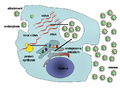 Cowpea chlorotic mottle virus
 -
 Cowpea chlorotic mottle virus


Ad. Transform your health with W8MD Weight Loss, Sleep & MedSpa

Tired of being overweight?
Special offer:
Budget GLP-1 weight loss medications
- Semaglutide starting from $29.99/week and up with insurance for visit of $59.99 and up per week self pay.
- Tirzepatide starting from $45.00/week and up (dose dependent) or $69.99/week and up self pay
✔ Same-week appointments, evenings & weekends
Learn more:
- GLP-1 weight loss clinic NYC
- W8MD's NYC medical weight loss
- W8MD Philadelphia GLP-1 shots
- Philadelphia GLP-1 injections
- Affordable GLP-1 shots NYC
|
WikiMD Medical Encyclopedia |
Medical Disclaimer: WikiMD is for informational purposes only and is not a substitute for professional medical advice. Content may be inaccurate or outdated and should not be used for diagnosis or treatment. Always consult your healthcare provider for medical decisions. Verify information with trusted sources such as CDC.gov and NIH.gov. By using this site, you agree that WikiMD is not liable for any outcomes related to its content. See full disclaimer.
Credits:Most images are courtesy of Wikimedia commons, and templates, categories Wikipedia, licensed under CC BY SA or similar.
Translate this page: - East Asian
中文,
日本,
한국어,
South Asian
हिन्दी,
தமிழ்,
తెలుగు,
Urdu,
ಕನ್ನಡ,
Southeast Asian
Indonesian,
Vietnamese,
Thai,
မြန်မာဘာသာ,
বাংলা
European
español,
Deutsch,
français,
Greek,
português do Brasil,
polski,
română,
русский,
Nederlands,
norsk,
svenska,
suomi,
Italian
Middle Eastern & African
عربى,
Turkish,
Persian,
Hebrew,
Afrikaans,
isiZulu,
Kiswahili,
Other
Bulgarian,
Hungarian,
Czech,
Swedish,
മലയാളം,
मराठी,
ਪੰਜਾਬੀ,
ગુજરાતી,
Portuguese,
Ukrainian
