Immunoglobulin light chain
Immunoglobulin light chains are integral components of antibody molecules, which play a crucial role in the immune system's ability to fight off pathogens. Each antibody consists of two heavy chains and two light chains that are linked together by disulfide bonds. The light chains are smaller than the heavy chains and are classified into two types: kappa (κ) and lambda (λ), which differ in their amino acid sequences and in their distribution within different types of antibodies.
Structure and Function
The immunoglobulin light chain is composed of two regions: a variable region (VL) and a constant region (CL). The VL region is important for the antigen-binding specificity of the antibody, allowing it to recognize and bind to a specific antigen. The CL region, on the other hand, contributes to the structural integrity of the antibody and interacts with other components of the immune system.
The light chains play a critical role in the function of antibodies. By binding to antigens, antibodies can neutralize pathogens directly or mark them for destruction by other immune cells. The specificity of this binding is determined by the unique structure of the VL region, which varies between different antibodies.
Types of Light Chains
There are two main types of immunoglobulin light chains: kappa (κ) and lambda (λ). In humans, the kappa type is more common, with about two-thirds of antibodies containing kappa light chains and one-third containing lambda light chains. The ratio of kappa to lambda light chains can vary between species and can be used as a diagnostic marker in certain diseases.
Kappa Light Chains
Kappa light chains are encoded by the IGK gene locus on chromosome 2 in humans. They are characterized by a specific set of variable (V), joining (J), and constant (C) gene segments that undergo recombination during B-cell development to generate a diverse repertoire of antibodies.
Lambda Light Chains
Lambda light chains are encoded by the IGL gene locus on chromosome 22 in humans. Like kappa chains, they also consist of V, J, and C gene segments that recombine to produce diverse antibodies. However, the organization and number of gene segments in the lambda locus differ from those in the kappa locus.
Clinical Significance
Immunoglobulin light chains are of clinical significance in several contexts. The ratio of kappa to lambda light chains can be altered in certain diseases, such as multiple myeloma, a type of blood cancer that affects plasma cells. In this disease, malignant plasma cells produce excessive amounts of a single type of light chain, known as a monoclonal light chain or Bence Jones protein, which can be detected in the blood or urine.
Light chain amyloidosis is another condition associated with abnormal production of light chains. In this disease, misfolded light chains accumulate in tissues, leading to organ dysfunction.
Diagnosis and Treatment
The measurement of serum free light chains (FLCs) is an important diagnostic tool in the evaluation of plasma cell disorders and other conditions affecting the immune system. Treatment of diseases involving abnormal light chain production focuses on targeting the underlying condition, such as using chemotherapy or immunotherapy to treat multiple myeloma.
Conclusion
Immunoglobulin light chains are essential for the diversity and specificity of the antibody response, playing a key role in the body's defense against pathogens. Understanding their structure, function, and clinical significance is crucial for diagnosing and treating diseases related to the immune system.
This article is a immunology stub. You can help WikiMD by expanding it!
-
 Diagram of antibody chains
 -
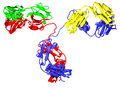 Structure of IgG2 antibody


Immunoglobulin_light_chain
-
Diagram of antibody chains
-
Structure of Immunoglobulin G2
Ad. Transform your life with W8MD's Budget GLP-1 injections from $29.99


W8MD offers a medical weight loss programs including NYC medical weight loss and Philadelphia medical weight loss offering:
- Budget GLP1 shots (generic and brand names) such as
- Learn more: Budget GLP1 weight loss injections NYC & Philadelphia GLP1 weight loss shots
- Most insurances accepted
- Budget GLP1 weight loss injections such as Semaglutide starting from $29.99/week and $45.00/week (Tirzepatide) with insurance.
NYC weight loss doctor appointmentsNYC weight loss doctor appointments
Start your NYC weight loss journey today at our:
- Call 718-946-5500 for NYC or 215-676-2334 for Philadelphia
- Tags:
GLP1 weight loss doctor NYC, Zepbound NYC, Budget GLP1 weight loss injections, Philadelphia medical weight loss, Wegovy NYC, Brooklyn weight loss, Wegovy NYC, Budget GLP1 shots NYC


|
WikiMD's Wellness Encyclopedia |
| Let Food Be Thy Medicine Medicine Thy Food - Hippocrates |
Medical Disclaimer: WikiMD is not a substitute for professional medical advice. The information on WikiMD is provided as an information resource only, may be incorrect, outdated or misleading, and is not to be used or relied on for any diagnostic or treatment purposes. Please consult your health care provider before making any healthcare decisions or for guidance about a specific medical condition. WikiMD expressly disclaims responsibility, and shall have no liability, for any damages, loss, injury, or liability whatsoever suffered as a result of your reliance on the information contained in this site. By visiting this site you agree to the foregoing terms and conditions, which may from time to time be changed or supplemented by WikiMD. If you do not agree to the foregoing terms and conditions, you should not enter or use this site. See full disclaimer.
Credits:Most images are courtesy of Wikimedia commons, and templates, categories Wikipedia, licensed under CC BY SA or similar.
Translate this page: - East Asian
中文,
日本,
한국어,
South Asian
हिन्दी,
தமிழ்,
తెలుగు,
Urdu,
ಕನ್ನಡ,
Southeast Asian
Indonesian,
Vietnamese,
Thai,
မြန်မာဘာသာ,
বাংলা
European
español,
Deutsch,
français,
Greek,
português do Brasil,
polski,
română,
русский,
Nederlands,
norsk,
svenska,
suomi,
Italian
Middle Eastern & African
عربى,
Turkish,
Persian,
Hebrew,
Afrikaans,
isiZulu,
Kiswahili,
Other
Bulgarian,
Hungarian,
Czech,
Swedish,
മലയാളം,
मराठी,
ਪੰਜਾਬੀ,
ગુજરાતી,
Portuguese,
Ukrainian


