Glandular metaplasia
Glandular branches are specialized structures in the body that are part of the larger endocrine system. They are responsible for the production and secretion of hormones that regulate a wide range of bodily functions.
Anatomy and Function[edit]
Glandular branches are found in various glands throughout the body. These include the pituitary gland, the thyroid gland, the adrenal glands, and the pancreas. Each of these glands contains specialized cells that produce specific hormones.
The hormones produced by glandular branches are released into the bloodstream and transported to target cells or organs in the body. These hormones act as chemical messengers, triggering specific responses in the target cells.
Types of Glandular Branches[edit]
There are several types of glandular branches, each associated with a specific gland and hormone production.
Pituitary Gland[edit]
The pituitary gland is often referred to as the "master gland" because it controls the function of many other glands in the body. It has two main parts: the anterior pituitary and the posterior pituitary. Each part produces different hormones.
Thyroid Gland[edit]
The thyroid gland is located in the neck and produces thyroid hormones, which regulate the body's metabolism.
Adrenal Glands[edit]
The adrenal glands are located on top of the kidneys and produce a variety of hormones, including cortisol and adrenaline.
Pancreas[edit]
The pancreas is both an endocrine and exocrine gland. As an endocrine gland, it produces insulin and glucagon, which regulate blood sugar levels.
Disorders of Glandular Branches[edit]
Disorders of glandular branches can lead to a variety of health problems. These can include diabetes, hypothyroidism, hyperthyroidism, and Addison's disease. Treatment for these disorders often involves hormone replacement therapy.
See Also[edit]

-
 Glandular metaplasia
 -
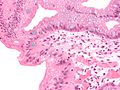 Glandular metaplasia


Ad. Transform your life with W8MD's
GLP-1 weight loss injections special from $29.99 with insurance
|
WikiMD Medical Encyclopedia |
Medical Disclaimer: WikiMD is for informational purposes only and is not a substitute for professional medical advice. Content may be inaccurate or outdated and should not be used for diagnosis or treatment. Always consult your healthcare provider for medical decisions. Verify information with trusted sources such as CDC.gov and NIH.gov. By using this site, you agree that WikiMD is not liable for any outcomes related to its content. See full disclaimer.
Credits:Most images are courtesy of Wikimedia commons, and templates, categories Wikipedia, licensed under CC BY SA or similar.
Translate this page: - East Asian
中文,
日本,
한국어,
South Asian
हिन्दी,
தமிழ்,
తెలుగు,
Urdu,
ಕನ್ನಡ,
Southeast Asian
Indonesian,
Vietnamese,
Thai,
မြန်မာဘာသာ,
বাংলা
European
español,
Deutsch,
français,
Greek,
português do Brasil,
polski,
română,
русский,
Nederlands,
norsk,
svenska,
suomi,
Italian
Middle Eastern & African
عربى,
Turkish,
Persian,
Hebrew,
Afrikaans,
isiZulu,
Kiswahili,
Other
Bulgarian,
Hungarian,
Czech,
Swedish,
മലയാളം,
मराठी,
ਪੰਜਾਬੀ,
ગુજરાતી,
Portuguese,
Ukrainian
