European plaice
European Plaice[edit]
The European plaice, scientifically known as Pleuronectes platessa, is a flatfish species that belongs to the family Pleuronectidae. It is commonly found in the coastal waters of the northeastern Atlantic Ocean, ranging from the Barents Sea to the Mediterranean Sea.
Description[edit]
The European plaice has a distinctive oval-shaped body, with both eyes located on the right side. It can grow up to 50 centimeters in length and weigh around 2 kilograms. The upper side of the fish is usually brownish or greenish in color, while the underside is white. It has a rough skin with small scales and a small mouth with sharp teeth.
Habitat and Distribution[edit]
European plaice is primarily found in sandy or muddy seabeds, often in shallow waters up to 200 meters deep. It prefers areas with a moderate current and is commonly seen near estuaries, bays, and coastal zones. This species is widely distributed along the European coasts, from Norway and Iceland in the north to Portugal and the Mediterranean Sea in the south.
Diet and Feeding Habits[edit]
The European plaice is a carnivorous fish that feeds on a variety of small marine organisms. Its diet mainly consists of crustaceans, mollusks, worms, and small fish. It uses its well-developed sense of smell and sight to locate its prey, and then ambushes them by burying itself in the sandy or muddy substrate.
Reproduction[edit]
European plaice reaches sexual maturity at around 3 to 4 years of age. The spawning season usually occurs during the spring and summer months, with peak activity in May and June. Females release their eggs into the water column, where they are fertilized by the males. The eggs hatch within a week, and the larvae drift in the water until they settle on the seabed.
Conservation Status[edit]
The European plaice is not currently listed as a threatened species. However, overfishing and habitat degradation pose significant threats to its population. Various measures, such as fishing quotas and habitat protection, have been implemented to ensure the sustainable management of this species.
See Also[edit]
References[edit]
-
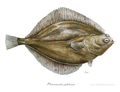 European plaice
 -
 European plaice
 -
 European plaice landings


Ad. Transform your health with W8MD Weight Loss, Sleep & MedSpa

Tired of being overweight?
Get started with evidence based, physician-supervised
affordable GLP-1 weight loss injections
Now available in New York City and Philadelphia:
- Semaglutide starting from $59.99/week and up
- Tirzepatide starting from $69.99/week and up (dose dependent)
✔ Evidence-based medical weight loss ✔ Insurance-friendly visits available ✔ Same-week appointments, evenings & weekends
Learn more:
Start your transformation today with W8MD weight loss centers.
|
WikiMD Medical Encyclopedia |
Medical Disclaimer: WikiMD is for informational purposes only and is not a substitute for professional medical advice. Content may be inaccurate or outdated and should not be used for diagnosis or treatment. Always consult your healthcare provider for medical decisions. Verify information with trusted sources such as CDC.gov and NIH.gov. By using this site, you agree that WikiMD is not liable for any outcomes related to its content. See full disclaimer.
Credits:Most images are courtesy of Wikimedia commons, and templates, categories Wikipedia, licensed under CC BY SA or similar.
Translate this page: - East Asian
中文,
日本,
한국어,
South Asian
हिन्दी,
தமிழ்,
తెలుగు,
Urdu,
ಕನ್ನಡ,
Southeast Asian
Indonesian,
Vietnamese,
Thai,
မြန်မာဘာသာ,
বাংলা
European
español,
Deutsch,
français,
Greek,
português do Brasil,
polski,
română,
русский,
Nederlands,
norsk,
svenska,
suomi,
Italian
Middle Eastern & African
عربى,
Turkish,
Persian,
Hebrew,
Afrikaans,
isiZulu,
Kiswahili,
Other
Bulgarian,
Hungarian,
Czech,
Swedish,
മലയാളം,
मराठी,
ਪੰਜਾਬੀ,
ગુજરાતી,
Portuguese,
Ukrainian
