Geographical indication
Geographical indication (GI) is a name or sign used on certain products which corresponds to a specific geographical location or origin (e.g., a town, region, or country). The use of a GI may act as a certification that the product possesses certain qualities, is made according to traditional methods, or enjoys a certain reputation, due to its geographical origin.
Definition and legal framework[edit]
Geographical indication is a concept in intellectual property law that refers to the use of a geographical name (or a traditional equivalent) that is recognized for a specific product. The GI tag ensures that none other than those registered as authorized users (or at least those residing inside the geographic territory) are allowed to use the popular product name.
In international law, geographical indications are covered by Article 22 of the Trade-Related Aspects of Intellectual Property Rights (TRIPS) Agreement, which came into force in 1995 under the World Trade Organization (WTO). This agreement, also known as the TRIPS Agreement, was the first international treaty to recognize and protect geographical indications.
Types of geographical indications[edit]
There are three types of geographical indications: Protected Designation of Origin (PDO), Protected Geographical Indication (PGI), and Traditional Speciality Guaranteed (TSG). These are schemes designed to protect the reputation of regional foods and promote rural and agricultural activity.
Geographical indications by country[edit]
Each country has its own laws and systems for protecting geographical indications. For example, in the European Union, geographical indications are protected under EU law to prevent misuse and imitation of regional food products. In India, the Geographical Indications of Goods (Registration and Protection) Act, 1999 provides for the registration and better protection of geographical indications relating to goods.
Economic and social impact[edit]
Geographical indications can have significant economic and social impacts. They can add value to products and contribute to rural development by promoting the sustainability of agricultural production and food systems. They can also help to preserve cultural heritage and traditional knowledge.
See also[edit]
- Appellation
- Indication of source
- Terroir
- List of geographical indications in India
- List of geographical indications in the European Union


-
 Geographical indication collective dimension
 -
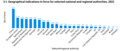 Geographical indications in force for selected national and regional authorities in 2022


Ad. Transform your health with W8MD Weight Loss, Sleep & MedSpa

Tired of being overweight?
Special offer:
Budget GLP-1 weight loss medications
- Semaglutide starting from $29.99/week and up with insurance for visit of $59.99 and up per week self pay.
- Tirzepatide starting from $45.00/week and up (dose dependent) or $69.99/week and up self pay
✔ Same-week appointments, evenings & weekends
Learn more:
- GLP-1 weight loss clinic NYC
- W8MD's NYC medical weight loss
- W8MD Philadelphia GLP-1 shots
- Philadelphia GLP-1 injections
- Affordable GLP-1 shots NYC
|
WikiMD Medical Encyclopedia |
Medical Disclaimer: WikiMD is for informational purposes only and is not a substitute for professional medical advice. Content may be inaccurate or outdated and should not be used for diagnosis or treatment. Always consult your healthcare provider for medical decisions. Verify information with trusted sources such as CDC.gov and NIH.gov. By using this site, you agree that WikiMD is not liable for any outcomes related to its content. See full disclaimer.
Credits:Most images are courtesy of Wikimedia commons, and templates, categories Wikipedia, licensed under CC BY SA or similar.
Translate this page: - East Asian
中文,
日本,
한국어,
South Asian
हिन्दी,
தமிழ்,
తెలుగు,
Urdu,
ಕನ್ನಡ,
Southeast Asian
Indonesian,
Vietnamese,
Thai,
မြန်မာဘာသာ,
বাংলা
European
español,
Deutsch,
français,
Greek,
português do Brasil,
polski,
română,
русский,
Nederlands,
norsk,
svenska,
suomi,
Italian
Middle Eastern & African
عربى,
Turkish,
Persian,
Hebrew,
Afrikaans,
isiZulu,
Kiswahili,
Other
Bulgarian,
Hungarian,
Czech,
Swedish,
മലയാളം,
मराठी,
ਪੰਜਾਬੀ,
ગુજરાતી,
Portuguese,
Ukrainian
