Nerve allograft
Nerve Allograft
A nerve allograft is a surgical graft involving the transplantation of nerve tissue from a donor to a recipient, used primarily to repair or replace damaged nerves. This procedure is a critical component of reconstructive surgery and neurosurgery, offering hope for patients suffering from nerve injuries that cannot be repaired through direct suturing or autografts (where the patient's own tissue is used).
Overview
Nerve allografts are utilized in situations where autograft options are limited or would cause significant morbidity at the donor site. Unlike autografts, allografts do not require the sacrifice of a healthy nerve, making them a valuable option for extensive nerve damage repair. The process involves the transplantation of nerve tissue from a cadaveric donor to the recipient, after which the allograft undergoes a process of axonal degeneration and regeneration, allowing the recipient's axons to grow across the graft and restore nerve function.
Indications
Nerve allografts are indicated for patients with:
- Gap lesions where direct nerve repair is not possible
- Extensive nerve damage where autografts are not viable
- Previous unsuccessful nerve repair attempts
Advantages and Disadvantages
Advantages
- Eliminates donor site morbidity associated with autografts
- Provides an option for long gap nerve repairs
- Reduces the number of surgeries and overall recovery time
Disadvantages
- Risk of immune rejection
- Potential for slower nerve regeneration compared to autografts
- Higher cost and limited availability
Procedure
The nerve allograft procedure involves several steps:
- Harvesting of the donor nerve, followed by preparation and sterilization to reduce immunogenicity
- Surgical removal of the damaged nerve segment in the recipient
- Precise alignment and attachment of the allograft to the nerve ends using microsurgical techniques
- Post-operative immunosuppression to prevent graft rejection
Recovery and Rehabilitation
Recovery involves careful monitoring for signs of rejection and regular physical therapy to promote nerve regeneration and functional recovery. The success of nerve allografts depends on the patient's age, the location and extent of the injury, and the length of the nerve gap.
Future Directions
Research is ongoing to enhance the efficacy of nerve allografts, including the use of growth factors, stem cell therapy, and improvements in immunosuppressive regimens. These advancements aim to improve the speed and quality of nerve regeneration, expanding the potential applications of nerve allografts in neurosurgery and reconstructive surgery.

-
Nerve allograft
-
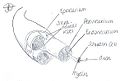 Nerve anatomy
 -
Process of nerve allograft

Ad. Transform your life with W8MD's
GLP-1 weight loss injections special from $29.99


W8MD Medical Weight Loss, Sleep and Medspa offers physician-supervised medical weight loss programs: NYC medical weight loss Philadelphia medical weight loss
Affordable GLP-1 Weight Loss ShotsAffordable GLP-1 Weight Loss Shots
Budget GLP-1 injections NYC (insurance & self-pay options) Popular treatments:
- Semaglutide starting from $29.99/week
- Tirzepatide starting from $45.00/week
✔ Most insurances accepted for visits ✔ Prior authorization support when eligible
Start your physician weight loss NYC journey today:
📍 NYC: Brooklyn weight loss center 📍 Philadelphia: Philadelphia weight loss center
📞 Call: 718-946-5500 (NYC) | 215-676-2334 (Philadelphia)
Tags: Affordable GLP1 weight loss NYC, Wegovy NYC, Zepbound NYC, Philadelphia medical weight loss


|
WikiMD Medical Encyclopedia |
Medical Disclaimer: WikiMD is not a substitute for professional medical advice. The information on WikiMD is provided as an information resource only, may be incorrect, outdated or misleading, and is not to be used or relied on for any diagnostic or treatment purposes. Please consult your health care provider before making any healthcare decisions or for guidance about a specific medical condition. WikiMD expressly disclaims responsibility, and shall have no liability, for any damages, loss, injury, or liability whatsoever suffered as a result of your reliance on the information contained in this site. By visiting this site you agree to the foregoing terms and conditions, which may from time to time be changed or supplemented by WikiMD. If you do not agree to the foregoing terms and conditions, you should not enter or use this site. See full disclaimer.
Credits:Most images are courtesy of Wikimedia commons, and templates, categories Wikipedia, licensed under CC BY SA or similar.
Translate this page: - East Asian
中文,
日本,
한국어,
South Asian
हिन्दी,
தமிழ்,
తెలుగు,
Urdu,
ಕನ್ನಡ,
Southeast Asian
Indonesian,
Vietnamese,
Thai,
မြန်မာဘာသာ,
বাংলা
European
español,
Deutsch,
français,
Greek,
português do Brasil,
polski,
română,
русский,
Nederlands,
norsk,
svenska,
suomi,
Italian
Middle Eastern & African
عربى,
Turkish,
Persian,
Hebrew,
Afrikaans,
isiZulu,
Kiswahili,
Other
Bulgarian,
Hungarian,
Czech,
Swedish,
മലയാളം,
मराठी,
ਪੰਜਾਬੀ,
ગુજરાતી,
Portuguese,
Ukrainian


