Fluorodeoxyglucose (18F)
Fluorodeoxyglucose (18F) (FDG) is a radiopharmaceutical used in the medical imaging modality positron emission tomography (PET). Chemically, it is 2-deoxy-2-18Ffluoro-D-glucose, a glucose analog, with the positron-emitting radioactive isotope fluorine-18 substituted for the normal hydroxyl group at the 2' position in the glucose molecule.
Chemistry
The uptake of FDG by cells is regulated by the enzyme hexokinase, which phosphorylates glucose to form glucose-6-phosphate. The phosphorylated FDG, being nearly structurally identical to glucose, is similarly transported into cells by the glucose transporter (GLUT). Once inside, FDG is phosphorylated to FDG-6-phosphate, which cannot be further metabolized by most tissues. As a result, FDG-6-phosphate accumulates in the cell.
Medical Use
In oncology, FDG is used in PET scanning to assess abnormal glucose metabolism and to differentiate benign from malignant lesions. It is also used in cardiology for myocardial viability studies, and in neurology to diagnose Alzheimer's disease, epilepsy, and other conditions.
Production
FDG is produced by nuclear transmutation of oxygen-18 to fluorine-18 in a cyclotron, followed by chemical synthesis of the radiotracer.
Safety
The radiation dose received from an FDG PET scan is comparable to that received from conventional radiology procedures. However, as with any radiopharmaceutical, there is a risk of radiation exposure, which should be minimized by following appropriate safety procedures.
See Also

-
Fluorodeoxyglucose (18F) molecule structure
-
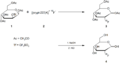 Synthesis of 18FDG
 -
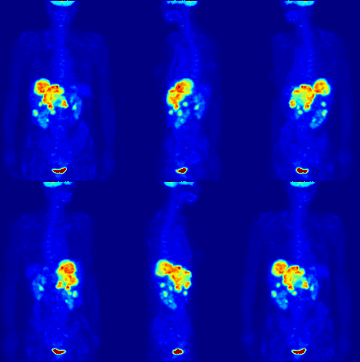 PET scan animation
 -
 Image of a laboratory setup


Ad. Transform your life with W8MD's
GLP-1 weight loss injections special from $29.99 with insurance
|
WikiMD Medical Encyclopedia |
Medical Disclaimer: WikiMD is for informational purposes only and is not a substitute for professional medical advice. Content may be inaccurate or outdated and should not be used for diagnosis or treatment. Always consult your healthcare provider for medical decisions. Verify information with trusted sources such as CDC.gov and NIH.gov. By using this site, you agree that WikiMD is not liable for any outcomes related to its content. See full disclaimer.
Credits:Most images are courtesy of Wikimedia commons, and templates, categories Wikipedia, licensed under CC BY SA or similar.
Translate this page: - East Asian
中文,
日本,
한국어,
South Asian
हिन्दी,
தமிழ்,
తెలుగు,
Urdu,
ಕನ್ನಡ,
Southeast Asian
Indonesian,
Vietnamese,
Thai,
မြန်မာဘာသာ,
বাংলা
European
español,
Deutsch,
français,
Greek,
português do Brasil,
polski,
română,
русский,
Nederlands,
norsk,
svenska,
suomi,
Italian
Middle Eastern & African
عربى,
Turkish,
Persian,
Hebrew,
Afrikaans,
isiZulu,
Kiswahili,
Other
Bulgarian,
Hungarian,
Czech,
Swedish,
മലയാളം,
मराठी,
ਪੰਜਾਬੀ,
ગુજરાતી,
Portuguese,
Ukrainian

.png)