Zuppa toscana
Zuppa Toscana is a traditional Italian soup originating from the Tuscany region. The name translates to "Tuscan soup" in English. It is a hearty dish that is popular in Italy and has gained recognition worldwide, particularly in the United States, where it is a staple on the menu of the restaurant chain Olive Garden.
Ingredients[edit]
Zuppa Toscana typically includes common ingredients found in the Tuscany region. The main ingredients are kale, cannellini beans, potatoes, celery, carrots, onion, tomato pulp, bacon, extra virgin olive oil, salt, powdered chili, and toasted Tuscan bread. Some variations may include Italian sausage, heavy cream, or chicken broth.
Preparation[edit]
The preparation of Zuppa Toscana involves cooking the vegetables and beans in a large pot until they are soft. The bacon is cooked separately until it is crispy, then added to the pot. The soup is then simmered for an extended period, allowing the flavors to meld together. The toasted Tuscan bread is typically added at the end, giving the soup a unique texture and added flavor.
Variations[edit]
While the traditional Zuppa Toscana recipe is quite standard in Italy, variations of the soup have become popular in other countries. In the United States, for example, the restaurant chain Olive Garden serves a version of Zuppa Toscana that includes Italian sausage and heavy cream, which are not typically found in the traditional Italian version.
Cultural Significance[edit]
Zuppa Toscana is a staple of Tuscan cuisine and is often served as a starter course during meals. It is particularly popular during the colder months, as it is a hearty soup that can be quite filling. The soup is also a common dish during the holiday season.
See Also[edit]

Zuppa toscana[edit]
-
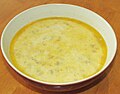 A bowl of Zuppa Toscana prepared from the Wikibooks recipe
.JPG)
Ad. Transform your life with W8MD's
GLP-1 weight loss injections special from $29.99 with insurance
|
WikiMD Medical Encyclopedia |
Medical Disclaimer: WikiMD is for informational purposes only and is not a substitute for professional medical advice. Content may be inaccurate or outdated and should not be used for diagnosis or treatment. Always consult your healthcare provider for medical decisions. Verify information with trusted sources such as CDC.gov and NIH.gov. By using this site, you agree that WikiMD is not liable for any outcomes related to its content. See full disclaimer.
Credits:Most images are courtesy of Wikimedia commons, and templates, categories Wikipedia, licensed under CC BY SA or similar.
Translate this page: - East Asian
中文,
日本,
한국어,
South Asian
हिन्दी,
தமிழ்,
తెలుగు,
Urdu,
ಕನ್ನಡ,
Southeast Asian
Indonesian,
Vietnamese,
Thai,
မြန်မာဘာသာ,
বাংলা
European
español,
Deutsch,
français,
Greek,
português do Brasil,
polski,
română,
русский,
Nederlands,
norsk,
svenska,
suomi,
Italian
Middle Eastern & African
عربى,
Turkish,
Persian,
Hebrew,
Afrikaans,
isiZulu,
Kiswahili,
Other
Bulgarian,
Hungarian,
Czech,
Swedish,
മലയാളം,
मराठी,
ਪੰਜਾਬੀ,
ગુજરાતી,
Portuguese,
Ukrainian
