Tendon transfer
Tendon transfer is a surgical procedure that is used to improve lost functions of the body. This procedure is commonly used in patients with nerve injury resulting in muscle paralysis, or in children with birth defects of the limbs.
Overview[edit]
Tendon transfer is a type of surgery that is used to restore the lost functions of a muscle or group of muscles. It involves moving a tendon from its original attachment to a new one to restore the function of a muscle or group of muscles that are no longer working. The procedure is commonly used in patients with nerve injury resulting in muscle paralysis, or in children with birth defects of the limbs.
Indications[edit]
Tendon transfer is indicated in cases where there is loss of muscle function due to nerve injury. This can occur in conditions such as brachial plexus injury, spinal cord injury, peripheral nerve injury, and cerebral palsy. It is also indicated in children with birth defects of the limbs.
Procedure[edit]
The procedure involves moving a tendon from its original attachment to a new one. The surgeon makes an incision in the skin over the muscle to be moved. The tendon is then detached from its original attachment and moved to its new location. The new attachment is secured with sutures.
Complications[edit]
Complications of tendon transfer can include infection, bleeding, and damage to nearby nerves and blood vessels. There is also a risk of the tendon not healing in its new location, which can result in loss of function.
See also[edit]
References[edit]
<references />
 | This medical article is a stub. You can help WikiMD by expanding the page. |
-
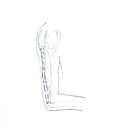 Deltoid-to-triceps transfer

Medical Disclaimer: WikiMD is for informational purposes only and is not a substitute for professional medical advice. Content may be inaccurate or outdated and should not be used for diagnosis or treatment. Always consult your healthcare provider for medical decisions. Verify information with trusted sources such as CDC.gov and NIH.gov. By using this site, you agree that WikiMD is not liable for any outcomes related to its content. See full disclaimer.
Credits:Most images are courtesy of Wikimedia commons, and templates, categories Wikipedia, licensed under CC BY SA or similar.
Translate this page: - East Asian
中文,
日本,
한국어,
South Asian
हिन्दी,
தமிழ்,
తెలుగు,
Urdu,
ಕನ್ನಡ,
Southeast Asian
Indonesian,
Vietnamese,
Thai,
မြန်မာဘာသာ,
বাংলা
European
español,
Deutsch,
français,
Greek,
português do Brasil,
polski,
română,
русский,
Nederlands,
norsk,
svenska,
suomi,
Italian
Middle Eastern & African
عربى,
Turkish,
Persian,
Hebrew,
Afrikaans,
isiZulu,
Kiswahili,
Other
Bulgarian,
Hungarian,
Czech,
Swedish,
മലയാളം,
मराठी,
ਪੰਜਾਬੀ,
ગુજરાતી,
Portuguese,
Ukrainian
