Araucanian herring
Chemical compound used historically in medicine
| Chemical Compound | |
|---|---|
| Identifiers | |
| CAS Number | |
| PubChem CID | |
| ChemSpider ID | |
| UNII | |
| ChEBI | |
| ChEMBL | |
| Properties | |
| Chemical Formula | |
| Molar Mass | |
| Appearance | |
| Density | |
| Melting Point | |
| Boiling Point | |
| Hazards | |
| GHS Pictograms | [[File:|50px]] |
| GHS Signal Word | |
| GHS Hazard Statements | |
| NFPA 704 | [[File:|50px]] |
| References | |
Antimony potassium tartrate, also known as tartar emetic, is a chemical compound with the formula K_Sb_(C_H_O_)_. It is a coordination complex of antimony and potassium with tartaric acid. Historically, it was used in medicine as an emetic, a treatment for parasitic infections, and as a pesticide.
Chemical structure and properties[edit]
Antimony potassium tartrate is a white crystalline powder that is soluble in water. The compound is a coordination complex where antimony is in the +3 oxidation state, coordinated to the tartrate anion. The structure of the compound can be described as a dimer, with two antimony atoms each coordinated to two tartrate ligands.
Historical medical use[edit]
Antimony potassium tartrate was widely used in the 19th and early 20th centuries as a treatment for various ailments. It was commonly used as an emetic to induce vomiting in cases of poisoning. Additionally, it was employed in the treatment of schistosomiasis and other parasitic diseases. However, due to its toxicity and the development of safer alternatives, its use in medicine has declined.
Toxicity[edit]
The compound is known to be toxic, and ingestion can lead to symptoms such as nausea, vomiting, diarrhea, and abdominal pain. Chronic exposure can result in more severe health effects, including damage to the liver and kidneys. Due to these risks, the use of antimony potassium tartrate in medicine has been largely discontinued.
Modern applications[edit]
While its use in medicine has decreased, antimony potassium tartrate is still used in some industrial applications. It is used as a mordant in dyeing and as a pesticide. Its role in these applications is primarily due to its ability to bind to proteins and other biological molecules.
Related pages[edit]
Gallery[edit]
-
 Structural formula of antimony potassium tartrate
 -
 3D structure of the anion
 -
 Historical image of tartar emetic
 -
 3D structure (x-axis view)
 -
 3D structure (y-axis view)
 -
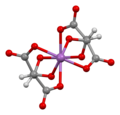 3D structure (z-axis view)


Araucanian herring[edit]
-
 Capture production of Araucanian herring in thousand tonnes from 1950 to 2022

Ad. Transform your life with W8MD's
GLP-1 weight loss injections special from $29.99 with insurance
|
WikiMD Medical Encyclopedia |
Medical Disclaimer: WikiMD is for informational purposes only and is not a substitute for professional medical advice. Content may be inaccurate or outdated and should not be used for diagnosis or treatment. Always consult your healthcare provider for medical decisions. Verify information with trusted sources such as CDC.gov and NIH.gov. By using this site, you agree that WikiMD is not liable for any outcomes related to its content. See full disclaimer.
Credits:Most images are courtesy of Wikimedia commons, and templates, categories Wikipedia, licensed under CC BY SA or similar.
Translate this page: - East Asian
中文,
日本,
한국어,
South Asian
हिन्दी,
தமிழ்,
తెలుగు,
Urdu,
ಕನ್ನಡ,
Southeast Asian
Indonesian,
Vietnamese,
Thai,
မြန်မာဘာသာ,
বাংলা
European
español,
Deutsch,
français,
Greek,
português do Brasil,
polski,
română,
русский,
Nederlands,
norsk,
svenska,
suomi,
Italian
Middle Eastern & African
عربى,
Turkish,
Persian,
Hebrew,
Afrikaans,
isiZulu,
Kiswahili,
Other
Bulgarian,
Hungarian,
Czech,
Swedish,
മലയാളം,
मराठी,
ਪੰਜਾਬੀ,
ગુજરાતી,
Portuguese,
Ukrainian
