Traffic
Traffic
Traffic refers to the movement of vehicles, pedestrians, and animals along roads, streets, and highways. It encompasses the flow of cars, trucks, bicycles, and other conveyances, as well as the management and regulation of this movement to ensure safety and efficiency.
History
The concept of traffic has evolved significantly over time. In ancient times, roads were primarily used for the movement of people and goods by foot or animal-drawn carts. With the advent of the Industrial Revolution, the volume and speed of traffic increased, necessitating the development of more sophisticated road networks and traffic management systems.
Types of Traffic
Traffic can be categorized into several types:
- Vehicular traffic: This includes cars, trucks, buses, and motorcycles. It is the most common form of traffic in urban areas.
- Pedestrian traffic: The movement of people on foot, which is especially significant in city centers and around public transport hubs.
- Bicycle traffic: Cyclists are an important part of urban traffic, and many cities have developed dedicated bike lanes to accommodate them.
- Animal traffic: In some rural or developing areas, animals such as horses or oxen are still used for transportation.
Traffic Management
Traffic management involves the use of various strategies and technologies to regulate and control traffic flow. This includes:
- Traffic signals: Devices that control vehicle and pedestrian movement at intersections.
- Road signs: Provide information and instructions to road users.
- Roundabouts: Circular intersections designed to improve traffic flow and reduce accidents.
- Traffic laws: Regulations that govern the behavior of road users to ensure safety and order.
Traffic Congestion
Traffic congestion occurs when the demand for road space exceeds the available capacity, leading to slower speeds and longer travel times. It is a common problem in urban areas and can be caused by various factors, including road construction, accidents, and high vehicle density.
Environmental Impact
Traffic has a significant impact on the environment, contributing to air pollution, noise pollution, and greenhouse gas emissions. Efforts to mitigate these effects include the promotion of public transportation, carpooling, and the use of electric vehicles.
Related Pages
Gallery
-
 Traffic on the George Washington Bridge
 -
 Historical traffic with horse-drawn wagons
 -
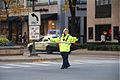 Traffic in Chicago
 -
 Traffic control in Rome
 -
 Traffic near a fast-food restaurant
 -
 Overview of a four-way intersection
 -
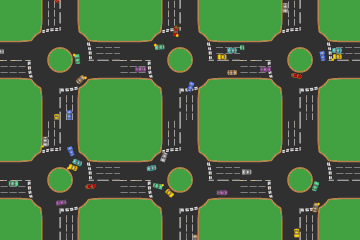 Animation of a roundabout
 -
 Diagram of a street intersection
 -
 Video of protected intersections for bicyclists
 -
Pedestrian crossing in 1961
-
 Train passing through an intersection
 -
 Video of lane changing in Gothenburg
 -
 Traffic in Anawrahta Road
 -
 Peak hour traffic in Melbourne
.jpg)


Ad. Transform your health with W8MD Weight Loss, Sleep & MedSpa

Tired of being overweight?
Special offer:
Budget GLP-1 weight loss medications
- Semaglutide starting from $29.99/week and up with insurance for visit of $59.99 and up per week self pay.
- Tirzepatide starting from $45.00/week and up (dose dependent) or $69.99/week and up self pay
✔ Same-week appointments, evenings & weekends ✔ Tele visits available with certain limitations Learn more:
- GLP-1 weight loss clinic NYC
- W8MD's NYC medical weight loss
- W8MD Philadelphia GLP-1 shots
- Philadelphia GLP-1 injections
- Affordable GLP-1 shots NYC
- Budget GLP-1 shots
|
WikiMD Medical Encyclopedia |
Medical Disclaimer: WikiMD is for informational purposes only and is not a substitute for professional medical advice. Content may be inaccurate or outdated and should not be used for diagnosis or treatment. Always consult your healthcare provider for medical decisions. Verify information with trusted sources such as CDC.gov and NIH.gov. By using this site, you agree that WikiMD is not liable for any outcomes related to its content. See full disclaimer.
Credits:Most images are courtesy of Wikimedia commons, and templates, categories Wikipedia, licensed under CC BY SA or similar.
Translate this page: - East Asian
中文,
日本,
한국어,
South Asian
हिन्दी,
தமிழ்,
తెలుగు,
Urdu,
ಕನ್ನಡ,
Southeast Asian
Indonesian,
Vietnamese,
Thai,
မြန်မာဘာသာ,
বাংলা
European
español,
Deutsch,
français,
Greek,
português do Brasil,
polski,
română,
русский,
Nederlands,
norsk,
svenska,
suomi,
Italian
Middle Eastern & African
عربى,
Turkish,
Persian,
Hebrew,
Afrikaans,
isiZulu,
Kiswahili,
Other
Bulgarian,
Hungarian,
Czech,
Swedish,
മലയാളം,
मराठी,
ਪੰਜਾਬੀ,
ગુજરાતી,
Portuguese,
Ukrainian

