Giant axonal neuropathy
Overview
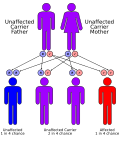
Giant Axonal Neuropathy (GAN) is a rare genetic disorder that affects the nervous system. It is characterized by the abnormal growth of axons, which are the long, threadlike extensions of neurons that transmit nerve impulses. This condition is inherited in an autosomal recessive pattern, meaning that both copies of the gene in each cell have mutations.
Pathophysiology
GAN is caused by mutations in the GAN gene, which provides instructions for making a protein called gigaxonin. This protein is involved in the breakdown of intermediate filaments, which are part of the cell's cytoskeleton. In individuals with GAN, the abnormal gigaxonin leads to the accumulation of intermediate filaments in the axons, causing them to swell and become dysfunctional.
Clinical Features
The symptoms of Giant Axonal Neuropathy typically begin in early childhood. Affected individuals often experience:
- Peripheral neuropathy, leading to muscle weakness and loss of sensation in the arms and legs.
- Ataxia, or lack of coordination.
- Dysarthria, or difficulty speaking.
- Optic atrophy, which can lead to vision problems.
- Curly hair, which is a distinctive feature in many patients.
Diagnosis
Diagnosis of GAN is based on clinical evaluation, family history, and genetic testing. Nerve biopsy may reveal the characteristic giant axons filled with disorganized neurofilaments. Genetic testing can confirm mutations in the GAN gene.
Management
There is currently no cure for Giant Axonal Neuropathy. Management focuses on symptomatic treatment and supportive care, including:
- Physical therapy to maintain mobility and muscle strength.
- Occupational therapy to assist with daily activities.
- Speech therapy for communication difficulties.
- Orthopedic devices to support weakened limbs.
Prognosis
The progression of GAN varies among individuals, but it is generally a progressive disorder. Most affected individuals experience a decline in motor and sensory functions over time, leading to significant disability.
Related pages
-
 Giant axonal neuropathy

Ad. Transform your life with W8MD's
GLP-1 weight loss injections special from $29.99 with insurance
|
WikiMD Medical Encyclopedia |
Medical Disclaimer: WikiMD is for informational purposes only and is not a substitute for professional medical advice. Content may be inaccurate or outdated and should not be used for diagnosis or treatment. Always consult your healthcare provider for medical decisions. Verify information with trusted sources such as CDC.gov and NIH.gov. By using this site, you agree that WikiMD is not liable for any outcomes related to its content. See full disclaimer.
Credits:Most images are courtesy of Wikimedia commons, and templates, categories Wikipedia, licensed under CC BY SA or similar.
Translate this page: - East Asian
中文,
日本,
한국어,
South Asian
हिन्दी,
தமிழ்,
తెలుగు,
Urdu,
ಕನ್ನಡ,
Southeast Asian
Indonesian,
Vietnamese,
Thai,
မြန်မာဘာသာ,
বাংলা
European
español,
Deutsch,
français,
Greek,
português do Brasil,
polski,
română,
русский,
Nederlands,
norsk,
svenska,
suomi,
Italian
Middle Eastern & African
عربى,
Turkish,
Persian,
Hebrew,
Afrikaans,
isiZulu,
Kiswahili,
Other
Bulgarian,
Hungarian,
Czech,
Swedish,
മലയാളം,
मराठी,
ਪੰਜਾਬੀ,
ગુજરાતી,
Portuguese,
Ukrainian
