Army Medical Museum and Library
Apparent Death
Apparent death, also known as thanatosis or tonic immobility, is a behavior observed in various animal species where an individual feigns death to evade predators. This anti-predator strategy is employed by a wide range of animals, including mammals, birds, reptiles, amphibians, and insects.
Mechanism
Apparent death is typically triggered by a threat or physical contact with a predator. The animal enters a state of immobility, often accompanied by a reduction in breathing and heart rate. This state can last from a few seconds to several minutes, depending on the species and the situation.
Examples in Nature
- Opossums are well-known for their dramatic display of thanatosis, often referred to as "playing possum." When threatened, an opossum will collapse, become limp, and emit a foul odor to mimic the scent of a decaying carcass.
- The Grass snake (Natrix natrix) is another example of a reptile that employs thanatosis. When threatened, it will roll onto its back, open its mouth, and may even release a foul-smelling substance to deter predators.
- The Phyllomedusa burmeisteri, a species of tree frog, can also exhibit tonic immobility when threatened, remaining motionless to avoid detection.
- The Common swift (Apus apus) may enter a state of apparent death when handled by humans, remaining still until the threat has passed.
- In the insect world, the Iridomyrmex purpureus, a type of ant, can feign death to avoid predation by other ants or larger predators.
- The Heterodon platirhinos, commonly known as the Eastern hognose snake, is famous for its elaborate death-feigning behavior, which includes convulsions and the release of a foul odor.
Evolutionary Advantages
The primary advantage of apparent death is to increase the likelihood of survival by deceiving predators into believing the prey is already dead and therefore not worth pursuing. This behavior can be particularly effective against predators that prefer live prey or are cautious of potential traps.
Related Behaviors
Apparent death is related to other anti-predator strategies such as camouflage, mimicry, and evasive maneuvers. Each of these strategies serves to reduce the likelihood of predation through different means.
Related Pages
Gallery
-
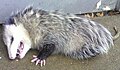 An opossum feigning death.
 -
 Grass snake playing dead.
 -
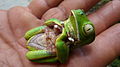 Phyllomedusa burmeisteri in a state of tonic immobility.
 -
 Common swift exhibiting apparent death.
 -
 Ants in a defensive posture.
 -
 Example of a bird species that may use thanatosis.
 -
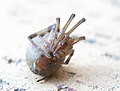 Spider in a state of thanatosis.
 -
 Eastern hognose snake feigning death.

_playing_dead_(14178349634).jpg)
.JPG)


-
 Army Medical Museum and Library
 -
 Army Medical Museum and Library
 -
 Surgeon General's Library


Ad. Transform your life with W8MD's Budget GLP-1 injections from $75


W8MD offers a medical weight loss program to lose weight in Philadelphia. Our physician-supervised medical weight loss provides:
- Weight loss injections in NYC (generic and brand names):
- Zepbound / Mounjaro, Wegovy / Ozempic, Saxenda
- Most insurances accepted or discounted self-pay rates. We will obtain insurance prior authorizations if needed.
- Generic GLP1 weight loss injections from $75 for the starting dose.
- Also offer prescription weight loss medications including Phentermine, Qsymia, Diethylpropion, Contrave etc.
NYC weight loss doctor appointmentsNYC weight loss doctor appointments
Start your NYC weight loss journey today at our NYC medical weight loss and Philadelphia medical weight loss clinics.
- Call 718-946-5500 to lose weight in NYC or for medical weight loss in Philadelphia 215-676-2334.
- Tags:NYC medical weight loss, Philadelphia lose weight Zepbound NYC, Budget GLP1 weight loss injections, Wegovy Philadelphia, Wegovy NYC, Philadelphia medical weight loss, Brookly weight loss and Wegovy NYC


|
WikiMD's Wellness Encyclopedia |
| Let Food Be Thy Medicine Medicine Thy Food - Hippocrates |
Medical Disclaimer: WikiMD is not a substitute for professional medical advice. The information on WikiMD is provided as an information resource only, may be incorrect, outdated or misleading, and is not to be used or relied on for any diagnostic or treatment purposes. Please consult your health care provider before making any healthcare decisions or for guidance about a specific medical condition. WikiMD expressly disclaims responsibility, and shall have no liability, for any damages, loss, injury, or liability whatsoever suffered as a result of your reliance on the information contained in this site. By visiting this site you agree to the foregoing terms and conditions, which may from time to time be changed or supplemented by WikiMD. If you do not agree to the foregoing terms and conditions, you should not enter or use this site. See full disclaimer.
Credits:Most images are courtesy of Wikimedia commons, and templates, categories Wikipedia, licensed under CC BY SA or similar.
Translate this page: - East Asian
中文,
日本,
한국어,
South Asian
हिन्दी,
தமிழ்,
తెలుగు,
Urdu,
ಕನ್ನಡ,
Southeast Asian
Indonesian,
Vietnamese,
Thai,
မြန်မာဘာသာ,
বাংলা
European
español,
Deutsch,
français,
Greek,
português do Brasil,
polski,
română,
русский,
Nederlands,
norsk,
svenska,
suomi,
Italian
Middle Eastern & African
عربى,
Turkish,
Persian,
Hebrew,
Afrikaans,
isiZulu,
Kiswahili,
Other
Bulgarian,
Hungarian,
Czech,
Swedish,
മലയാളം,
मराठी,
ਪੰਜਾਬੀ,
ગુજરાતી,
Portuguese,
Ukrainian
