Yale University
Yale University is a private Ivy League research university in New Haven, Connecticut. Founded in 1701 as the Collegiate School, it is the third-oldest institution of higher education in the United States and one of the nine Colonial Colleges chartered before the American Revolution.
History
The Collegiate School was renamed Yale College in 1718 to honor the school's benefactor, Elihu Yale. During the 19th century, the school introduced graduate and professional instruction, awarding the first Ph.D. in the United States in 1861 and organizing as a university in 1887.
Campus
The university's assets include an endowment valued at $30.3 billion as of October 2020, the second largest of any educational institution. The Yale University Library, serving all twelve residential colleges, holds more than 15 million volumes and is the third-largest academic library in the United States.
Academics
Yale University offers a comprehensive range of subjects in its curriculum, with a strong emphasis on the liberal arts. It is organized into fourteen schools: the original undergraduate college, the Yale Graduate School of Arts and Sciences and twelve professional schools.
Notable alumni
Among the university's many notable alumni are five U.S. Presidents, 19 U.S. Supreme Court Justices, and many foreign heads of state.
See also
References
<references />
External links
 | |
|---|---|
 |
 |
-
 Yale University Shield
 -
 Yale University Logo
 -
Yale University Seal
-
 A Front View of Yale College and the College Chapel, New Haven
 -
 Yale Family Crest
 -
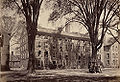 View of Connecticut Hall, Old Campus, Yale College, New Haven, Connecticut
 -
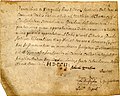 Yale College Diploma, Nathaniel Chauncey, 1702
 -
 A View of the Buildings of Yale College at New Haven, 1807
 -
 Yale's Four-Oared Crew Team with 1876 Centennial Regatta Trophy
 -
 Woolsey Hall, Memorial Hall, University Dining Hall, Yale University
 -
 Yale University by Richard Rummell
 -
 Yale Law School in the Sterling Law Building


-
Yale University Shield
-
Yale University Logo
-
Yale Seal
-
A Front View of Yale College and the College Chapel, New Haven
-
Yale Family Chrest
-
View of Connecticut Hall, Old Campus, Yale College, New Haven, Connecticut
-
Yale College Diploma, Nathaniel Chauncey, 1702
-
A View of the Buildings of Yale College at New Haven, 1807
-
Yale's Four-Oared Crew Team with 1876 Centennial Regatta Trophy
-
Woolsey Hall, Memorial Hall, University Dining Hall, Yale University
-
Yale University by Richard Rummell
-
Yale Law School in the Sterling Law Building
Ad. Transform your life with W8MD's
GLP-1 weight loss injections special from $29.99 with insurance
|
WikiMD Medical Encyclopedia |
Medical Disclaimer: WikiMD is for informational purposes only and is not a substitute for professional medical advice. Content may be inaccurate or outdated and should not be used for diagnosis or treatment. Always consult your healthcare provider for medical decisions. Verify information with trusted sources such as CDC.gov and NIH.gov. By using this site, you agree that WikiMD is not liable for any outcomes related to its content. See full disclaimer.
Credits:Most images are courtesy of Wikimedia commons, and templates, categories Wikipedia, licensed under CC BY SA or similar.
Translate this page: - East Asian
中文,
日本,
한국어,
South Asian
हिन्दी,
தமிழ்,
తెలుగు,
Urdu,
ಕನ್ನಡ,
Southeast Asian
Indonesian,
Vietnamese,
Thai,
မြန်မာဘာသာ,
বাংলা
European
español,
Deutsch,
français,
Greek,
português do Brasil,
polski,
română,
русский,
Nederlands,
norsk,
svenska,
suomi,
Italian
Middle Eastern & African
عربى,
Turkish,
Persian,
Hebrew,
Afrikaans,
isiZulu,
Kiswahili,
Other
Bulgarian,
Hungarian,
Czech,
Swedish,
മലയാളം,
मराठी,
ਪੰਜਾਬੀ,
ગુજરાતી,
Portuguese,
Ukrainian

