Tumor microenvironment
Tumor Microenvironment
The tumor microenvironment (TME) is the environment surrounding a tumor, including the surrounding blood vessels, immune cells, fibroblasts, signaling molecules, and the extracellular matrix (ECM). The TME plays a crucial role in tumor development, progression, and response to therapy.
Components
The tumor microenvironment is composed of several key components:
Cancer Cells
Cancer cells are the primary component of the tumor microenvironment. They interact with other components of the TME to promote tumor growth and metastasis.
Stromal Cells
Stromal cells include fibroblasts, endothelial cells, and pericytes. These cells contribute to the formation of the tumor stroma, which provides structural support and influences tumor behavior.
Immune Cells
The TME contains various immune cells, such as T cells, B cells, macrophages, and natural killer cells. These cells can have both tumor-promoting and tumor-suppressing roles, depending on their state and the signals they receive from the tumor and its environment.
Extracellular Matrix
The extracellular matrix (ECM) is a network of proteins and polysaccharides that provides structural support to the cells. It also plays a role in cell signaling and can influence cancer cell behavior.
Signaling Molecules
The TME is rich in signaling molecules such as cytokines, chemokines, and growth factors. These molecules mediate communication between cancer cells and the surrounding stromal and immune cells.
Role in Cancer Progression
The tumor microenvironment is not just a passive bystander but actively participates in cancer progression. It can influence tumor growth, angiogenesis, immune evasion, and metastasis. The interactions between cancer cells and the TME can lead to the development of drug resistance, making the TME a target for therapeutic interventions.
Therapeutic Implications
Targeting the tumor microenvironment offers potential therapeutic strategies. Approaches include modifying the immune response, targeting stromal components, and altering the ECM to inhibit tumor progression and improve the efficacy of existing treatments.
Related Pages
References
<references group="" responsive="1"></references>
Gallery
-
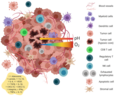 Components of the tumor microenvironment
 -
 Tumor stroma and extracellular matrix in hypoxia
 -
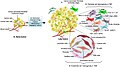 Stromal cell in tumor microenvironment
 -
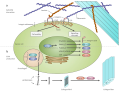 HIF regulates interactions of cancer cells with ECM
 -
 Tumor microenvironment
 -
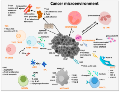 Tumor-associated immune cells in TME of breast cancer
 -
 Immune checkpoints in breast cancer


_of_breast_cancer_models.svg)

Tumor_microenvironment
-
Components of the tumor microenvironment
-
Stromal cell in tumor microenvironment
-
Tumor-associated immune cells in the tumor microenvironment (TME) of breast cancer models
-
Immune checkpoints of immunosuppressive actions associated with breast cancer
Ad. Transform your life with W8MD's Budget GLP-1 injections from $75


W8MD offers a medical weight loss program to lose weight in Philadelphia. Our physician-supervised medical weight loss provides:
- Weight loss injections in NYC (generic and brand names):
- Zepbound / Mounjaro, Wegovy / Ozempic, Saxenda
- Most insurances accepted or discounted self-pay rates. We will obtain insurance prior authorizations if needed.
- Generic GLP1 weight loss injections from $75 for the starting dose.
- Also offer prescription weight loss medications including Phentermine, Qsymia, Diethylpropion, Contrave etc.
NYC weight loss doctor appointmentsNYC weight loss doctor appointments
Start your NYC weight loss journey today at our NYC medical weight loss and Philadelphia medical weight loss clinics.
- Call 718-946-5500 to lose weight in NYC or for medical weight loss in Philadelphia 215-676-2334.
- Tags:NYC medical weight loss, Philadelphia lose weight Zepbound NYC, Budget GLP1 weight loss injections, Wegovy Philadelphia, Wegovy NYC, Philadelphia medical weight loss, Brookly weight loss and Wegovy NYC


|
WikiMD's Wellness Encyclopedia |
| Let Food Be Thy Medicine Medicine Thy Food - Hippocrates |
Medical Disclaimer: WikiMD is not a substitute for professional medical advice. The information on WikiMD is provided as an information resource only, may be incorrect, outdated or misleading, and is not to be used or relied on for any diagnostic or treatment purposes. Please consult your health care provider before making any healthcare decisions or for guidance about a specific medical condition. WikiMD expressly disclaims responsibility, and shall have no liability, for any damages, loss, injury, or liability whatsoever suffered as a result of your reliance on the information contained in this site. By visiting this site you agree to the foregoing terms and conditions, which may from time to time be changed or supplemented by WikiMD. If you do not agree to the foregoing terms and conditions, you should not enter or use this site. See full disclaimer.
Credits:Most images are courtesy of Wikimedia commons, and templates, categories Wikipedia, licensed under CC BY SA or similar.
Translate this page: - East Asian
中文,
日本,
한국어,
South Asian
हिन्दी,
தமிழ்,
తెలుగు,
Urdu,
ಕನ್ನಡ,
Southeast Asian
Indonesian,
Vietnamese,
Thai,
မြန်မာဘာသာ,
বাংলা
European
español,
Deutsch,
français,
Greek,
português do Brasil,
polski,
română,
русский,
Nederlands,
norsk,
svenska,
suomi,
Italian
Middle Eastern & African
عربى,
Turkish,
Persian,
Hebrew,
Afrikaans,
isiZulu,
Kiswahili,
Other
Bulgarian,
Hungarian,
Czech,
Swedish,
മലയാളം,
मराठी,
ਪੰਜਾਬੀ,
ગુજરાતી,
Portuguese,
Ukrainian
