Turtle
Article about turtles
Turtles are reptiles of the order Testudines, characterized by a bony or cartilaginous shell that acts as a shield. The order includes both extant and extinct species, with the earliest known turtles dating back to the Triassic period, around 220 million years ago. Turtles are ectothermic, or cold-blooded, and are found in a variety of environments, from terrestrial to freshwater and marine habitats.
Anatomy and Physiology
Turtles have a unique body plan that includes a shell composed of a carapace (dorsal part) and a plastron (ventral part). The shell is made up of bony plates covered by scutes, which are keratinous scales. Unlike other reptiles, turtles cannot expand their chest to breathe; instead, they use special muscles to move their internal organs and create negative pressure to inhale.
Shell
The turtle shell is a complex structure that provides protection and support. It is formed by the fusion of ribs and vertebrae, which are covered by scutes. The shell's shape and size vary among species, adapted to their specific environments and lifestyles.
Respiration
Turtles have adapted various methods of respiration. While most breathe air through lungs, some species can absorb oxygen through their skin or cloaca, especially when submerged in water for extended periods.
Ecology and Behavior
Turtles occupy diverse ecological niches. Some are strictly aquatic, like the Green sea turtle, while others, such as the Box turtle, are primarily terrestrial. Turtles are generally omnivorous, with diets ranging from plants and algae to invertebrates and small vertebrates.
Reproduction
Turtles lay eggs, which they bury in sand or soil. The temperature of the nest can determine the sex of the hatchlings, a phenomenon known as temperature-dependent sex determination. After laying eggs, most female turtles do not provide parental care.
Migration
Many turtle species, particularly sea turtles, undertake long migrations between feeding and nesting grounds. These migrations can span thousands of kilometers and are guided by environmental cues such as ocean currents and the Earth's magnetic field.
Conservation
Turtles face numerous threats, including habitat destruction, pollution, climate change, and poaching for their meat and shells. Conservation efforts focus on habitat protection, legal protection, and captive breeding programs to ensure the survival of endangered species.
Cultural Significance
Turtles have been featured in various cultural myths and legends. In some cultures, they symbolize longevity and wisdom. The Kurma avatar of the Hindu god Vishnu is depicted as a turtle, representing stability and support.
Related pages
References
Gallery
-
 Olive Ridley Sea Turtle
 -
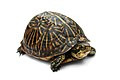 Florida Box Turtle
 -
 Turtle Skeleton Cross-section
 -
 Turtle Shell Development
 -
 Green Sea Turtle
 -
 Red Eared Slider
 -
 Indian Softshell Turtle
 -
 Snapping Turtle
 -
 Basking Cooter Turtles
 -
 Green Sea Turtle Grazing
 -
 Oblong Turtle
 -
 Crested Caracara Eating a Turtle
 -
 Tortoise Snap
 -
 Three-toed Box Turtle
 -
 Snapping Turtle
 -
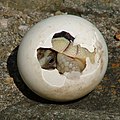 Tortoise Hatchling
 -
 Origin of Turtle Body Plan
 -
 Haeckel's Chelonia
 -
 Zoology of Egypt
 -
 Geometric Tortoise
 -
 Deinosuchus
 -
 Spot-billed Pelican
 -
 Pig-nosed Turtle


_Babai_River_nose-breathing_at_surface.jpg)

.jpg)


.jpg)
.jpg)
.jpg)


_(Varanus_exanthematicus).png)


_(cropped).jpg)
Turtle
-
Turtle
-
Turtle
-
Turtle
-
Turtle
-
 Turtle
 -
Turtle
-
Turtle
-
Turtle
-
Turtle
-
Turtle
-
Turtle

-
Turtle
-
Turtle
-
Turtle
-
Turtle
-
Turtle
-
Turtle
-
Turtle
-
Turtle
-
Turtle
-
Turtle
-
Turtle
Ad. Transform your life with W8MD's
GLP-1 weight loss injections special from $29.99 with insurance
|
WikiMD Medical Encyclopedia |
Medical Disclaimer: WikiMD is for informational purposes only and is not a substitute for professional medical advice. Content may be inaccurate or outdated and should not be used for diagnosis or treatment. Always consult your healthcare provider for medical decisions. Verify information with trusted sources such as CDC.gov and NIH.gov. By using this site, you agree that WikiMD is not liable for any outcomes related to its content. See full disclaimer.
Credits:Most images are courtesy of Wikimedia commons, and templates, categories Wikipedia, licensed under CC BY SA or similar.
Translate this page: - East Asian
中文,
日本,
한국어,
South Asian
हिन्दी,
தமிழ்,
తెలుగు,
Urdu,
ಕನ್ನಡ,
Southeast Asian
Indonesian,
Vietnamese,
Thai,
မြန်မာဘာသာ,
বাংলা
European
español,
Deutsch,
français,
Greek,
português do Brasil,
polski,
română,
русский,
Nederlands,
norsk,
svenska,
suomi,
Italian
Middle Eastern & African
عربى,
Turkish,
Persian,
Hebrew,
Afrikaans,
isiZulu,
Kiswahili,
Other
Bulgarian,
Hungarian,
Czech,
Swedish,
മലയാളം,
मराठी,
ਪੰਜਾਬੀ,
ગુજરાતી,
Portuguese,
Ukrainian
