Vagus nerve
Vagus Nerve
The vagus nerve is the tenth cranial nerve (CN X) and is a critical component of the autonomic nervous system. It is responsible for a wide range of functions, including heart rate regulation, gastrointestinal peristalsis, sweating, and muscle movements in the mouth, including speech. The vagus nerve is the longest of the cranial nerves, extending from the brainstem to the abdomen.
Anatomy
The vagus nerve originates in the medulla oblongata of the brainstem. It exits the skull through the jugular foramen and travels down the neck within the carotid sheath, alongside the internal carotid artery and the internal jugular vein.
Branches
The vagus nerve has several branches, including:
- The auricular branch, which supplies sensation to the ear.
- The pharyngeal branch, which innervates the muscles of the pharynx.
- The superior laryngeal nerve, which innervates the cricothyroid muscle.
- The recurrent laryngeal nerve, which innervates the intrinsic muscles of the larynx.
Function
The vagus nerve is involved in parasympathetic control of the heart, lungs, and digestive tract. It slows the heart rate, stimulates digestive secretions, and regulates the contraction of smooth muscles in the gastrointestinal tract.
Clinical Significance
Damage to the vagus nerve can result in a variety of symptoms, including difficulty swallowing, loss of voice, and abnormal heart rate. Vagus nerve stimulation is a treatment used for epilepsy and depression.
Related Pages
References
- Standring, S. (2016). Gray's Anatomy: The Anatomical Basis of Clinical Practice. 41st Edition. Elsevier.
- Netter, F. H. (2014). Atlas of Human Anatomy. 6th Edition. Saunders.
Gallery
-
 Diagram of the vagus nerve.
 -
 Vagus nerve in the neck.
 -
 Vagus nerve in the thorax.
 -
 Vagus nerve in the abdomen.
 -
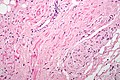 Sinoatrial node, influenced by the vagus nerve.
 -
 Inferior view of the human brain showing cranial nerves.
 -
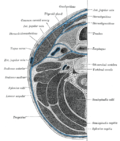 Vagus nerve and its branches.
 -
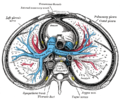 Vagus nerve in the thorax.
 -
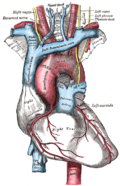 Vagus nerve in the abdomen.
 -
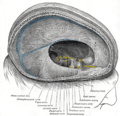 Vagus nerve and the heart.
 -
 Vagus nerve and the stomach.
 -
 Vagus nerve and the intestines.
 -
 Vagus nerve and the liver.
 -
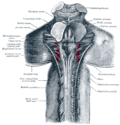 Vagus nerve and the lungs.
 -
 Vagus nerve and the esophagus.
 -
 Vagus nerve and the pharynx.
 -
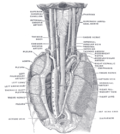 Vagus nerve and the larynx.
 -
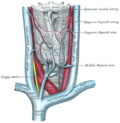 Vagus nerve and the ear.
 -
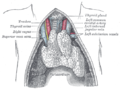 Vagus nerve and the carotid artery.
 -
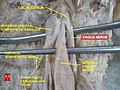 Internal carotid artery, near the vagus nerve.


-
Vagus nerve
-
Vagus nerve
-
Vagus nerve
-
Sinoatrial node high magnification
-
Vagus nerve
-
Vagus nerve
-
Vagus nerve
-
Vagus nerve
-
Vagus nerve
-
Vagus nerve
-
Vagus nerve
-
Internal carotid artery
Ad. Transform your life with W8MD's
GLP-1 weight loss injections special from $29.99 with insurance
|
WikiMD Medical Encyclopedia |
Medical Disclaimer: WikiMD is for informational purposes only and is not a substitute for professional medical advice. Content may be inaccurate or outdated and should not be used for diagnosis or treatment. Always consult your healthcare provider for medical decisions. Verify information with trusted sources such as CDC.gov and NIH.gov. By using this site, you agree that WikiMD is not liable for any outcomes related to its content. See full disclaimer.
Credits:Most images are courtesy of Wikimedia commons, and templates, categories Wikipedia, licensed under CC BY SA or similar.
Translate this page: - East Asian
中文,
日本,
한국어,
South Asian
हिन्दी,
தமிழ்,
తెలుగు,
Urdu,
ಕನ್ನಡ,
Southeast Asian
Indonesian,
Vietnamese,
Thai,
မြန်မာဘာသာ,
বাংলা
European
español,
Deutsch,
français,
Greek,
português do Brasil,
polski,
română,
русский,
Nederlands,
norsk,
svenska,
suomi,
Italian
Middle Eastern & African
عربى,
Turkish,
Persian,
Hebrew,
Afrikaans,
isiZulu,
Kiswahili,
Other
Bulgarian,
Hungarian,
Czech,
Swedish,
മലയാളം,
मराठी,
ਪੰਜਾਬੀ,
ગુજરાતી,
Portuguese,
Ukrainian
