Hwajeon
Hwajeon (Korean: 화전) is a traditional Korean pan-fried sweet pancake that is typically made from glutinous rice flour and flower petals. The name "Hwajeon" can be translated as "flower pancake". It is traditionally prepared and eaten during the spring and autumn seasons, especially during the Samjinnal and Chuseok festivals.
History
The origin of Hwajeon dates back to the Goryeo Dynasty (918–1392), where it was a popular dish among the royal court and aristocracy. The practice of making and eating Hwajeon during the spring and autumn festivals is believed to have originated from ancient agricultural rituals.
Preparation
Hwajeon is made by mixing glutinous rice flour with water to form a dough. The dough is then divided into small pieces, which are flattened into round shapes. Flower petals, such as azalea or chrysanthemum, are placed on top of the dough pieces, which are then pan-fried until golden brown. The pancakes are typically served with a sweet syrup made from soy sauce, sugar, and water.
Cultural Significance
Hwajeon is not only a food but also a symbol of Korean culture and tradition. The process of making Hwajeon is often a communal activity, bringing families and communities together. It is also a way to appreciate the beauty of nature, as the flower petals used in Hwajeon are often picked from the wild during spring and autumn.
See Also

-
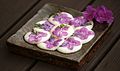 Hwajeon

Ad. Transform your life with W8MD's
GLP-1 weight loss injections special from $29.99 with insurance
|
WikiMD Medical Encyclopedia |
Medical Disclaimer: WikiMD is for informational purposes only and is not a substitute for professional medical advice. Content may be inaccurate or outdated and should not be used for diagnosis or treatment. Always consult your healthcare provider for medical decisions. Verify information with trusted sources such as CDC.gov and NIH.gov. By using this site, you agree that WikiMD is not liable for any outcomes related to its content. See full disclaimer.
Credits:Most images are courtesy of Wikimedia commons, and templates, categories Wikipedia, licensed under CC BY SA or similar.
Translate this page: - East Asian
中文,
日本,
한국어,
South Asian
हिन्दी,
தமிழ்,
తెలుగు,
Urdu,
ಕನ್ನಡ,
Southeast Asian
Indonesian,
Vietnamese,
Thai,
မြန်မာဘာသာ,
বাংলা
European
español,
Deutsch,
français,
Greek,
português do Brasil,
polski,
română,
русский,
Nederlands,
norsk,
svenska,
suomi,
Italian
Middle Eastern & African
عربى,
Turkish,
Persian,
Hebrew,
Afrikaans,
isiZulu,
Kiswahili,
Other
Bulgarian,
Hungarian,
Czech,
Swedish,
മലയാളം,
मराठी,
ਪੰਜਾਬੀ,
ગુજરાતી,
Portuguese,
Ukrainian
