Smoker's melanosis
A condition characterized by pigmentation changes in the oral mucosa due to smoking
Smoker's melanosis is a benign condition characterized by increased pigmentation of the oral mucosa, particularly in individuals who smoke tobacco. This condition is most commonly observed in the gingiva, buccal mucosa, and palate.
Pathophysiology
Smoker's melanosis is believed to result from the stimulation of melanocytes by the components of tobacco smoke. Nicotine and other chemicals in tobacco can lead to increased production of melanin, the pigment responsible for the coloration of the skin and mucous membranes. The increased melanin production is a protective response to the irritants in tobacco smoke.
Clinical Presentation
The condition is characterized by brown to black pigmentation of the oral mucosa. The pigmentation is usually diffuse and symmetric, affecting areas such as the anterior labial gingiva, buccal mucosa, and the hard palate. The degree of pigmentation can vary depending on the amount and duration of tobacco use.
Diagnosis
Diagnosis of smoker's melanosis is primarily clinical, based on the patient's history of tobacco use and the characteristic appearance of the oral mucosa. A biopsy is rarely needed but may be performed to rule out other pigmented lesions such as oral melanotic macule or melanoma.
Management
The primary management of smoker's melanosis involves cessation of smoking. Upon quitting smoking, the pigmentation often fades over time, although this process can take several months to years. There is no specific treatment required for smoker's melanosis itself, as it is a benign condition.
Prognosis
Smoker's melanosis is a benign condition with no malignant potential. However, it serves as an indicator of tobacco use, which is a risk factor for various oral and systemic diseases, including oral cancer.
Prevention
The most effective way to prevent smoker's melanosis is to avoid tobacco use. Smoking cessation programs and interventions can help individuals quit smoking and reduce the risk of developing smoker's melanosis and other tobacco-related conditions.
Related pages
-
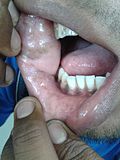 Smoker's melanosis
 -
Smoker's melanosis
-
 Smoker's melanosis


Ad. Transform your life with W8MD's Budget GLP-1 injections from $75


W8MD offers a medical weight loss program to lose weight in Philadelphia. Our physician-supervised medical weight loss provides:
- Weight loss injections in NYC (generic and brand names):
- Zepbound / Mounjaro, Wegovy / Ozempic, Saxenda
- Most insurances accepted or discounted self-pay rates. We will obtain insurance prior authorizations if needed.
- Generic GLP1 weight loss injections from $75 for the starting dose.
- Also offer prescription weight loss medications including Phentermine, Qsymia, Diethylpropion, Contrave etc.
NYC weight loss doctor appointmentsNYC weight loss doctor appointments
Start your NYC weight loss journey today at our NYC medical weight loss and Philadelphia medical weight loss clinics.
- Call 718-946-5500 to lose weight in NYC or for medical weight loss in Philadelphia 215-676-2334.
- Tags:NYC medical weight loss, Philadelphia lose weight Zepbound NYC, Budget GLP1 weight loss injections, Wegovy Philadelphia, Wegovy NYC, Philadelphia medical weight loss, Brookly weight loss and Wegovy NYC


|
WikiMD's Wellness Encyclopedia |
| Let Food Be Thy Medicine Medicine Thy Food - Hippocrates |
Medical Disclaimer: WikiMD is not a substitute for professional medical advice. The information on WikiMD is provided as an information resource only, may be incorrect, outdated or misleading, and is not to be used or relied on for any diagnostic or treatment purposes. Please consult your health care provider before making any healthcare decisions or for guidance about a specific medical condition. WikiMD expressly disclaims responsibility, and shall have no liability, for any damages, loss, injury, or liability whatsoever suffered as a result of your reliance on the information contained in this site. By visiting this site you agree to the foregoing terms and conditions, which may from time to time be changed or supplemented by WikiMD. If you do not agree to the foregoing terms and conditions, you should not enter or use this site. See full disclaimer.
Credits:Most images are courtesy of Wikimedia commons, and templates, categories Wikipedia, licensed under CC BY SA or similar.
Translate this page: - East Asian
中文,
日本,
한국어,
South Asian
हिन्दी,
தமிழ்,
తెలుగు,
Urdu,
ಕನ್ನಡ,
Southeast Asian
Indonesian,
Vietnamese,
Thai,
မြန်မာဘာသာ,
বাংলা
European
español,
Deutsch,
français,
Greek,
português do Brasil,
polski,
română,
русский,
Nederlands,
norsk,
svenska,
suomi,
Italian
Middle Eastern & African
عربى,
Turkish,
Persian,
Hebrew,
Afrikaans,
isiZulu,
Kiswahili,
Other
Bulgarian,
Hungarian,
Czech,
Swedish,
മലയാളം,
मराठी,
ਪੰਜਾਬੀ,
ગુજરાતી,
Portuguese,
Ukrainian

