Linseed oil
Linseed Oil
Linseed oil, also known as flaxseed oil, is a colorless to yellowish oil obtained from the dried, ripened seeds of the flax plant (Linum usitatissimum). The oil is obtained by pressing, sometimes followed by solvent extraction. Due to its high levels of alpha-Linolenic acid (a particular form of Omega-3 fatty acid), it is often used as a dietary supplement.
History
The use of linseed oil has been documented in various cultures, including those of Ancient Egypt, where it was used in the mummification process. In the Middle Ages, it was used in oil lamps and as a wood finish. It was also used as a base in paints, varnishes, and inks.
Production
Linseed oil is produced from the seeds of the flax plant. The seeds are harvested and cleaned before being pressed or solvent extracted to obtain the oil. The oil is then refined and bottled for sale. The production process can vary, with some producers opting for cold pressing, which retains more of the oil's nutritional value.
Uses
Linseed oil has a variety of uses, both industrial and nutritional.
Industrial Uses
In the industrial sector, linseed oil is used as an ingredient in paints, varnishes, and stains. It is also used in the production of linoleum flooring. Its ability to polymerize into a solid form makes it useful in the manufacture of oilcloth and in certain types of printing ink.
Nutritional Uses
As a food supplement, linseed oil is valued for its high content of alpha-Linolenic acid. This omega-3 fatty acid is beneficial for heart health and can help to reduce inflammation. It is also used in vegan and vegetarian diets as a source of omega-3 fatty acids.
Health Benefits
Research has shown that linseed oil may have several potential health benefits. These include reducing inflammation, improving heart health, and aiding in digestion. However, more research is needed to fully understand these potential benefits and the mechanisms behind them.
Safety and Side Effects
While generally safe for consumption, linseed oil can cause side effects in some individuals, including diarrhea and allergic reactions. It is also important to note that linseed oil should not be heated or used for cooking, as this can cause the oil to oxidize and become harmful.
See Also


-
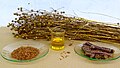 From flax to linseed oil
 -
Your country needs flax, and will pay well for it
-
 Fransk Linolja - 2021


Ad. Transform your life with W8MD's
GLP-1 weight loss injections special from $29.99 with insurance
|
WikiMD Medical Encyclopedia |
Medical Disclaimer: WikiMD is for informational purposes only and is not a substitute for professional medical advice. Content may be inaccurate or outdated and should not be used for diagnosis or treatment. Always consult your healthcare provider for medical decisions. Verify information with trusted sources such as CDC.gov and NIH.gov. By using this site, you agree that WikiMD is not liable for any outcomes related to its content. See full disclaimer.
Credits:Most images are courtesy of Wikimedia commons, and templates, categories Wikipedia, licensed under CC BY SA or similar.
Translate this page: - East Asian
中文,
日本,
한국어,
South Asian
हिन्दी,
தமிழ்,
తెలుగు,
Urdu,
ಕನ್ನಡ,
Southeast Asian
Indonesian,
Vietnamese,
Thai,
မြန်မာဘာသာ,
বাংলা
European
español,
Deutsch,
français,
Greek,
português do Brasil,
polski,
română,
русский,
Nederlands,
norsk,
svenska,
suomi,
Italian
Middle Eastern & African
عربى,
Turkish,
Persian,
Hebrew,
Afrikaans,
isiZulu,
Kiswahili,
Other
Bulgarian,
Hungarian,
Czech,
Swedish,
മലയാളം,
मराठी,
ਪੰਜਾਬੀ,
ગુજરાતી,
Portuguese,
Ukrainian

