Transmitter
Transmitter
A transmitter is an electronic device that produces radio waves with an antenna. The transmitter itself generates a radio frequency alternating current, which is applied to the antenna. When excited by this alternating current, the antenna radiates radio waves. Transmitters are necessary components of all electronic devices that communicate by radio, such as radio and television broadcasting stations, cellular phones, wireless computer networks, Bluetooth-enabled devices, garage door openers, and two-way radios.
History
The development of the transmitter began with the discovery of radio waves by Heinrich Hertz in the late 19th century. Hertz's experiments in 1887 demonstrated the existence of electromagnetic waves, which were predicted by James Clerk Maxwell. The first practical radio transmitters were developed by Guglielmo Marconi in the early 20th century, using spark-gap technology. These early transmitters were capable of sending Morse code signals over long distances.
In the 1920s, the invention of the vacuum tube allowed for the development of continuous wave transmitters, which could transmit audio signals. This led to the birth of AM radio broadcasting. The invention of the FM transmitter by Edwin Armstrong in the 1930s improved the quality of radio broadcasts by reducing static and interference.
Types of Transmitters
Radio Transmitters
Radio transmitters are used in broadcasting to send audio signals to a wide audience. They can be classified into AM and FM transmitters, based on the modulation technique used.
Television Transmitters
Television transmitters send both audio and video signals. They use a combination of amplitude modulation for video and frequency modulation for audio.
Microwave Transmitters
Microwave transmitters are used for point-to-point communication links, such as satellite communication and radar.
Mobile and Wireless Transmitters
These transmitters are used in cellular networks, Wi-Fi, and Bluetooth devices. They operate at various frequencies and power levels depending on the application.
Components of a Transmitter
A typical transmitter consists of several key components:
- Oscillator: Generates the radio frequency signal.
- Modulator: Imposes the information signal onto the carrier wave.
- Amplifier: Increases the power of the modulated signal.
- Antenna: Radiates the signal into space.
Related Pages
References
- "Radio Transmitters." Encyclopedia of Radio, edited by Christopher H. Sterling, Routledge, 2004.
- "The Invention of Radio." IEEE Global History Network, IEEE, 2010.
- "Wireless Communication: Principles and Practice." Theodore S. Rappaport, Prentice Hall, 2002.
Gallery
-
 WDET-FM transmitter
 -
 Signal processing system
 -
 AM Elcom Bauer transmitter
 -
 KWNR Continental transmitter
 -
 Icom IC-746PRO
 -
 Historical transmitter
 -
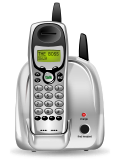 Cordless phone
 -
 Garage door opener remote
 -
 Wireless network
 -
 Bluetooth headset
 -
 Dipole transmitting antenna
 -
 Heinrich Hertz discovering radio waves
 -
 Marconi's spark gap transmitter
 -
 Powerful spark gap transmitter
 -
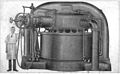 Poulsen arc transmitter
 -
 Alexanderson alternator
 -
 First vacuum tube AM radio transmitter
 -
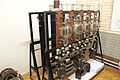 Blythe House Science Museum
 -
 Armstrong's FM transmitter prototype
 -
 Magnetron radar assembly


.jpg)


-
Transmitter
-
Transmitter
-
Transmitter
-
Transmitter
-
 Transmitter
 -
Transmitter
-
Transmitter
-
Transmitter
-
Transmitter
-
Transmitter
-
Transmitter
-
Transmitter

Ad. Transform your life with W8MD's Budget GLP-1 injections from $75


W8MD offers a medical weight loss program to lose weight in Philadelphia. Our physician-supervised medical weight loss provides:
- Weight loss injections in NYC (generic and brand names):
- Zepbound / Mounjaro, Wegovy / Ozempic, Saxenda
- Most insurances accepted or discounted self-pay rates. We will obtain insurance prior authorizations if needed.
- Generic GLP1 weight loss injections from $75 for the starting dose.
- Also offer prescription weight loss medications including Phentermine, Qsymia, Diethylpropion, Contrave etc.
NYC weight loss doctor appointmentsNYC weight loss doctor appointments
Start your NYC weight loss journey today at our NYC medical weight loss and Philadelphia medical weight loss clinics.
- Call 718-946-5500 to lose weight in NYC or for medical weight loss in Philadelphia 215-676-2334.
- Tags:NYC medical weight loss, Philadelphia lose weight Zepbound NYC, Budget GLP1 weight loss injections, Wegovy Philadelphia, Wegovy NYC, Philadelphia medical weight loss, Brookly weight loss and Wegovy NYC


|
WikiMD's Wellness Encyclopedia |
| Let Food Be Thy Medicine Medicine Thy Food - Hippocrates |
Medical Disclaimer: WikiMD is not a substitute for professional medical advice. The information on WikiMD is provided as an information resource only, may be incorrect, outdated or misleading, and is not to be used or relied on for any diagnostic or treatment purposes. Please consult your health care provider before making any healthcare decisions or for guidance about a specific medical condition. WikiMD expressly disclaims responsibility, and shall have no liability, for any damages, loss, injury, or liability whatsoever suffered as a result of your reliance on the information contained in this site. By visiting this site you agree to the foregoing terms and conditions, which may from time to time be changed or supplemented by WikiMD. If you do not agree to the foregoing terms and conditions, you should not enter or use this site. See full disclaimer.
Credits:Most images are courtesy of Wikimedia commons, and templates, categories Wikipedia, licensed under CC BY SA or similar.
Translate this page: - East Asian
中文,
日本,
한국어,
South Asian
हिन्दी,
தமிழ்,
తెలుగు,
Urdu,
ಕನ್ನಡ,
Southeast Asian
Indonesian,
Vietnamese,
Thai,
မြန်မာဘာသာ,
বাংলা
European
español,
Deutsch,
français,
Greek,
português do Brasil,
polski,
română,
русский,
Nederlands,
norsk,
svenska,
suomi,
Italian
Middle Eastern & African
عربى,
Turkish,
Persian,
Hebrew,
Afrikaans,
isiZulu,
Kiswahili,
Other
Bulgarian,
Hungarian,
Czech,
Swedish,
മലയാളം,
मराठी,
ਪੰਜਾਬੀ,
ગુજરાતી,
Portuguese,
Ukrainian
