Air sac
Air sac

An air sac is a structure found in the respiratory system of birds and some other animals, including certain dinosaurs. Air sacs are part of the avian respiratory system, which is highly efficient and allows for the high metabolic demands of flight.
Structure
Air sacs are thin-walled, membranous structures that are connected to the lungs of birds. They extend into the bones and body cavity, forming a complex system that aids in respiration. The air sac system typically includes:
- Anterior air sacs: These include the interclavicular, cervical, and anterior thoracic air sacs.
- Posterior air sacs: These include the posterior thoracic and abdominal air sacs.
Function
The primary function of air sacs is to facilitate a continuous flow of air through the lungs, allowing for efficient gas exchange. Unlike mammals, birds have a unidirectional flow of air through their lungs, which is achieved by the action of the air sacs. This system ensures that the lungs receive a constant supply of fresh air during both inhalation and exhalation.

Respiratory cycle
The avian respiratory cycle involves two inhalations and two exhalations:
1. First inhalation: Air enters through the trachea and moves into the posterior air sacs. 2. First exhalation: Air moves from the posterior air sacs into the lungs, where gas exchange occurs. 3. Second inhalation: Air moves from the lungs into the anterior air sacs. 4. Second exhalation: Air is expelled from the anterior air sacs through the trachea.
This cycle allows for a continuous flow of air through the lungs, maximizing oxygen uptake and carbon dioxide removal.
Evolutionary significance
The presence of air sacs is not limited to modern birds. Fossil evidence suggests that some theropod dinosaurs, the ancestors of birds, also had air sac systems. This adaptation may have played a role in the evolution of flight by reducing body weight and improving respiratory efficiency.

Examples in birds
Air sacs are present in all bird species, from small passerines to large penguins. For example, the Emperor Penguin (Aptenodytes forsteri) relies on its air sac system to maintain buoyancy and efficient respiration during long dives.

Related pages
Gallery
-
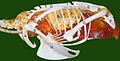 Diagram showing the air sacs in a bird

Ad. Transform your health with W8MD Weight Loss, Sleep & MedSpa

Tired of being overweight?
Special offer:
Budget GLP-1 weight loss medications
- Semaglutide starting from $29.99/week and up with insurance for visit of $59.99 and up per week self pay.
- Tirzepatide starting from $45.00/week and up (dose dependent) or $69.99/week and up self pay
✔ Same-week appointments, evenings & weekends
Learn more:
- GLP-1 weight loss clinic NYC
- W8MD's NYC medical weight loss
- W8MD Philadelphia GLP-1 shots
- Philadelphia GLP-1 injections
- Affordable GLP-1 shots NYC
|
WikiMD Medical Encyclopedia |
Medical Disclaimer: WikiMD is for informational purposes only and is not a substitute for professional medical advice. Content may be inaccurate or outdated and should not be used for diagnosis or treatment. Always consult your healthcare provider for medical decisions. Verify information with trusted sources such as CDC.gov and NIH.gov. By using this site, you agree that WikiMD is not liable for any outcomes related to its content. See full disclaimer.
Credits:Most images are courtesy of Wikimedia commons, and templates, categories Wikipedia, licensed under CC BY SA or similar.
Translate this page: - East Asian
中文,
日本,
한국어,
South Asian
हिन्दी,
தமிழ்,
తెలుగు,
Urdu,
ಕನ್ನಡ,
Southeast Asian
Indonesian,
Vietnamese,
Thai,
မြန်မာဘာသာ,
বাংলা
European
español,
Deutsch,
français,
Greek,
português do Brasil,
polski,
română,
русский,
Nederlands,
norsk,
svenska,
suomi,
Italian
Middle Eastern & African
عربى,
Turkish,
Persian,
Hebrew,
Afrikaans,
isiZulu,
Kiswahili,
Other
Bulgarian,
Hungarian,
Czech,
Swedish,
മലയാളം,
मराठी,
ਪੰਜਾਬੀ,
ગુજરાતી,
Portuguese,
Ukrainian
