Propyl acetate
Propyl acetate, also known as propyl ethanoate, is an organic compound with the chemical formula C3H7COOCH3. It is a colorless liquid with a fruity odor, commonly used as a solvent and in the production of paints, coatings, and inks. Propyl acetate is also used in the flavoring and fragrance industry, owing to its pleasant smell.
Properties
Propyl acetate is a member of the ester family, compounds formed by the reaction of an acid and an alcohol with the elimination of water. It is soluble in most organic solvents but has limited solubility in water. The compound has a boiling point of 102°C and a melting point of -95°C. Its molecular weight is 102.13 g/mol.
Production
The production of propyl acetate typically involves the esterification of acetic acid with propanol, in the presence of a strong acid catalyst such as sulfuric acid. This reaction can be represented by the equation:
C3H7OH + CH3COOH → C3H7COOCH3 + H2O
The process can be conducted under batch or continuous conditions, depending on the scale and desired purity of the product.
Applications
Solvent
Propyl acetate is widely used as a solvent in the manufacturing of varnishes, lacquers, and sealants due to its ability to dissolve a wide range of compounds and its relatively fast evaporation rate. Its use as a solvent extends to the pharmaceutical and cosmetics industries, where it is used in the formulation of various products.
Flavoring and Fragrance
In the food and beverage industry, propyl acetate is used as a flavoring agent, imparting a fruity flavor to products. It is also used in the production of fragrances, contributing a sweet, fruity note to perfumes and scented products.
Other Uses
Propyl acetate finds applications in the printing industry as a component of inks and overprint varnishes. It is also used as a deicing agent and in the production of cleaning agents and adhesives.
Safety and Regulation
Propyl acetate is generally considered to be of low toxicity, but it can cause irritation to the eyes, skin, and respiratory system upon prolonged exposure. It is flammable and poses a fire risk if not handled properly. Regulations regarding the handling and use of propyl acetate vary by country, but generally include guidelines on exposure limits, storage, and disposal.
Environmental Impact
The environmental impact of propyl acetate is relatively low. It is biodegradable and does not accumulate in the environment. However, as with all volatile organic compounds (VOCs), its release into the atmosphere can contribute to air pollution and the formation of ground-level ozone, a component of smog.

-
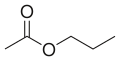 Propyl-acetate-2D-skeletal.svg
 -
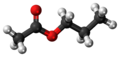 Propyl_acetate_3D_ball.png


Ad. Transform your life with W8MD's
GLP-1 weight loss injections special from $29.99


W8MD Medical Weight Loss, Sleep and Medspa offers physician-supervised medical weight loss programs: NYC medical weight loss Philadelphia medical weight loss
Affordable GLP-1 Weight Loss ShotsAffordable GLP-1 Weight Loss Shots
Budget GLP-1 injections NYC (insurance & self-pay options) Popular treatments:
- Semaglutide starting from $29.99/week
- Tirzepatide starting from $45.00/week
✔ Most insurances accepted for visits ✔ Prior authorization support when eligible
Start your physician weight loss NYC journey today:
📍 NYC: Brooklyn weight loss center 📍 Philadelphia: Philadelphia weight loss center
📞 Call: 718-946-5500 (NYC) | 215-676-2334 (Philadelphia)
Tags: Affordable GLP1 weight loss NYC, Wegovy NYC, Zepbound NYC, Philadelphia medical weight loss


|
WikiMD Medical Encyclopedia |
Medical Disclaimer: WikiMD is not a substitute for professional medical advice. The information on WikiMD is provided as an information resource only, may be incorrect, outdated or misleading, and is not to be used or relied on for any diagnostic or treatment purposes. Please consult your health care provider before making any healthcare decisions or for guidance about a specific medical condition. WikiMD expressly disclaims responsibility, and shall have no liability, for any damages, loss, injury, or liability whatsoever suffered as a result of your reliance on the information contained in this site. By visiting this site you agree to the foregoing terms and conditions, which may from time to time be changed or supplemented by WikiMD. If you do not agree to the foregoing terms and conditions, you should not enter or use this site. See full disclaimer.
Credits:Most images are courtesy of Wikimedia commons, and templates, categories Wikipedia, licensed under CC BY SA or similar.
Translate this page: - East Asian
中文,
日本,
한국어,
South Asian
हिन्दी,
தமிழ்,
తెలుగు,
Urdu,
ಕನ್ನಡ,
Southeast Asian
Indonesian,
Vietnamese,
Thai,
မြန်မာဘာသာ,
বাংলা
European
español,
Deutsch,
français,
Greek,
português do Brasil,
polski,
română,
русский,
Nederlands,
norsk,
svenska,
suomi,
Italian
Middle Eastern & African
عربى,
Turkish,
Persian,
Hebrew,
Afrikaans,
isiZulu,
Kiswahili,
Other
Bulgarian,
Hungarian,
Czech,
Swedish,
മലയാളം,
मराठी,
ਪੰਜਾਬੀ,
ગુજરાતી,
Portuguese,
Ukrainian
