Calea ternifolia
Calea ternifolia is a species of flowering plant in the family Asteraceae, native to Mexico and Central America. It is commonly known as dream herb or bitter-grass, and has been used in traditional medicine and spiritual practices by the indigenous Chontal people of Oaxaca, Mexico.
Description
Calea ternifolia is a perennial shrub that grows up to 1.5 meters tall. The leaves are opposite, with three leaflets each, and are covered in small, white hairs. The flowers are small, yellow, and tubular, and the fruit is a small achene.
Uses
The Chontal people use Calea ternifolia in their traditional medicine to treat a variety of ailments, including stomach problems, fever, and asthma. It is also used as a hallucinogen in spiritual practices, with the belief that it can induce vivid dreams and help with dream recall.
Cultivation
Calea ternifolia prefers a warm, humid environment and well-drained soil. It can be propagated from seeds or cuttings, and requires regular pruning to maintain its shape.
Research
While there is limited scientific research on Calea ternifolia, some studies suggest that it may have potential medicinal properties, including anti-inflammatory and antimicrobial effects. However, more research is needed to confirm these findings and understand the plant's potential uses in modern medicine.
Safety
Calea ternifolia is generally considered safe when used in moderation, but it can cause side effects such as nausea and vomiting in high doses. It is also a powerful hallucinogen, and should be used with caution.
See also

This flora-related article is a stub. You can help WikiMD by expanding it.

-
 Calea ternifolia
 -
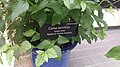 Calea ternifolia (syn. Calea zacatechichi) Dream Herb

_Dream_Herb.jpg)
-
Calea ternifolia plant
-
Calea ternifolia leaves
-
Calea ternifolia (syn. Calea zacatechichi) Dream Herb
Ad. Transform your life with W8MD's
GLP-1 weight loss injections special from $29.99 with insurance
|
WikiMD Medical Encyclopedia |
Medical Disclaimer: WikiMD is for informational purposes only and is not a substitute for professional medical advice. Content may be inaccurate or outdated and should not be used for diagnosis or treatment. Always consult your healthcare provider for medical decisions. Verify information with trusted sources such as CDC.gov and NIH.gov. By using this site, you agree that WikiMD is not liable for any outcomes related to its content. See full disclaimer.
Credits:Most images are courtesy of Wikimedia commons, and templates, categories Wikipedia, licensed under CC BY SA or similar.
Translate this page: - East Asian
中文,
日本,
한국어,
South Asian
हिन्दी,
தமிழ்,
తెలుగు,
Urdu,
ಕನ್ನಡ,
Southeast Asian
Indonesian,
Vietnamese,
Thai,
မြန်မာဘာသာ,
বাংলা
European
español,
Deutsch,
français,
Greek,
português do Brasil,
polski,
română,
русский,
Nederlands,
norsk,
svenska,
suomi,
Italian
Middle Eastern & African
عربى,
Turkish,
Persian,
Hebrew,
Afrikaans,
isiZulu,
Kiswahili,
Other
Bulgarian,
Hungarian,
Czech,
Swedish,
മലയാളം,
मराठी,
ਪੰਜਾਬੀ,
ગુજરાતી,
Portuguese,
Ukrainian

