Tumor hypoxia
Condition of low oxygen in tumor tissues
Tumor hypoxia refers to a condition in which there is a deficiency of oxygen in the tumor microenvironment. This phenomenon is a common characteristic of solid tumors and has significant implications for cancer progression and treatment.
Pathophysiology
Tumor hypoxia occurs when the rapid growth of cancer cells outpaces the development of new blood vessels, leading to areas within the tumor that are poorly oxygenated. This hypoxic environment can influence tumor biology in several ways, including promoting angiogenesis, altering metabolism, and affecting cell signaling pathways.
Hypoxia-Inducible Factors
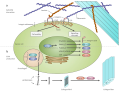
The primary cellular response to hypoxia is mediated by hypoxia-inducible factors (HIFs), which are transcription factors that regulate the expression of genes involved in adaptation to low oxygen conditions. HIF-1, in particular, plays a crucial role in the regulation of genes that control glycolysis, angiogenesis, and cell survival.

Metabolic Adaptations
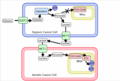
Under hypoxic conditions, cancer cells often switch from oxidative phosphorylation to anaerobic glycolysis to meet their energy demands. This metabolic shift is known as the Warburg effect.
Glycolytic Pathway
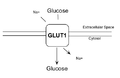
HIF-1 upregulates the expression of several glycolytic enzymes, including GLUT1 (glucose transporter 1), which facilitates increased glucose uptake, and 6-phosphofructo-2-kinase, which enhances glycolytic flux.

Lactate Production
The end product of anaerobic glycolysis is lactic acid, which accumulates in the tumor microenvironment, contributing to acidosis and further promoting tumor progression.

Impact on Treatment
Tumor hypoxia is associated with resistance to radiotherapy and certain chemotherapy agents. This resistance arises because oxygen is a potent radiosensitizer, and its absence reduces the effectiveness of radiation-induced DNA damage.
Research and Therapeutic Strategies
Efforts to overcome hypoxia-induced treatment resistance include the development of hypoxia-activated prodrugs and the use of agents that can modify the tumor microenvironment to improve oxygenation.
Related pages
References
-
 Tumor hypoxia
 -
 Tumor hypoxia
 -
 Tumor hypoxia
 -
 Tumor hypoxia
 -
 Tumor hypoxia
 -
 Tumor hypoxia
 -
 Tumor hypoxia
 -
 Tumor hypoxia


Ad. Transform your health with W8MD Weight Loss, Sleep & MedSpa

Tired of being overweight?
Special offer:
Budget GLP-1 weight loss medications
- Semaglutide starting from $29.99/week and up with insurance for visit of $59.99 and up per week self pay.
- Tirzepatide starting from $45.00/week and up (dose dependent) or $69.99/week and up self pay
✔ Same-week appointments, evenings & weekends
Learn more:
- GLP-1 weight loss clinic NYC
- W8MD's NYC medical weight loss
- W8MD Philadelphia GLP-1 shots
- Philadelphia GLP-1 injections
- Affordable GLP-1 shots NYC
|
WikiMD Medical Encyclopedia |
Medical Disclaimer: WikiMD is for informational purposes only and is not a substitute for professional medical advice. Content may be inaccurate or outdated and should not be used for diagnosis or treatment. Always consult your healthcare provider for medical decisions. Verify information with trusted sources such as CDC.gov and NIH.gov. By using this site, you agree that WikiMD is not liable for any outcomes related to its content. See full disclaimer.
Credits:Most images are courtesy of Wikimedia commons, and templates, categories Wikipedia, licensed under CC BY SA or similar.
Translate this page: - East Asian
中文,
日本,
한국어,
South Asian
हिन्दी,
தமிழ்,
తెలుగు,
Urdu,
ಕನ್ನಡ,
Southeast Asian
Indonesian,
Vietnamese,
Thai,
မြန်မာဘာသာ,
বাংলা
European
español,
Deutsch,
français,
Greek,
português do Brasil,
polski,
română,
русский,
Nederlands,
norsk,
svenska,
suomi,
Italian
Middle Eastern & African
عربى,
Turkish,
Persian,
Hebrew,
Afrikaans,
isiZulu,
Kiswahili,
Other
Bulgarian,
Hungarian,
Czech,
Swedish,
മലയാളം,
मराठी,
ਪੰਜਾਬੀ,
ગુજરાતી,
Portuguese,
Ukrainian
