Turbellaria
Turbellaria


Turbellaria is a class of mostly free-living flatworms belonging to the phylum Platyhelminthes. These organisms are primarily aquatic, inhabiting both marine and freshwater environments, although some species are terrestrial. Turbellarians are known for their ciliated epidermis, which aids in locomotion.
Characteristics
Turbellarians are characterized by their soft, flattened bodies and a lack of specialized respiratory and circulatory systems. They rely on diffusion for gas exchange and nutrient distribution. The body is covered with cilia, which are used for movement and feeding. Turbellarians exhibit a range of body sizes, from a few millimeters to several centimeters in length.
The digestive system of turbellarians is simple, often consisting of a mouth, pharynx, and a branched gut. Some species have a protrusible pharynx that can be extended to capture prey. Turbellarians are mostly carnivorous, feeding on small invertebrates and organic debris.
Reproduction
Turbellarians can reproduce both sexually and asexually. Sexual reproduction involves the exchange of sperm between individuals, as most turbellarians are hermaphroditic, possessing both male and female reproductive organs. Asexual reproduction occurs through fission, where the organism splits into two or more parts, each of which regenerates into a complete individual.
Ecology
Turbellarians play a significant role in aquatic ecosystems as predators of small invertebrates and as prey for larger animals. They are important in the food web, contributing to the control of invertebrate populations and the recycling of nutrients.
Classification
Turbellaria is traditionally divided into several orders, including Tricladida, Polycladida, and Rhabdocoela. However, recent molecular studies have suggested that Turbellaria is not a monophyletic group, leading to revisions in their classification.
Related pages
References
- Ruppert, E. E., Fox, R. S., & Barnes, R. D. (2004). Invertebrate Zoology. Brooks/Cole.
- Tyler, S., Schilling, S., Hooge, M., & Bush, L. F. (2006). "Turbellarian taxonomic database". Version 1.4. Available at: [1]
-
 Bedford's Flatworm
 -
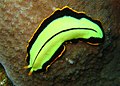 Pseudoceros dimidiatus
 -
 Mating Pseudobiceros bedfordi
Ad. Transform your health with W8MD Weight Loss, Sleep & MedSpa

Tired of being overweight?
Get started with evidence based, physician-supervised
affordable GLP-1 weight loss injections
Now available in New York City and Philadelphia:
- Semaglutide starting from $59.99/week and up
- Tirzepatide starting from $69.99/week and up (dose dependent)
✔ Evidence-based medical weight loss ✔ Insurance-friendly visits available ✔ Same-week appointments, evenings & weekends
Learn more:
Start your transformation today with W8MD weight loss centers.
|
WikiMD Medical Encyclopedia |
Medical Disclaimer: WikiMD is for informational purposes only and is not a substitute for professional medical advice. Content may be inaccurate or outdated and should not be used for diagnosis or treatment. Always consult your healthcare provider for medical decisions. Verify information with trusted sources such as CDC.gov and NIH.gov. By using this site, you agree that WikiMD is not liable for any outcomes related to its content. See full disclaimer.
Credits:Most images are courtesy of Wikimedia commons, and templates, categories Wikipedia, licensed under CC BY SA or similar.
Translate this page: - East Asian
中文,
日本,
한국어,
South Asian
हिन्दी,
தமிழ்,
తెలుగు,
Urdu,
ಕನ್ನಡ,
Southeast Asian
Indonesian,
Vietnamese,
Thai,
မြန်မာဘာသာ,
বাংলা
European
español,
Deutsch,
français,
Greek,
português do Brasil,
polski,
română,
русский,
Nederlands,
norsk,
svenska,
suomi,
Italian
Middle Eastern & African
عربى,
Turkish,
Persian,
Hebrew,
Afrikaans,
isiZulu,
Kiswahili,
Other
Bulgarian,
Hungarian,
Czech,
Swedish,
മലയാളം,
मराठी,
ਪੰਜਾਬੀ,
ગુજરાતી,
Portuguese,
Ukrainian
