HPV Prevention and Control Board
Overview
The HPV Prevention and Control Board is an international organization dedicated to the prevention and control of Human Papillomavirus (HPV) infections. The board focuses on promoting awareness, education, and vaccination strategies to reduce the incidence of HPV-related diseases, including cervical cancer, genital warts, and other anogenital cancers.
Mission
The mission of the HPV Prevention and Control Board is to provide guidance and support to countries and regions in implementing effective HPV prevention and control programs. This includes:
- Promoting the use of HPV vaccines
- Supporting the development of national HPV vaccination programs
- Encouraging screening and early detection of HPV-related diseases
- Facilitating research and data collection on HPV epidemiology
Activities
The board engages in a variety of activities to achieve its mission:
Workshops and Conferences
The board organizes international workshops and conferences to bring together experts in the field of HPV prevention. These events provide a platform for sharing knowledge, discussing challenges, and developing strategies for effective HPV control.
Policy Development
The board collaborates with health ministries, non-governmental organizations, and other stakeholders to develop policies and guidelines for HPV prevention. This includes recommendations for vaccination schedules, screening protocols, and public health campaigns.
Research and Data Collection
The board supports research initiatives aimed at understanding the burden of HPV-related diseases and the impact of vaccination programs. It also collects and disseminates data on HPV prevalence and vaccine coverage.
HPV Vaccination
HPV vaccination is a key component of the board's strategy to prevent HPV infections. The board advocates for the inclusion of HPV vaccines in national immunization programs and works to increase vaccine accessibility and uptake.
Vaccine Types
There are several types of HPV vaccines available, including:
Each vaccine targets different strains of HPV, with the nonavalent vaccine providing the broadest protection against multiple HPV types.
Target Populations
The board recommends vaccination for pre-adolescent and adolescent girls and boys, as well as catch-up vaccination for young adults who missed the initial vaccination window.
Screening and Early Detection
In addition to vaccination, the board emphasizes the importance of regular screening for early detection of HPV-related diseases. Screening methods include:
Early detection through screening can lead to timely treatment and improved outcomes for individuals with HPV-related conditions.
Challenges
The board identifies several challenges in HPV prevention and control, including:
- Vaccine hesitancy and misinformation
- Limited access to vaccines in low-resource settings
- Cultural and social barriers to vaccination and screening
Conclusion
The HPV Prevention and Control Board plays a crucial role in the global effort to reduce the burden of HPV-related diseases. Through its initiatives in vaccination, screening, and policy development, the board aims to achieve a significant reduction in HPV infections and improve public health outcomes worldwide.
| Vaccination |
|---|
|
|
| Public Health | |
|---|---|

| |
| ' | |
| Field | Not specified |
| Profession | Not specified |
| Education | Not specified |
| Subdisciplines | None listed |
| Related Fields | None listed |
| Organizations | None listed |
| Notable Figures | None listed |
| Issues | None listed |
-
HPV Prevention and Control Board logo
-
 HPV Prevention and Control Board
 -
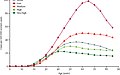 Cervical Cancer Age Incidence 2018
 -
 Cervical Cancer Mortality 2018


Ad. Transform your life with W8MD's
GLP-1 weight loss injections special from $29.99 with insurance
|
WikiMD Medical Encyclopedia |
Medical Disclaimer: WikiMD is for informational purposes only and is not a substitute for professional medical advice. Content may be inaccurate or outdated and should not be used for diagnosis or treatment. Always consult your healthcare provider for medical decisions. Verify information with trusted sources such as CDC.gov and NIH.gov. By using this site, you agree that WikiMD is not liable for any outcomes related to its content. See full disclaimer.
Credits:Most images are courtesy of Wikimedia commons, and templates, categories Wikipedia, licensed under CC BY SA or similar.
Translate this page: - East Asian
中文,
日本,
한국어,
South Asian
हिन्दी,
தமிழ்,
తెలుగు,
Urdu,
ಕನ್ನಡ,
Southeast Asian
Indonesian,
Vietnamese,
Thai,
မြန်မာဘာသာ,
বাংলা
European
español,
Deutsch,
français,
Greek,
português do Brasil,
polski,
română,
русский,
Nederlands,
norsk,
svenska,
suomi,
Italian
Middle Eastern & African
عربى,
Turkish,
Persian,
Hebrew,
Afrikaans,
isiZulu,
Kiswahili,
Other
Bulgarian,
Hungarian,
Czech,
Swedish,
മലയാളം,
मराठी,
ਪੰਜਾਬੀ,
ગુજરાતી,
Portuguese,
Ukrainian

