Ardem Patapoutian
Surgical procedure to replace the aortic valve
Aortic Valve Replacement
.svg)

Aortic valve replacement is a surgical procedure in which a patient's aortic valve is replaced with an artificial valve. The aortic valve is one of the four main valves in the heart, and it plays a crucial role in ensuring unidirectional blood flow from the left ventricle to the aorta.
Indications
Aortic valve replacement is typically indicated for patients with severe aortic stenosis or aortic regurgitation. Aortic stenosis is a condition where the valve becomes narrowed, restricting blood flow, while aortic regurgitation occurs when the valve does not close properly, allowing blood to flow backward into the heart.
Types of Replacement Valves
There are two main types of replacement valves used in aortic valve replacement:
- Mechanical valves: These are made from durable materials such as titanium or carbon. They are long-lasting but require patients to take lifelong anticoagulant medication to prevent blood clots.
- Bioprosthetic valves: These are made from animal tissue, such as pig or cow tissue, or from human tissue. They do not require long-term anticoagulation but may need to be replaced after 10-20 years.
Surgical Techniques
Aortic valve replacement can be performed using different surgical techniques:
- Open-heart surgery: The traditional method involves a large incision in the chest and temporarily stopping the heart to replace the valve.
- Minimally invasive surgery: This involves smaller incisions and may use specialized instruments and cameras to perform the surgery with less trauma to the body.
- Transcatheter aortic valve replacement (TAVR): A less invasive procedure where the new valve is inserted via a catheter through the femoral artery or another access point, without the need for open-heart surgery.
Recovery and Prognosis
Recovery from aortic valve replacement varies depending on the type of surgery performed. Patients who undergo open-heart surgery may require several weeks to recover, while those who have minimally invasive procedures may recover more quickly. The prognosis after aortic valve replacement is generally good, with many patients experiencing significant improvement in symptoms and quality of life.
Complications
Potential complications of aortic valve replacement include bleeding, infection, valve dysfunction, and stroke. The risk of complications depends on the patient's overall health, the type of valve used, and the surgical technique.
Related pages
Gallery
-
 Diagram of the human heart
 -
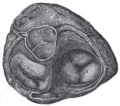 Illustration of heart valves
Ad. Transform your life with W8MD's Budget GLP-1 injections from $75


W8MD offers a medical weight loss program to lose weight in Philadelphia. Our physician-supervised medical weight loss provides:
- Weight loss injections in NYC (generic and brand names):
- Zepbound / Mounjaro, Wegovy / Ozempic, Saxenda
- Most insurances accepted or discounted self-pay rates. We will obtain insurance prior authorizations if needed.
- Generic GLP1 weight loss injections from $75 for the starting dose.
- Also offer prescription weight loss medications including Phentermine, Qsymia, Diethylpropion, Contrave etc.
NYC weight loss doctor appointmentsNYC weight loss doctor appointments
Start your NYC weight loss journey today at our NYC medical weight loss and Philadelphia medical weight loss clinics.
- Call 718-946-5500 to lose weight in NYC or for medical weight loss in Philadelphia 215-676-2334.
- Tags:NYC medical weight loss, Philadelphia lose weight Zepbound NYC, Budget GLP1 weight loss injections, Wegovy Philadelphia, Wegovy NYC, Philadelphia medical weight loss, Brookly weight loss and Wegovy NYC


|
WikiMD's Wellness Encyclopedia |
| Let Food Be Thy Medicine Medicine Thy Food - Hippocrates |
Medical Disclaimer: WikiMD is not a substitute for professional medical advice. The information on WikiMD is provided as an information resource only, may be incorrect, outdated or misleading, and is not to be used or relied on for any diagnostic or treatment purposes. Please consult your health care provider before making any healthcare decisions or for guidance about a specific medical condition. WikiMD expressly disclaims responsibility, and shall have no liability, for any damages, loss, injury, or liability whatsoever suffered as a result of your reliance on the information contained in this site. By visiting this site you agree to the foregoing terms and conditions, which may from time to time be changed or supplemented by WikiMD. If you do not agree to the foregoing terms and conditions, you should not enter or use this site. See full disclaimer.
Credits:Most images are courtesy of Wikimedia commons, and templates, categories Wikipedia, licensed under CC BY SA or similar.
Translate this page: - East Asian
中文,
日本,
한국어,
South Asian
हिन्दी,
தமிழ்,
తెలుగు,
Urdu,
ಕನ್ನಡ,
Southeast Asian
Indonesian,
Vietnamese,
Thai,
မြန်မာဘာသာ,
বাংলা
European
español,
Deutsch,
français,
Greek,
português do Brasil,
polski,
română,
русский,
Nederlands,
norsk,
svenska,
suomi,
Italian
Middle Eastern & African
عربى,
Turkish,
Persian,
Hebrew,
Afrikaans,
isiZulu,
Kiswahili,
Other
Bulgarian,
Hungarian,
Czech,
Swedish,
മലയാളം,
मराठी,
ਪੰਜਾਬੀ,
ગુજરાતી,
Portuguese,
Ukrainian
