Bomb disposal

Bomb Disposal is the process by which hazardous explosive devices are rendered safe. Bomb disposal is an all-encompassing term that applies to the many facets of explosive ordnance disposal (EOD), and it is a critical component of modern military operations and civilian safety. The practice involves the detection, identification, evaluation, rendering safe, recovery, and disposal of explosive ordnance that may pose a threat to people, infrastructure, or the environment.
History
The need for bomb disposal became prominent during the World War II, when the belligerent countries dropped thousands of tons of bombs over each other's territories. This led to the development of bomb disposal units and procedures. Initially, bomb disposal was primarily a military concern, but over time, the need for bomb disposal in civilian contexts, such as in the aftermath of terrorist bombings or the discovery of unexploded ordnance (UXO) from previous conflicts, has become increasingly important.
Techniques
Bomb disposal experts, often called EOD technicians, employ a variety of techniques depending on the type of ordnance they are dealing with and the context in which it is found. These techniques include manual disarmament, the use of remote tools, and the controlled detonation of explosive devices. The use of bomb disposal robots has become more prevalent, allowing technicians to remotely deal with potential threats.
Training
EOD technicians undergo rigorous training to handle a wide range of explosive threats. Military personnel, for example, receive training that covers a broad spectrum of munitions, including improvised explosive devices (IEDs), chemical, biological, radiological, and nuclear (CBRN) threats. Civilian bomb disposal technicians often specialize in certain areas, such as IEDs or historical ordnance.
Risks
Bomb disposal is inherently dangerous. Despite the advancements in technology and techniques, the risk of injury or death is always present. The unpredictable nature of explosive devices, especially IEDs, poses significant challenges to bomb disposal operations.
Notable Incidents
Several notable incidents highlight the dangers and complexities of bomb disposal. These include the disposal of unexploded bombs from World War II that are regularly found in Europe, and high-profile bomb disposal operations in conflict zones around the world.
In Popular Culture
Bomb disposal has been depicted in various forms of media, including films, television shows, and books. These portrayals often emphasize the tension and danger associated with bomb disposal operations, though they may not always provide an accurate representation of the techniques and challenges involved.
See Also
- Improvised Explosive Device (IED)
- Explosive Ordnance Disposal (EOD)
- Unexploded Ordnance (UXO)
- Counter-IED efforts

Bomb_disposal
-
 Pittsburgh Marathon 2010 bomb squad
 -
 1918 German UXOs
 -
 Bomb disposal 1940
 -
 EOD technician Ireland
 -
 3rd Battalion 3rd Marines controlled detonation
 -
 US Navy explosive ordnance disposal (EOD) divers
 -
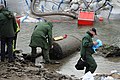 Fundort Luftmine 04 Koblenz 2011
 -
 Bomb Disposal Squad Indian Army protective suit


_divers.jpg)


Ad. Transform your life with W8MD's
GLP-1 weight loss injections special from $29.99 with insurance
|
WikiMD Medical Encyclopedia |
Medical Disclaimer: WikiMD is for informational purposes only and is not a substitute for professional medical advice. Content may be inaccurate or outdated and should not be used for diagnosis or treatment. Always consult your healthcare provider for medical decisions. Verify information with trusted sources such as CDC.gov and NIH.gov. By using this site, you agree that WikiMD is not liable for any outcomes related to its content. See full disclaimer.
Credits:Most images are courtesy of Wikimedia commons, and templates, categories Wikipedia, licensed under CC BY SA or similar.
Translate this page: - East Asian
中文,
日本,
한국어,
South Asian
हिन्दी,
தமிழ்,
తెలుగు,
Urdu,
ಕನ್ನಡ,
Southeast Asian
Indonesian,
Vietnamese,
Thai,
မြန်မာဘာသာ,
বাংলা
European
español,
Deutsch,
français,
Greek,
português do Brasil,
polski,
română,
русский,
Nederlands,
norsk,
svenska,
suomi,
Italian
Middle Eastern & African
عربى,
Turkish,
Persian,
Hebrew,
Afrikaans,
isiZulu,
Kiswahili,
Other
Bulgarian,
Hungarian,
Czech,
Swedish,
മലയാളം,
मराठी,
ਪੰਜਾਬੀ,
ગુજરાતી,
Portuguese,
Ukrainian
