New England Compounding Center meningitis outbreak
New England Compounding Center meningitis outbreak was a significant public health crisis that occurred in 2012, involving the distribution of contaminated steroid injections by the New England Compounding Center (NECC), a compounding pharmacy located in Framingham, Massachusetts. This outbreak led to widespread meningitis infections, causing numerous illnesses and deaths across the United States. The incident highlighted critical issues in the regulation and oversight of compounding pharmacies and led to significant changes in laws and policies governing the pharmaceutical compounding industry.
Background
Compounding pharmacies, like the NECC, prepare medications tailored to meet the specific needs of patients, often by altering or combining drug ingredients. These pharmacies are supposed to operate under strict guidelines to ensure the safety and efficacy of their compounded medications. However, the NECC was found to have violated several safety standards, leading to the contamination of their products.
The Outbreak
The outbreak was traced back to methylprednisolone acetate, a steroid injection compounded by the NECC, which was contaminated with fungal pathogens. These injections are commonly used to treat back pain and joint issues. Patients receiving the contaminated injections developed fungal meningitis, a rare and severe form of meningitis. The outbreak affected over 750 individuals across 20 states, resulting in more than 60 deaths.
Investigation and Response
The Centers for Disease Control and Prevention (CDC) and the Food and Drug Administration (FDA) launched a comprehensive investigation into the outbreak. Their findings revealed significant lapses in the NECC's sterile compounding practices, including the use of expired ingredients, poor environmental monitoring, and inadequate testing of products for sterility. The investigation also uncovered that the NECC had been operating more like a drug manufacturer than a pharmacy, distributing large quantities of medications across state lines without patient-specific prescriptions, in violation of its pharmacy license.
Legal and Regulatory Outcomes
The outbreak led to criminal charges against several NECC employees, including its owners and supervising pharmacist, who were accused of multiple counts of racketeering, mail fraud, and the introduction of adulterated and misbranded drugs into interstate commerce with the intent to defraud and mislead.
In response to the outbreak, Congress passed the Drug Quality and Security Act (DQSA) in 2013, which aimed to strengthen the regulatory oversight of compounding pharmacies and enhance the safety of compounded medications. The DQSA created a new category of compounding pharmacies called "outsourcing facilities" that are subject to FDA oversight.
Impact
The NECC meningitis outbreak had a profound impact on public health, leading to increased scrutiny of compounding pharmacies and changes in regulatory oversight to prevent similar incidents in the future. It also raised awareness among healthcare providers and patients about the risks associated with compounded medications.
See Also
- Meningitis
- Compounding pharmacy
- Drug Quality and Security Act
- Centers for Disease Control and Prevention
- Food and Drug Administration

-
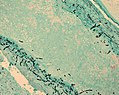 Fungus in brain tissue
 -
 Exserohilum rostratum


Ad. Transform your life with W8MD's
GLP-1 weight loss injections special from $29.99 with insurance
|
WikiMD Medical Encyclopedia |
Medical Disclaimer: WikiMD is for informational purposes only and is not a substitute for professional medical advice. Content may be inaccurate or outdated and should not be used for diagnosis or treatment. Always consult your healthcare provider for medical decisions. Verify information with trusted sources such as CDC.gov and NIH.gov. By using this site, you agree that WikiMD is not liable for any outcomes related to its content. See full disclaimer.
Credits:Most images are courtesy of Wikimedia commons, and templates, categories Wikipedia, licensed under CC BY SA or similar.
Translate this page: - East Asian
中文,
日本,
한국어,
South Asian
हिन्दी,
தமிழ்,
తెలుగు,
Urdu,
ಕನ್ನಡ,
Southeast Asian
Indonesian,
Vietnamese,
Thai,
မြန်မာဘာသာ,
বাংলা
European
español,
Deutsch,
français,
Greek,
português do Brasil,
polski,
română,
русский,
Nederlands,
norsk,
svenska,
suomi,
Italian
Middle Eastern & African
عربى,
Turkish,
Persian,
Hebrew,
Afrikaans,
isiZulu,
Kiswahili,
Other
Bulgarian,
Hungarian,
Czech,
Swedish,
മലയാളം,
मराठी,
ਪੰਜਾਬੀ,
ગુજરાતી,
Portuguese,
Ukrainian
