Prunus speciosa
Prunus speciosa, commonly known as the Oshima cherry, is a species of cherry native to Japan. It is one of the many species within the genus Prunus, which encompasses a wide range of fruit-bearing trees and shrubs, including plums, apricots, almonds, peaches, and cherries. Prunus speciosa is particularly noted for its ornamental value, with its striking blossoms being a herald of spring in its native habitat.
Description
Prunus speciosa is a deciduous tree that can reach heights of up to 15-20 meters. The leaves are oval-shaped, with serrated margins and a pointed tip, measuring 7-12 cm in length. The flowers of the Oshima cherry are its most distinctive feature, blooming in early spring before the leaves fully emerge. These blossoms are white to pale pink, approximately 3-4 cm in diameter, and grow in clusters from the stems. Unlike some other cherry species, Prunus speciosa does not produce edible fruit, with the small cherries being more ornamental than culinary.
Habitat and Distribution
Originally from Japan, Prunus speciosa is primarily found on the Oshima Island, part of the Izu Islands, which is reflected in its common name. Its natural habitat includes coastal areas and mountain slopes, where it thrives in well-drained, volcanic soil. Over the years, it has been cultivated in various parts of the world as an ornamental tree, valued for its beautiful spring blossoms.
Cultivation and Uses
The Oshima cherry is widely cultivated for its aesthetic appeal. It is a popular choice for parks, gardens, and public spaces, where its springtime blooms can be appreciated. In Japan, it is often planted around temples and used in traditional cherry blossom viewing festivals, known as hanami. While it is primarily grown for its flowers, Prunus speciosa is also used in breeding programs to develop new cherry cultivars, thanks to its hardiness and disease resistance.
Conservation
As with many native species, the conservation of Prunus speciosa involves protecting its natural habitat and managing the genetic diversity of the populations. Efforts are made in Japan and elsewhere to ensure that this species continues to thrive, both in the wild and in cultivation.
See Also

-
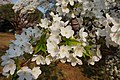 Prunus speciosa
 -
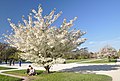 Prunus speciosa in the Jardin des Plantes
 -
 Prunus speciosa in the Jardin des Plantes
 -
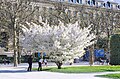 Prunus speciosa in the Jardin des Plantes
 -
 Prunus speciosa (Oshima cherry)
 -
 Yoshino cherry and Oshima cherry


_%E3%82%AA%E3%82%AA%E3%82%B7%E3%83%9E%E3%82%B6%E3%82%AF%E3%83%A9_1.jpg)

Ad. Transform your health with W8MD Weight Loss, Sleep & MedSpa

Tired of being overweight?
Get started with evidence based, physician-supervised
affordable GLP-1 weight loss injections
Now available in New York City and Philadelphia:
- Semaglutide starting from $59.99/week and up
- Tirzepatide starting from $69.99/week and up (dose dependent)
✔ Evidence-based medical weight loss ✔ Insurance-friendly visits available ✔ Same-week appointments, evenings & weekends
Learn more:
Start your transformation today with W8MD weight loss centers.
|
WikiMD Medical Encyclopedia |
Medical Disclaimer: WikiMD is for informational purposes only and is not a substitute for professional medical advice. Content may be inaccurate or outdated and should not be used for diagnosis or treatment. Always consult your healthcare provider for medical decisions. Verify information with trusted sources such as CDC.gov and NIH.gov. By using this site, you agree that WikiMD is not liable for any outcomes related to its content. See full disclaimer.
Credits:Most images are courtesy of Wikimedia commons, and templates, categories Wikipedia, licensed under CC BY SA or similar.
Translate this page: - East Asian
中文,
日本,
한국어,
South Asian
हिन्दी,
தமிழ்,
తెలుగు,
Urdu,
ಕನ್ನಡ,
Southeast Asian
Indonesian,
Vietnamese,
Thai,
မြန်မာဘာသာ,
বাংলা
European
español,
Deutsch,
français,
Greek,
português do Brasil,
polski,
română,
русский,
Nederlands,
norsk,
svenska,
suomi,
Italian
Middle Eastern & African
عربى,
Turkish,
Persian,
Hebrew,
Afrikaans,
isiZulu,
Kiswahili,
Other
Bulgarian,
Hungarian,
Czech,
Swedish,
മലയാളം,
मराठी,
ਪੰਜਾਬੀ,
ગુજરાતી,
Portuguese,
Ukrainian
